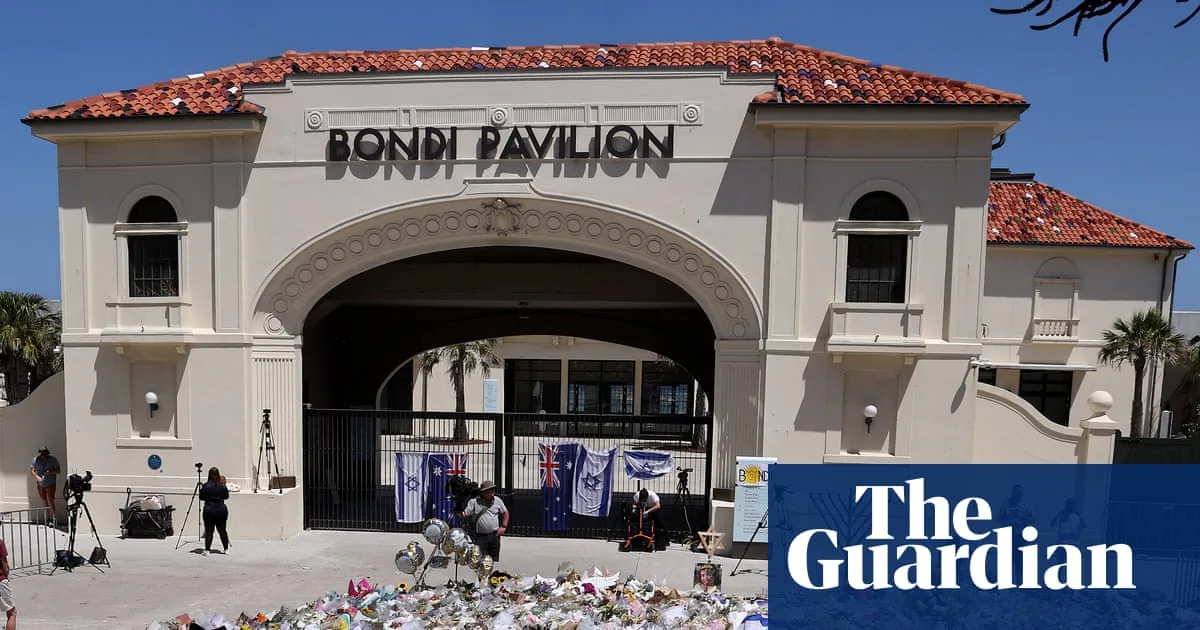
Misinformation, turbocharged by AI, was hard to avoid in the hours and days that followed the Bondi beach terror attack, as some platforms pushed dubious claims to users trying to find factual information. The X “for you” page, which serves up content determined by an algorithm, was filled with false details, including that the attack was a psyop or false-flag operation, that the attackers were IDF soldiers, and that those injured were crisis actors.
An altered clip of the New South Wales premier, Chris Minns, with deepfaked audio making false claims about the attackers, was shared across multiple accounts. In another particularly egregious example, an AI-generated image based on an actual photo of the victims was altered to suggest he was a crisis actor having red makeup applied to his face to look like blood. The man depicted in the fake image, human rights lawyer Arsen Ostrovsky, later posted on X that he would not dignify the “sick campaign of lies and hate” with a response.
Pakistan’s information minister, Attaullah Tarar, said his country had been the victim of a coordinated online disinformation campaign, with false claims circulating that one of the suspects was a Pakistani national. The man who was falsely identified told Guardian Australia it was “extremely disturbing” and traumatising to have his photo circulated on social media next to claims he was the alleged attacker. Tarar alleged the disinformation campaign originated in India.

Meanwhile, X’s AI chatbot Grok told users that an IT worker with an English name was the hero who tackled and disarmed one of the alleged shooters, rather than the Syrian-born Ahmed al-Ahmed. This claim seems to have originated on a website set up on the same day as the terror attack to mimic a legitimate news site. AI-generated images of Ahmed also proliferated on social media, promoting crypto schemes and fake fundraisers.
Misinformation has long circulated on social media, but algorithms now reward engagement based on outrage, particularly for verified accounts that can financially benefit. Many of the posts touting false claims had hundreds of thousands or even millions of views. When Musk took over X, he dismantled the site’s factchecking scheme in favour of a user rating system called “community notes”, which appends crowdsourced user factchecking to posts. Meta is implementing a similar system.
But the community notes system isn’t helpful where opinions are deeply divided, and it takes too long. X is trialling having Grok generate its own community notes to factcheck posts, but the Ahmed example suggests this is even more worrying. A saving grace is that many of the fakes are still easily spotted – for now. The fake Minns had an American twinge in the accent, and the crisis actor post had hallmarks of dodgy AI image generation. But as AI models improve, it could become even harder to distinguish fact from fiction.