Merlin, a free bird song identification app developed by the Cornell Lab of Ornithology, has seen a surge in popularity in the UK. The app, which uses machine learning to identify bird species by their songs, has been downloaded over 33 million times globally, with the UK accounting for more than 1.5 million users in 2024—an 88% increase from the previous year. New users are growing by 30% each month.
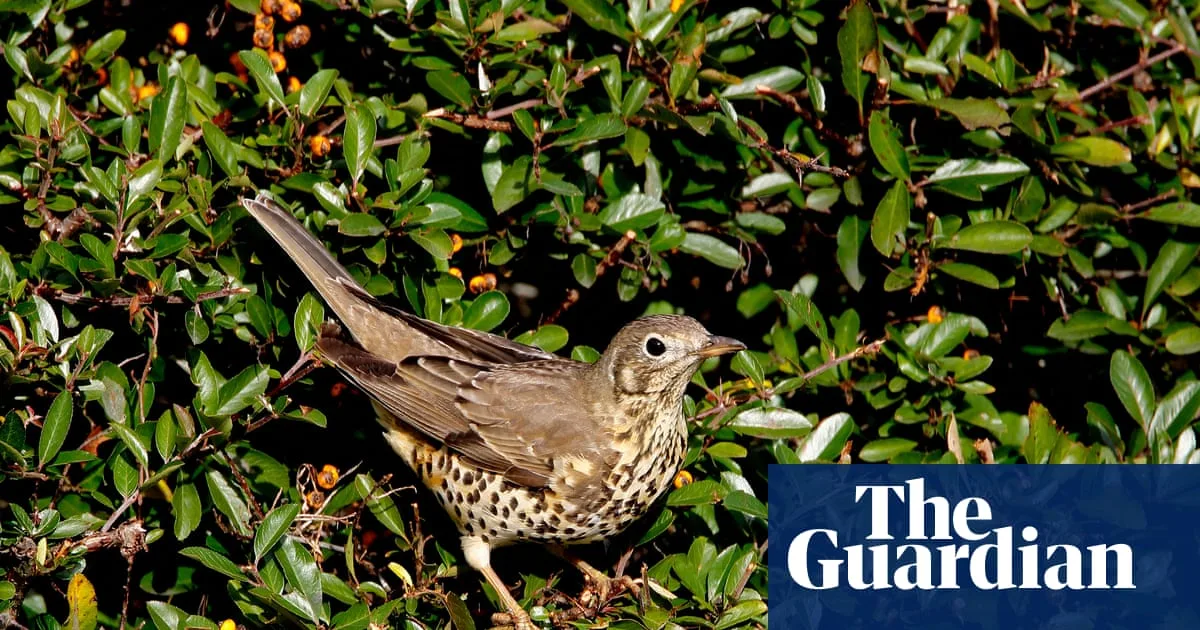
Users like writer Natasha Walter praise the app for making birdwatching accessible. 'It's wonderful and it's been a joy to me,' she says. 'This is what AI and machine-learning have been invented for. It's the one good thing!' The app has helped her learn to identify species such as song thrushes and mistle thrushes in her London garden.
Angela Townsend from Bedfordshire found Merlin useful after being overwhelmed by bird calls on a nightingale walk. 'Warblers were just little brown jobbies but I can now recognise Cetti's warblers and willow warblers when I'm out without having to put the app on,' she says. Mary Novakovich, author of My Family and Other Enemies, uses it while travelling in Croatia, noting it 'brings you closer to the natural world.'
However, Merlin is not infallible. Kasper Wall, a 12-year-old birder from Norfolk, recalls the app initially detecting North American species like northern cardinal and brown-headed cowbird in his garden. 'It can definitely be fooled,' he says. Naturalist Nick Acheson warns that reliance on the app may hinder learning: 'There's a risk that people don't learn and just abdicate responsibility for learning to Merlin.' He notes a glitch where a chaffinch call is misidentified as a redstart.
John Williamson, a guide for Norfolk Wildlife Trust, has observed Merlin repeatedly misidentifying high-pitched calls as spotted flycatcher in reedbeds where the bird is unlikely. 'Merlin can't do habitat,' he says. Despite these limitations, the app continues to attract users eager to connect with nature.