Sam Altman Defends AI's Energy Demands at New Delhi Summit
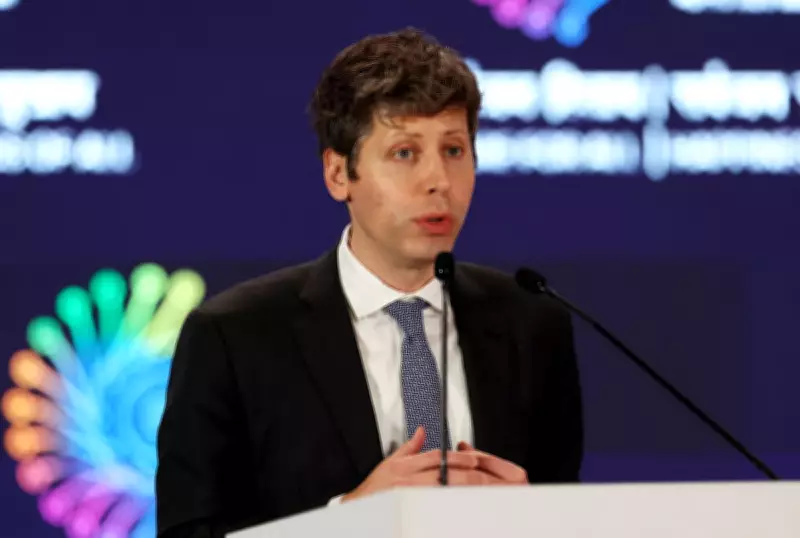
OpenAI CEO Sam Altman has sparked debate by defending the substantial energy consumption of artificial intelligence models, drawing a direct comparison to the resources required for human development. Speaking at the AI Impact summit in New Delhi, India, on 19 February 2026, Altman attempted to contextualise concerns about AI's environmental footprint.
Comparing AI Training to Human Development
"People talk about how much energy it takes to train an AI model – but it also takes a lot of energy to train a human," Altman told The Indian Express during his visit. "It takes about 20 years of life – and all the food you consume during that time – before you become smart." Despite this defence, he acknowledged that public scrutiny of AI's energy use is "fair" and emphasised the urgent need to transition to renewable sources like nuclear, wind, and solar power.
Growing Concerns Over Datacenter Impact
Altman's remarks come amid increasing global discussion about the environmental consequences of datacenters that power AI systems. According to the International Energy Agency, datacenters accounted for approximately 1.5% of global electricity consumption in 2024, with projections indicating a 15% annual increase from 2024 to 2030. This growth rate is more than four times faster than electricity consumption in all other sectors combined.

Noman Bashir, a computing and climate impact fellow at MIT's climate and sustainability consortium, warned that the rapid expansion of datacenters is unsustainable. "The demand for new datacenters cannot be met in a sustainable way," Bashir stated. "The pace at which companies are building new datacenters means the bulk of the electricity to power them must come from fossil fuel-based power plants."
Water Usage Claims and Skepticism
At the conference, Altman also downplayed concerns about water consumption by datacenters, dismissing claims as "totally fake." He explained that while evaporative cooling was once common, modern datacenters no longer rely on such methods. "You see things on the internet, [like]: 'Don't use ChatGPT. It's 17 gallons of water for each query or whatever.' This is completely untrue – totally insane," Altman asserted. CNBC has reported that some newer datacenters operate without any water usage.
However, skepticism remains among experts. Mike Weinstein, director of sustainability at Southern New Hampshire University, expressed doubts about justifying AI's energy demands based on its potential to solve global problems. A September 2025 OpenAI report revealed that the most common work-related use of ChatGPT is for writing assistance, not addressing critical issues like food or energy systems. "I have yet to see it demonstrated," Weinstein said regarding AI's claimed benefits.
Online Backlash and Criticism
Altman's comments triggered a significant backlash on social media, with critics describing his analogy as dystopian. Matt Stoller, research director at the American Economic Liberties Project, posted on X: "He's saying a really big spreadsheet and a baby are morally equivalent. One reason to believe that life is divine is so that you don't allow sociopaths like this anywhere near anything important."
Sports commentator Jeff Johnson compared Altman's remarks to the Netflix series Black Mirror, which explores technological harms. "Notice the disturbing techy parlance that he uses to describe the general human experience," Johnson wrote. "'Training?!' Too many people are falling for [it]. Y'all really lettin these geeks destroy the Earth."
The debate underscores broader tensions between AI innovation and environmental sustainability, as the industry faces calls for greater regulation and transparency. In December, over 230 environmental groups in the US advocated for a moratorium on datacenter construction, citing threats to economic, environmental, and water security.