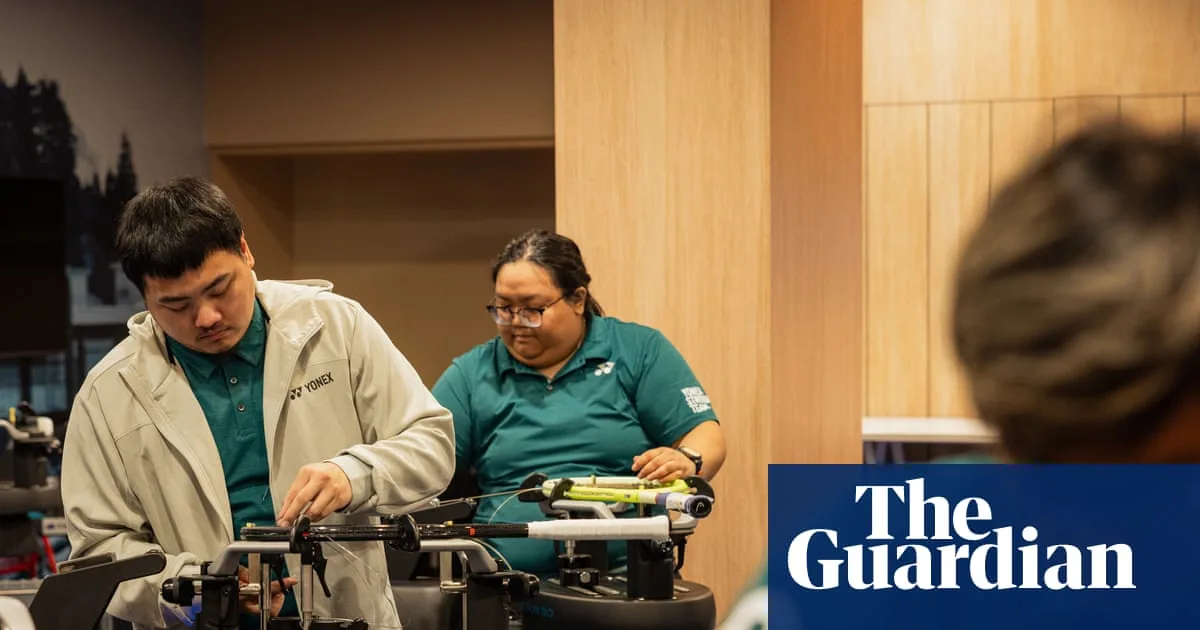
Beneath the roaring crowds of Rod Laver Arena, a critical and often overlooked operation is in full swing. In an unassuming underground room at Melbourne Park, a team of specialists is engaged in a high-pressure craft essential to the Australian Open itself. Their work is not played out on the blue courts above but involves the meticulous preparation of the very tools the athletes wield: their tennis rackets.
The Demanding Craft of Championship Stringing
Leading the Yonex stringing team, Jim Downes understands the immense pressure of the role after a 30-year career. "It's a high demand job," he confirms. The world's elite players are "very particular" about their equipment, specifically the tension of the strings crisscrossing the frame. A higher tension offers more control but sacrifices power, while a lower tension does the opposite. This precision is non-negotiable at the Grand Slam level.
"A lot of people know how to string," Downes notes, distinguishing between shop stringers and the tournament experts. "But they might not be quick enough to do this job and maybe not consistent enough for the players' needs at this level." His 22-person team is tasked with servicing roughly 800 athletes throughout the tournament.
British stringer Sarah Bloomfield, at her second Australian Open, explains how conditions dictate player requests. "I think the weather is the biggest factor," she says. "They all arrive in Australia and up their tension because it's hotter so the ball travels faster, so they all want more control."
Precision, Process, and Player Consistency
The process begins when a player or coach delivers rackets, specific tension instructions, and their chosen strings to the dedicated room. The old strings are swiftly cut out, and the empty frames are assigned to a stringer. Downes tries to maintain crucial consistency. "Generally we keep the top 10 seeds with the stringers that are going to be here until the end," he says. As the tournament advances and players are eliminated, the stringing team shrinks, leaving the most experienced hands for the final, high-stakes matches.
In the main room, a focused calm prevails, with the only real tension belonging to the strings. The soundscape is a mix of distant crowd murmurs and the immediate snips, clicks, and whirrs of the stringing machines. Each frame is secured, and the main strings are threaded, clamped, tensioned, and knotted by hand before the cross strings are meticulously woven through.
The Evolution of Strings and the Stringer's Life
The materials have evolved significantly. While natural gut from animal intestines was the standard for a century, polyester strings revolutionised the game in the 1990s. "It provided more spin and more durability, but it can have some negative effects on the body," Downes explains, citing wear on wrists, elbows, and shoulders. This led to a hybrid resurgence, combining gut's power with polyester's control and strength.
Life on tour means long hours, calloused hands, and aching feet from standing still. Bloomfield's toolkit is stocked with plasters and bandages. "The more you string the easier it gets because your hands harden up," she says. The work rhythm oscillates between steady sessions and urgent mid-match requests. "Always the adrenaline starts pumping a little bit," she admits, "but it's all about consistency."
After stringing, a final, low-tech touch is applied: stencilling the sponsor's logo with a fluffy paint stick. Even then, the stringers' investment continues. Friendly rivalries emerge when two freshly strung players face off. "[It] makes it fun, just that added little bonus for the long days," Bloomfield says. "Unfortunately, my player just lost, so I had more work to do."
It's a unique profession where years of honed craftsmanship can be violently smashed into oblivion in a player's angry outburst. Downes isn't fazed. "I think the companies feel worse about that than the stringers do," he remarks. "It's just an angry outburst. They need to release it somehow." For Bloomfield, a former player, watching tennis now comes with profound pride in the unseen workforce. "I have a huge love for the staff around it," she reflects. "I feel like part of that team."