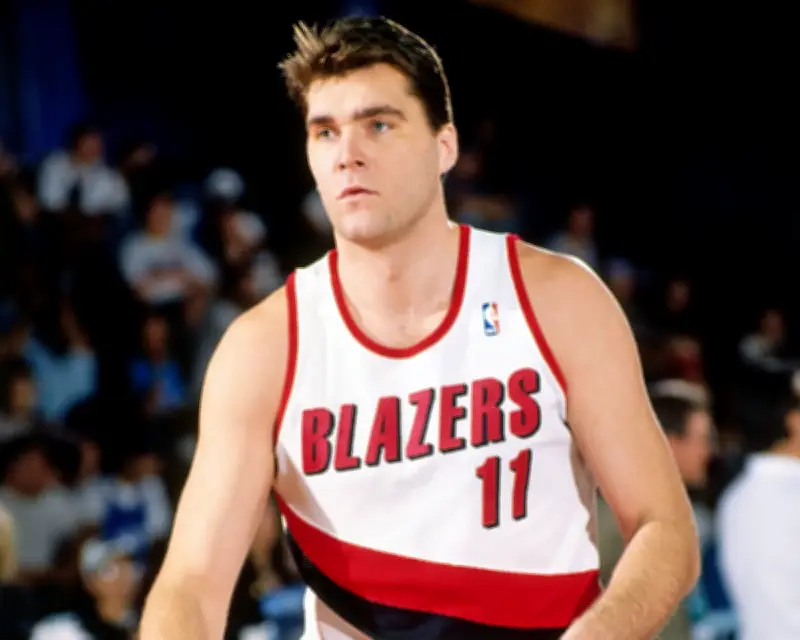
On 17 June 1986, NBA commissioner David Stern announced the Portland Trail Blazers' selection of Arvydas Sabonis from the Soviet Union with the last pick of the first round. The crowd booed, and TBS hosts laughed. One Portland journalist vowed to jump off the Broadway Bridge if Sabonis ever played in the NBA. Two rounds later, Portland selected Dražen Petrović from Yugoslavia. These picks marked a turning point that transformed the league into a global phenomenon.
European Players Overlooked Before 1986
Before 1986, international draft picks were rare and typically came from US colleges or late-round gambles. Dan Peterson, an American coach in Italy, noted that NBA scouts were absent in Europe. Teams relied on secondhand reports and grainy VHS tapes. Rick Sund, former GM of the Dallas Mavericks, recalled the lack of modern scouting technology like Synergy. Portland's vice-president of basketball operations, Bucky Buckwalter, had been intrigued by European players since his time as an assistant coach at the University of Utah, where his teams played exhibition games against European squads. He leaned on former college teammate George Fisher, coaching in France, for intelligence on European talent.
Sabonis and Petrović: The Pioneers
Buckwalter first heard about Sabonis during a 1982 exhibition tour by the Soviet national team. At 17, the 7ft 3in center outscored two-time National Player of the Year Ralph Sampson. Sabonis combined power and finesse, running like a gazelle, passing like Bill Walton, and shooting threes. NBA All-Star Detlef Schrempf later said, "I told everyone all the time that if Sabonis was in the NBA he'd be the best player possibly ever." Fisher also recommended Petrović, a Yugoslavian guard averaging over 40 points per game, dubbed "The Mozart of Basketball." In the 1986 European Cup final, Petrović scored 47 points on 19-of-23 shooting with 25 assists against Olimpia Milano.
Barriers to International Signings
Signing international players faced major hurdles: FIBA's amateurism requirement meant NBA players could not represent their countries, while European professionals were considered amateurs. Communist countries exerted control: the Soviet Union forbade players from signing abroad without defecting, endangering families. Yugoslavia prohibited players from leaving until age 28. NBA executives doubted Europeans could compete or assimilate, fearing they lacked toughness and skill. Buckwalter believed Sabonis and Petrović could elevate the Blazers, but signing them seemed unlikely.
Post-Draft Developments
Weeks after the draft, Sabonis and Petrović faced off at the FIBA Championship in Madrid. The Soviet Union beat Yugoslavia in an overtime thriller before losing to the US. Buckwalter, staying in the same hotel, arranged a secret 3am meeting with Sabonis via a Lithuanian friend. Sabonis wanted to join the NBA but refused to defect due to family risks. Portland enlisted US state department connections, including a congressman, senator, and two secretaries of state, and offered millions to Soviet officials, but the Soviets wanted Sabonis for the 1988 Olympics. Buckwalter also met Petrović, who was hesitant to forfeit international eligibility.
Changing Tides
Buckwalter hired Kenny Grant to monitor Petrović. In spring 1988, Portland paid for Sabonis to rehab his torn achilles in Portland. That summer, Sabonis led the Soviets past the US in the Olympics and beat Yugoslavia for gold. In 1989, FIBA voted to allow professionals in international competitions, enabling the 1992 US Dream Team. Five Europeans signed with NBA teams for the 1989-90 season, including Petrović. After a slow start in Portland, he flourished with the New Jersey Nets, averaging 22.3 points per game in 1992-93 and earning All-NBA Third Team honors. He died in a car crash in Germany in June 1993 at age 28.
Sabonis Finally Arrives
The USSR's glasnost policy allowed players to leave. Sabonis chose to sign with Valladolid in Spain in 1989, still recovering from achilles injuries. He joined the NBA in 1995 at age 30 after a successful stint with Real Madrid. Team doctor Robert Cook said Sabonis "could qualify for a handicapped parking spot" based on his MRI. Despite injuries, Sabonis averaged 14.5 points and 8.1 rebounds in 23.8 minutes per game in 1995-96, extrapolating to 22 points and 12.2 rebounds per 36 minutes. He played seven seasons in Portland. The journalist who vowed to jump off the Broadway Bridge never followed through, according to the 92-year-old Buckwalter.
Globalization Accelerates
Commissioner David Stern's vision to globalize the game included sponsored clinics, camps, and exporting VHS tapes like Michael Jordan's Come Fly With Me. The 1992 Dream Team inspired Europeans like Dirk Nowitzki, Tony Parker, and Pau Gasol. Europeans trickled in during the mid-90s; Toni Kukoč joined the Bulls in 1993 and became key to their second three-peat. Roberto Carmenati, a longtime scout, noted Nowitzki's 1998 draft as a turning point, as he was relatively unknown even in Europe. By the late 1990s and early 2000s, NBA teams hired full-time international scouts, and now most teams employ four or five.
Legacy and Impact
Sabonis and Petrović are Hall of Famers, though their primes were diminished by injuries and tragedy. They proved Europeans could be NBA stars. In 1986, fewer than 10 international players were in the NBA. In the 2025 draft, 23 international players were selected, and on opening night of the 2025-26 season, 135 international players from 43 countries made up over 25% of the league. The last eight MVP awards went to players born outside the United States. Basketball, invented in America, now belongs to the world.