US Winter Olympics Begin Smoothly Despite Political Tensions and Protests
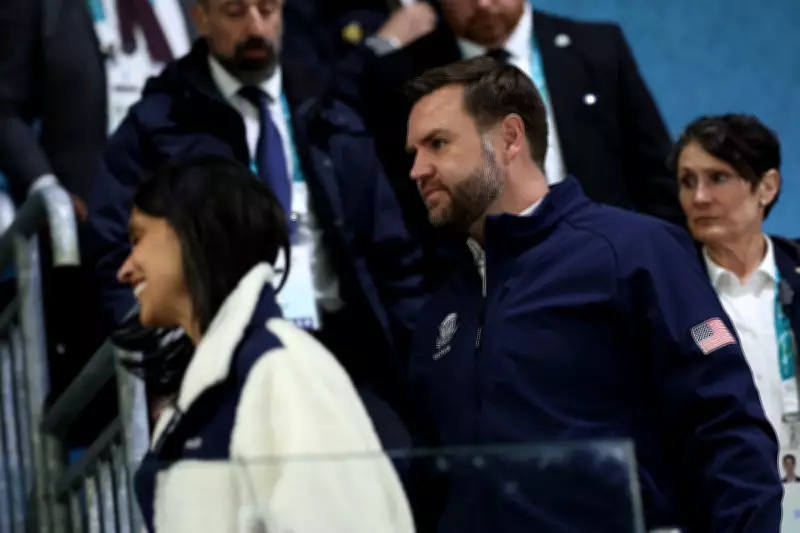
The 2026 Winter Olympics in Milan opened with Team USA's women's ice hockey team securing a commanding 5-1 victory against Czechia on Thursday afternoon, marking a successful start to their campaign. This sporting triumph unfolded against a backdrop of significant political tensions, including local protests against US Immigration and Customs Enforcement agents and the discreet presence of Vice President JD Vance at the Milano Rho Ice Hockey Arena.
Political Neutrality and Geopolitical Statements
On the eve of the Games, International Olympic Committee President Kirsty Coventry issued a carefully worded statement emphasizing sport's role as a neutral ground. "We understand politics and we know we don't operate in a vacuum," Coventry declared. "But our game is sport. That means keeping sport a neutral ground. A place where every athlete can compete freely, without being held back by the politics or divisions of their governments."
This declaration carried substantial political weight, interpreted by observers as signaling potential reintegration for Russia into Olympic competition while avoiding commentary on Israel's participation. The statement also extended diplomatic courtesy to American organizers of the upcoming 2028 Olympics, despite ongoing controversies surrounding US domestic policies.

Local Protests and Vance's Controversial Presence
Milan has witnessed protests against the involvement of ICE agents in Olympic security operations, with demonstrators expressing particular outrage following Vice President Vance's refusal to apologize to the family of Alex Pretti, who was fatally shot by federal agents last month. When questioned about offering condolences, Vance responded dismissively with "For what?"
The level of anti-American sentiment became sufficiently pronounced that Coventry faced questions during a pre-Olympic press conference about whether spectators might justifiably boo American athletes. Against this contentious backdrop, Vance arrived in Milan on Thursday morning alongside Secretary of State Marco Rubio and his family, conducting diplomatic visits with US athletes before leading the American delegation at the Opening Ceremony.
Athlete Statements and Political Divisions
Vance addressed American freestyle skiers on Thursday morning, asserting that the Olympics represent "one of the few things that unites the entire country. The whole country, Democrat, Republican, independent, we're all rooting for you, and we're cheering for you."
However, this claim of national unity appears questionable given the polarized political climate. Several prominent American athletes have already issued measured criticisms of current administration policies. Cross-country skier Jessie Diggins stated she would compete for "an American people who stand for love, for acceptance, for compassion, honesty and respect for others," while downhill skier Lindsey Vonn expressed that her "heart is incredibly heavy" following recent government crackdowns.
Strategic Discretion and Sporting Atmosphere
Perhaps recognizing the potential for controversy, Vance's party entered the ice hockey arena discreetly seven minutes before the end of the first period, avoiding the dramatic entrances characteristic of previous political figures at sporting events. Television cameras similarly avoided focusing on the vice president and his entourage, which included his wife and children.
Organizers cultivated a festive atmosphere with DJ performances, club music during breaks, flashing lights, and coordinated crowd waves. American supporters dominated the arena, adorned in flags, hockey jerseys, and official Team USA merchandise. The crowd erupted when Megan Keller scored the opening goal during a power play advantage, assisted by trailblazing 21-year-old Laila Edwards, the first black woman to make a US Olympic ice hockey squad.
Dominant Performance and Historical Significance
Team USA built momentum throughout the game with additional goals from Joy Dunne and Hayley Scamurra in the second period. Despite a swift counter-attack goal from Czechia's Barbora Jurickova, the American team sealed their victory with contributions from five-time Olympian Hilary Knight and another goal from Scamurra.

Keller, competing in her third Olympic Games, had previously articulated a message likely welcomed by the administration: "The powerful thing about sport in the Olympics is it's everybody uniting together." Her historic collaboration with Edwards on the opening goal added poignant significance to the victory.
Underlying Political Questions Persist
While the sporting competition proceeded smoothly and the arena atmosphere remained buoyant, substantial political questions continue to loom over these Games. The US women's ice hockey team enters as tournament favorites, with reigning champions Canada representing their primary rivals. Notably, current US administration policies advocate for Canadian integration as a 51st state, potentially intensifying tensions should the teams meet in knockout rounds.
Despite Vance maintaining relative anonymity in the stands and organizers emphasizing athletic celebration, the broader political context surrounding these Olympics cannot be easily dismissed. The festive atmosphere cultivated within competition venues may prove difficult to sustain beyond the ice as geopolitical realities persist.