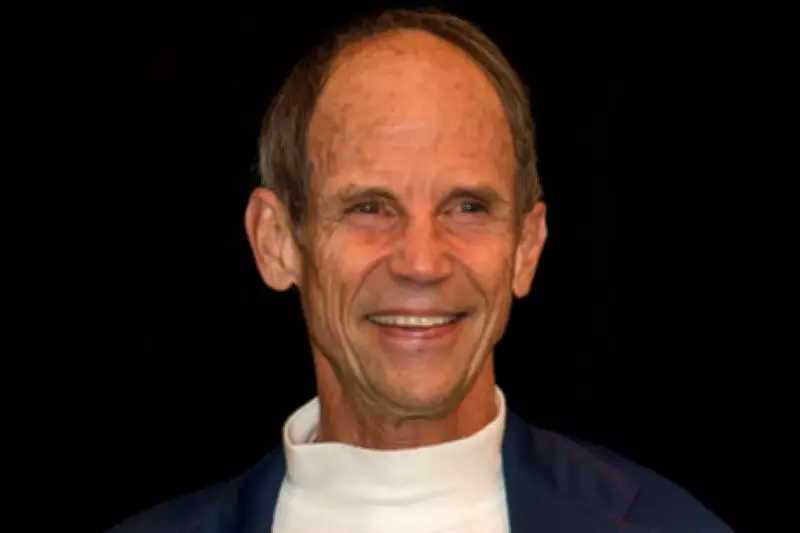
Jeff Galloway, the celebrated 1972 US Olympian who transformed the world of running with his innovative and accessible run-walk-run strategy, has passed away at the age of 80. His pioneering approach, which encouraged athletes of all abilities to incorporate walking breaks into their running routines, left an enduring legacy in the sport, making distance running achievable for millions worldwide.
A Legacy of Accessibility and Innovation
Mr Galloway died on Wednesday at a hospital in Pensacola, Florida, after suffering a hemorrhagic stroke, as confirmed by his daughter-in-law Carissa Galloway. In the days preceding his death, following emergency neurosurgery on 20 February, an outpouring of tributes and well-wishes flooded social media platforms, with countless individuals sharing heartfelt videos expressing gratitude for the confidence and inspiration he provided through his methods.
The Origins of the Run-Walk-Run Method
His revolutionary run-walk-run technique originated in 1974, just two years after his Olympic appearance in the 10,000 metres. He began teaching a running class through Florida State University, initially hoping to attract customers to his new store, Phidippides. "None had done any running for at least five years. So we started walking with a few one-minute jogs," Mr Galloway recounted on his website.

He meticulously adjusted the walk breaks to ensure all participants remained comfortable and injury-free. "I spent some time with each group, during the runs, to adjust the frequency of walk breaks so that no one was huffing and puffing — even at the end," he explained. "Walk breaks kept the groups together. Everyone passed the final exam: finishing either a 5K or a 10K with smiles on their faces."
Proven Benefits and Personal Application
Mr Galloway firmly believed that integrating walking into runs significantly reduced injury risks, conserved energy, and boosted overall confidence. He applied this philosophy personally, famously walking through every water station during the 1980 Houston marathon and achieving a faster time of 2:16:35 than his previous run-only races. "I’ve been using them ever since," he said, "continuing to fine-tune the ratios of running to walking based upon pace per mile and individual needs."
Democratising Running for All
Jim Vance, an elite endurance sports consultant based in San Diego, hailed Mr Galloway as a true "pioneer" for making running accessible to everyone. "He removed the barrier to entry, which was mostly mental," Mr Vance told The Associated Press. "Running isn't supposed to be a suffer-fest. It should be something peaceful, something enjoyable, so people can enjoy running and not dread it."
Despite surviving heart failure in 2021 and having completed over 230 marathons in his lifetime, Mr Galloway remained remarkably ambitious. He told The New York Times in December: "My mission now, at the age of 80-plus, is to show that people can do things that are normally not done, and can do them safely."
Personal Impact and Widespread Influence
He disseminated his running philosophies through numerous books, websites, and retreats, and served as the official training consultant for runDisney, often joining participants in their races. His impact was deeply personal for many, including Karen Bock-Losee, 70, from Jacksonville, Florida, who shared in a video: "I never thought I would be a runner. I never thought I'd run a half marathon. I'm 70 years old and I've run several since my 60th birthday when I discovered Galloway running. I just want to say thank you."
Susan Williams recalled Mr Galloway personally encouraging her during a difficult moment in a 2011 half marathon, saying, "You passed me, and my butt was cramping. You turned around and came back. You talked me through it. It was awesome."
Enduring Legacy in the Running Community
Bobby McGee, a Colorado-based running coach, underscored Mr Galloway's profound legacy, noting that his method truly democratised the sport. "When a group of people in any kind of run — from marathons to fun runs — get together afterwards they talk about their time," Mr McGee said. "Nobody asks them if they ran the whole thing."
Mr Galloway is survived by his two sons and six grandchildren, leaving behind a community forever changed by his vision of inclusive and joyful running.