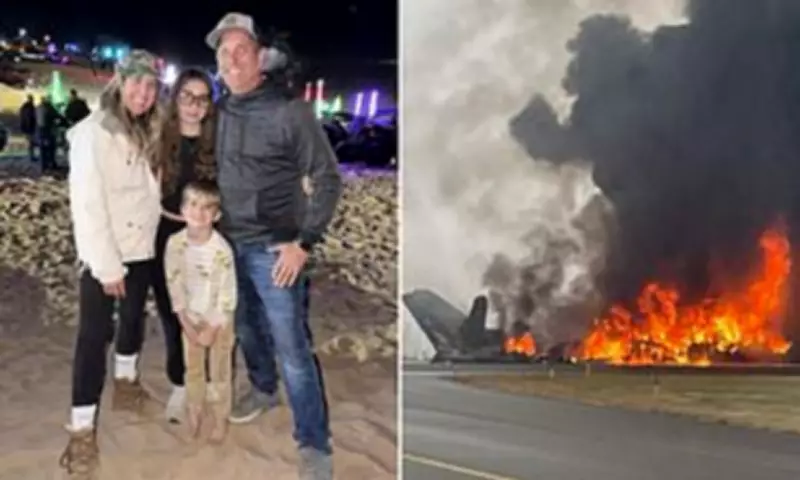
Federal safety investigators have confirmed that NASCAR legend Greg Biffle was not piloting his private jet when it crashed last month in a devastating accident that claimed seven lives, including his own. The National Transportation Safety Board's preliminary report provides crucial new details about the tragic incident that has shocked the motorsport community and aviation authorities alike.
Pilot Qualifications Under Scrutiny
The NTSB investigation has revealed significant questions about pilot qualifications aboard the ill-fated aircraft. While retired Delta pilot Dennis Dutton was at the controls as an experienced pilot, the report confirms that neither Greg Biffle nor Jack Dutton, who was seated in the copilot position, possessed the specific endorsement required on their pilot licenses to serve as copilot for that particular Cessna C550 aircraft. This regulatory detail has become a focal point of the ongoing investigation, though officials emphasize it remains unclear whether this factor contributed to the catastrophic outcome.
Instrument Failures Before and During Flight
According to the preliminary findings, multiple instrument failures plagued the aircraft from the outset. Before takeoff from Statesville Regional Airport, approximately 45 miles north of Charlotte, North Carolina, investigators confirmed that a thrust reverser indicator light was malfunctioning. Once airborne, more serious problems emerged as the pilot's altimeter and several other crucial instruments ceased functioning properly.

The cockpit voice recorder captured concerning conversations between the three licensed pilots aboard as they discussed the mounting technical issues. Jack Dutton's radio transmission declaring "we're having some problems here" provides chilling evidence of the developing emergency. The aircraft's flight path showed dramatic altitude fluctuations, soaring from 1,800 feet to 4,000 feet before descending rapidly to just a few hundred feet above ground level in its final moments.
The Tragic Human Toll
The crash claimed the lives of all seven people aboard, transforming the aircraft into a fireball upon impact about one-third of a mile from the runway at Statesville Regional Airport. Among the victims were Greg Biffle, his wife Cristina, their two children Ryder (5) and Emma (14), family friend Craig Wadsworth, pilot Dennis Dutton, and his son Jack Dutton. The tragedy has left the NASCAR community mourning one of its most accomplished drivers, who won more than 50 races across NASCAR's three circuits during his illustrious career.
In a particularly cruel twist following the aviation disaster, burglars targeted Biffle's mansion, stealing approximately $30,000 in cash, two handguns, valuable NASCAR memorabilia, and personal items. This secondary crime has compounded the grief surrounding the family's unimaginable loss.
Investigation Challenges and Community Response
NTSB investigators face significant challenges in determining the exact cause of the crash. The cockpit voice recorder experienced intermittent cutouts during the flight, limiting the available audio evidence. Technical experts have only recently begun the painstaking process of examining wreckage and analyzing flight data to understand what caused the instrument failures and subsequent crash.
Dennis Dutton's former neighbor, Jonathan Donahue, reported hearing "a large, loud pop, like something broke on the plane at takeoff" moments before the aircraft attempted its emergency return. Donahue emphasized Dutton's four decades of flying experience, suggesting mechanical failure rather than pilot error likely caused the catastrophe.
The NASCAR community has rallied in support, with hundreds gathering at a Charlotte arena earlier this month for a public memorial service honoring Biffle's legacy. The racing icon was recently recognized for his humanitarian efforts following Hurricane Helene, during which he used his personal helicopter to deliver aid to flooded areas of western North Carolina.

As the investigation continues, aviation safety experts note that the flight pattern was consistent with a crew experiencing serious technical problems and attempting an urgent return to the airport. The NTSB's full investigation is expected to take several months as specialists examine all aspects of the aircraft's maintenance, pilot qualifications, and the complex sequence of events that led to this devastating loss of life.