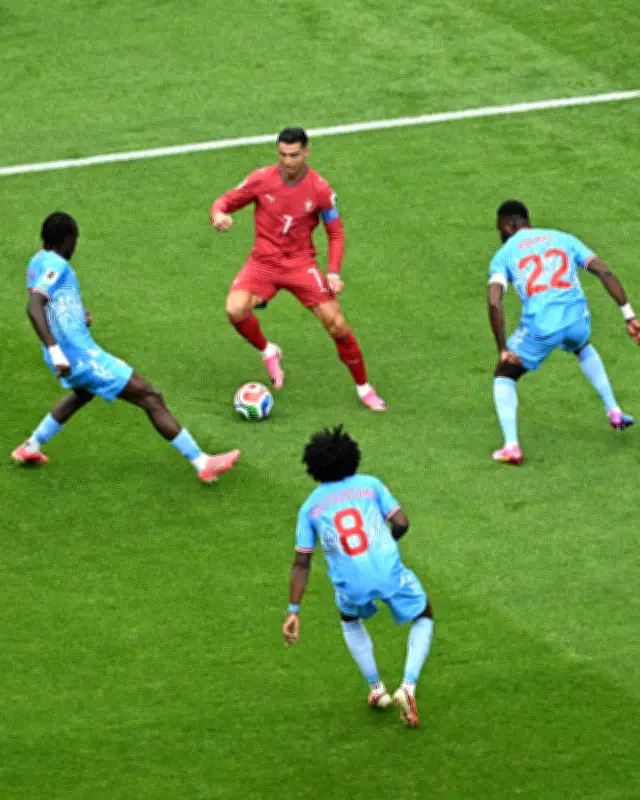
Cristiano Ronaldo, Serena Williams, and Lewis Hamilton are among the stars benefiting from advances in sports science, equipment, and facilities, allowing them to compete at elite levels into their 40s.
Growing Trend of Older Athletes
When 40-year-old Luka Modrić lined up for Croatia against England, he embodied a growing trend in elite sport. A generation ago, a footballer competing at the highest level at 40 would have been rare, but the 2026 World Cup features a record eight players aged at least 40. Lewis Hamilton is still racing in Formula One at 41, while Serena Williams, 44, and Venus Williams, 46, received a wildcard into Wimbledon women's doubles.
Across sports, careers that once seemed impossibly long are becoming common. But are athletes getting better with age, or have they just improved at managing aging?
Age Trends in Elite Sport
According to the Centre of Excellence in Population Ageing Research, elite athletes are getting older. Since 1992, the average age of Olympians has risen from 25 to 27. In football, the average age of top male players increased from 26 in 1990 to 27 in 2018, while for female players it rose from 23 to 26.
However, this doesn't mean athletes peak later; they remain competitive longer. Dr. Liam Anderson, an exercise physiologist at the University of Birmingham, said, “Athletes don’t stop aging. What sports science has done is help them slow the rate of decline and maximize what they have left. Combined with decades of experience and tactical understanding, we see athletes remain competitive much later.”
Physiological Changes with Age
Age affects almost every physiological system, but not equally. “Explosiveness deteriorates most,” said Dr. Paul Hough, a sport and exercise scientist at the University of Westminster. “In pure speed sports like 100 meters, veteran sprinters are rare. Footballers who rely on speed must modify their game or retire sooner.”
Maximal oxygen consumption, heart rate, and cardiac output fall, along with flexibility. Recovery slows and injuries take longer to heal. At the Tokyo Olympics, the average short-distance runner was 25, and swimmers averaged 22-23. Marathon runners were older: average age 30 for men and 31 for women, with oldest competitors at 44.
Experience Compensates for Physical Decline
Athletic performance isn't solely physiological. “Experience, tactical awareness, anticipation, decision-making, and emotional control often improve with age,” Anderson said. “These qualities can partially compensate for small physical declines.”
In technical, low-impact sports like sailing, shooting, and equestrianism, age can be a virtue. At Tokyo, the average equestrian was 39 for men and 36 for women.
Adaptation and Professionalization
Successful athletes adapt as they age. Cristiano Ronaldo started as a winger relying on speed but gradually became an out-and-out forward, reading the game better and making fewer sprints. Serena Williams returned to play doubles, which is more tactical and less physically demanding.
Modern athletes train, recover, eat, and sleep with unprecedented discipline. Financial incentives have changed dramatically; remaining competitive an extra two to three years can be worth millions.
Improvements in Environment and Equipment
Dr. Alex Ireland at Manchester Metropolitan University notes improvements in surfaces, clothing, and equipment. “Football pitches in the 70s and 80s were poor. Now even fifth division sides have carpet-like surfaces,” he said. Better surfaces reduce energy expenditure and injury risk. Advances in boots, balls, and other equipment also help.
Improved injury prevention and rehabilitation have extended careers. “A cruciate ligament injury would have been career-ending 25-30 years ago,” Ireland said. “Now it’s a six- to nine-month injury, and many players come back to excellent careers.”
Monitoring and Recovery
GPS trackers allow monitoring of training loads in detail, measuring sprints, accelerations, and decelerations. “If an older athlete has performed many explosive actions, they can back off training,” Hough said. Tools like ice baths, saunas, compression garments, and blood monitoring optimize recovery. “These are marginal gains,” said Dr. Tom Brownlee, “but worthwhile once sleep, nutrition, training, and recovery are mastered.”
Anderson argues that “the accumulation of many small improvements” has made the difference: better recovery, sophisticated load management, advances in rehabilitation, improved nutrition, and greater understanding of sleep.
Genetics, Resources, and Luck
Even these factors don't tell the whole story. Athletes like Ronaldo and the Williams sisters are exceptional. “They are among the very best ever,” said Prof. Joseph Baker. “That makes the explanation hard to decipher.” Genetics, access to resources, and financial incentives play roles. Luck also matters; some avoid serious injuries that derail rivals.
Lessons for the Average Person
For the rest of us, focusing on basics is key. “Eat plenty of fruit and vegetables, consume enough protein, and get adequate sleep,” Brownlee said. “Very few of us have those dialed.”
Adapt training with age. “People try to replicate training from their 20s, but the body can't recover as quickly,” Hough said. “Training more frequently but less intensively may be a solution.”
It's never too late to start. Ireland sees competitors in their 70s, 80s, and 90s at masters events. “Your body will adapt; it just takes longer,” he said.
Dr. Lorcan Daly notes that many age-related declines are due to inactivity. “What is often reversed through exercise is not aging but the consequences of physical inactivity,” he said. He cites French cyclist Robert Marchand, who improved his aerobic fitness and one-hour cycling record between ages 101 and 103.
Mindset matters. Baker found older masters athletes accept some decline but remain committed to training. “This engagement in hard work is a better predictor of performance maintenance than age,” he said.