Spanish Football Emerges as the Superior Model for Champions League Success
Spanish clubs have secured an impressive 24 titles across the three major European competitions this century, solidifying their status as the dominant force in continental football. This success is not merely a matter of chance but stems from a deeply ingrained tactical philosophy that prioritises ball-oriented defending, clearly defined positions, and organised combination play.
The Pitfalls of Man-Marking in Modern Football
In contrast, Germany has witnessed a resurgence of the retro tactical approach of man-marking, epitomised by Atalanta's Europa League victory in 2024. However, this method has proven ineffective against teams with superior individual quality, as demonstrated by Atalanta's crushing 10-2 aggregate defeat to Bayern Munich in the Champions League last 16. Such one-sided matches highlight the limitations of relying on one-on-one battles over 90 minutes.
Man-marking can only serve as a short-term surprise tactic, akin to handball strategies before the final whistle, rather than a sustainable match-long strategy. The vastness of a football pitch demands more cognitive engagement, where players must cooperate, orient themselves, and engage in one-on-one situations only when guided by team dynamics.
The Spanish Blueprint: A National Identity
Spain's approach has become a matter of national identity, with six different clubs sharing in their European successes. In comparison, the Bundesliga has produced only two title-winning clubs in the same period. La Liga has claimed the Champions League in seven of the past 12 years, and this season, it boasts the most quarter-finalists: Real Madrid, Barcelona, and Atlético Madrid.
While these teams may not be the outright favourites this year, the influence of Spanish coaching is pervasive. Managers like Mikel Arteta at Arsenal and Luis Enrique at PSG, both products of the Barcelona school and influenced by Pep Guardiola, embody this style with their own nuances. Spanish managers dominate Europe, with 11 in the last 16 of all three competitions this season, more than double the next highest country.
Spanish Managers Leading Innovation Across Europe
Time and again, Spanish coaches are making waves. Xabi Alonso ended Bayern Munich's dominance with Bayer Leverkusen, Unai Emery elevates second-tier clubs like Aston Villa, and Cesc Fàbregas is reshaping Italian football with Como in Serie A. Even Guardiola, after a brief dip in inspiration, is evolving his tactics at Manchester City with new player types, remaining competitive in domestic titles despite Champions League setbacks.
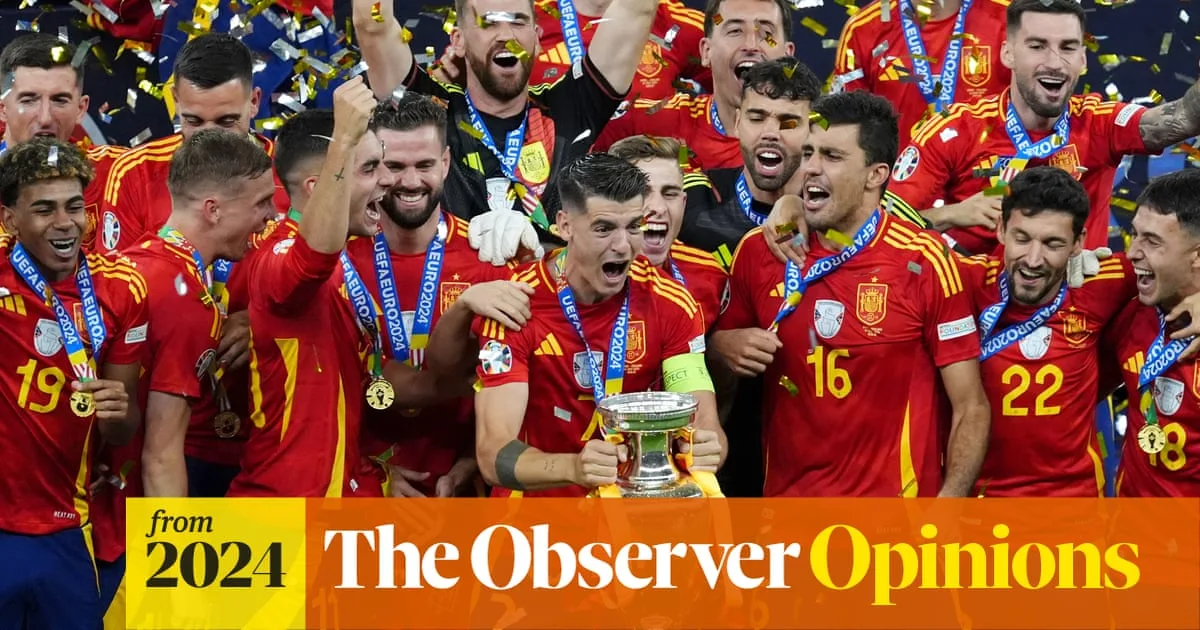
On the international stage, Luis de la Fuente has led Spain to European Championship success in 2024, marking three of the past five titles for the nation. This level of dominance surpasses even Germany's heyday in the 70s and 80s, positioning Spain as a top contender for the upcoming World Cup.
Italy's Decline and Germany's Warning
The Spanish school has effectively replaced the Italian model as the superior blueprint. Italy, while still producing coaches for the international market, struggles with a lack of intensity, commitment, and world-class players. This is evidenced by no Italian clubs in this year's Champions League quarter-finals and the national team's failure to qualify for the World Cup for the third consecutive time.
Germany risks a similar fate if it continues down the path of man-marking. Bundesliga defenders, including at Bayern Munich under Vincent Kompany, are increasingly adopting this approach. While it may yield short-term gains against unprepared opponents like PSG, it falters against well-prepared teams like Arsenal. Achieving a seamless switch from possession-based defence to man-marking without losing control remains an unattained goal, even for the best managers.
In summary, Spain's tactical superiority, backed by 24 European titles and a deep-rooted philosophy, sets the standard for success. As Germany and Italy grapple with outdated methods, the evidence is clear: embracing the Spanish model is key to competing at the highest level.