
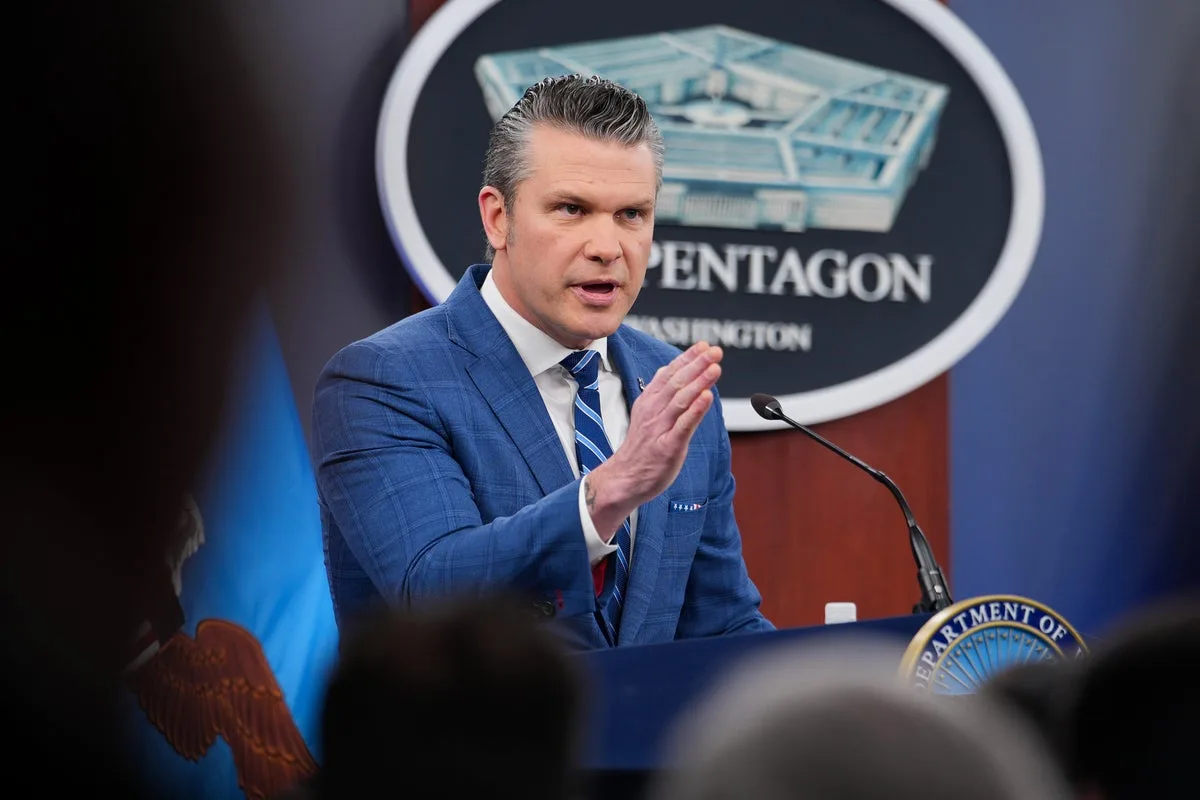
A federal judge has ruled that the Pentagon violated a court order by imposing a new policy requiring all reporters to be escorted inside the building, calling the move an unlawful attempt to circumvent an earlier decision that restored press access.
U.S. District Judge Paul Friedman sided with The New York Times, stating that the Defense Department's new escort rule was a deliberate evasion of his earlier ruling that the Pentagon's credential policy infringed on journalists' constitutional rights to free speech and due process. He wrote: 'The department simply cannot reinstate an unlawful policy under the guise of taking ‘new’ action and expect the court to look the other way.'
The judge had previously ordered the reinstatement of press credentials for seven Times reporters and clarified that his decision applied broadly to all regulated parties. The Pentagon's revised policy, introduced after that order, mandated that reporters be accompanied by a Pentagon official at all times while in the building.
Pentagon officials did not immediately respond to requests for comment. The Pentagon Press Association, which includes AP reporters, said the interim policy preserved provisions deemed unconstitutional and added new restrictions. Justice Department lawyers argued that the court should not expand its order to prevent the Pentagon from ever addressing security through credential policies.
Judge Friedman, nominated by President Bill Clinton, noted that recent U.S. military operations in Venezuela and Iran underscored the need for public access to information about government activities, stating the First Amendment principle that 'the nation's security requires a free press and an informed people'. He said the policy was clearly designed to weed out 'disfavoured journalists' and replace them with those willing to serve the administration.
The Pentagon has said it will appeal the March 20 ruling. The current press corps is mostly comprised of conservative outlets that agreed to the policy, while journalists from outlets like The Associated Press that refused to consent have continued reporting from outside the building.




