A new film dramatising the explosive rift that tore apart the Republic of Ireland's 2002 World Cup campaign has landed, but its meticulous attention to visual detail is undermined by significant factual liberties and a confused artistic purpose.
The Problem of Recreating Recent History
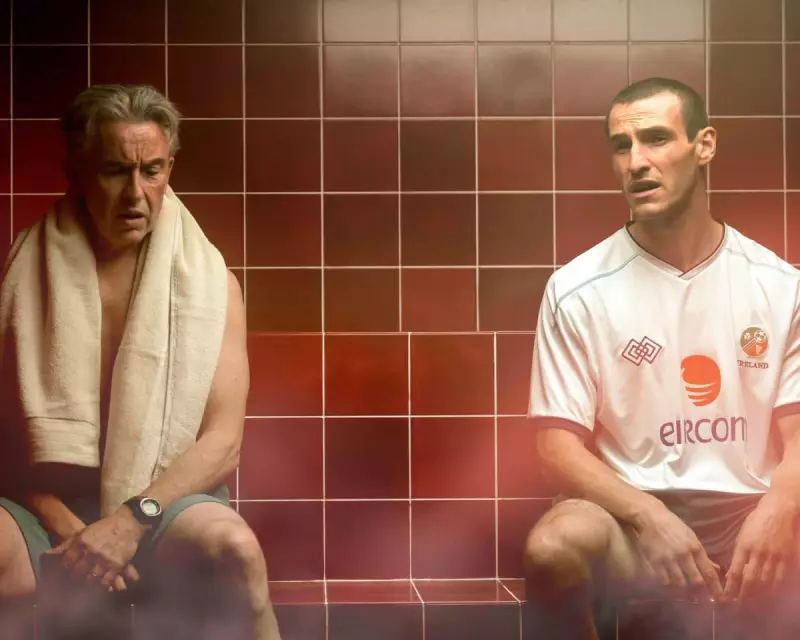
'Saipan', directed by Glenn Leyburn and Lisa Barros D'Sa, focuses on the catastrophic fallout between captain Roy Keane and manager Mick McCarthy on the Pacific island of Saipan just days before the tournament began. Released in Ireland on Boxing Day and set for a UK release on 23 January, the film painstakingly recreates the kits, tracksuits, and press conferences of the era. The accuracy is so precise that cuts between dramatised scenes and actual archival footage are often startling.
This faithful reproduction, however, begs a critical question: what is the point? When the original events were not only filmed but also specifically staged for cameras—like post-match press conferences—the value of seeing actor Steve Coogan impersonate McCarthy becomes unclear. The exercise seems particularly odd when the dramatisation introduces "grotesque inventions and inaccuracies" concerning the characters' motivations and the plot itself.
Artistic Licence Versus Factual Fidelity
The film's climactic scene is Keane's infamous "stick it up your bollocks" tirade delivered to McCarthy in a hotel restaurant. While accounts of the exact wording vary, all witnesses agree on one thing absent from the film: Keane did not attack McCarthy for being "insufficiently Irish." This invented angle is misleading. Nine players in that squad, including the two—Gary Breen and David Connolly—who supposedly sympathised with Keane afterwards, were born in England. Framing the dispute as an Anglo-Irish conflict is a lazy fabrication.
Further issues undermine the drama's credibility. The film shifts Keane's fury over the team being fed cheese sandwiches instead of proper pasta from a qualifier against the Netherlands to Saipan, a justifiable compression for narrative sake. Less defensible is the portrayal of Keane's explosive interview with the Irish Times. The film depicts it as a betrayal by a journalist who published prematurely, thereby lessening Keane's culpability. In reality, this did not happen.
Casting and Dynamic Alter the Core Conflict
The casting choices fundamentally change the nature of the confrontation. Steve Coogan, while adept as McCarthy, was 16 years older during filming than McCarthy was in 2002. He is also three inches shorter than his co-star Éanna Hardwicke, who plays Keane. In reality, McCarthy is three inches taller than Keane.
This flips the physical dynamic entirely. The real-life incident involved a 30-year-old player shouting at a physically imposing, older manager. On screen, it becomes a hyper-fit young athlete berating a shorter, significantly older man, making Keane's stance appear more like bullying than righteous indignation, regardless of his arguments.
The film's tone is uneven, veering from nuanced portrayal to broad comedy. McCarthy is shown doing odd jobs at home, while FAI executives and most players at the camp are depicted in "almost cartoonish shenanigans" and perpetually drunk. This sits awkwardly against the more serious attempt to understand Keane's driven personality, which the film ultimately fails to penetrate.
The most compelling moments come from the interspersed contemporary clips: the voices of RTÉ's Bill O'Herlihy and Eamon Dunphy, the crackly satellite phone reports, and the heated public phone-ins that reveal how the incident "split the nation." Yet the film offers little context for why it was so divisive—how Keane was seen by many as representing the new, ambitious Celtic Tiger Ireland, while McCarthy symbolised a lovable but shambolic past.
In the end, 'Saipan' feels like an aesthetic experiment in meticulous recreation, reminiscent of Gus Van Sant's shot-for-shot Psycho remake. But when the original events are so readily available on film, and when the dramatisation takes such questionable liberties with the truth, viewers are left wondering what the endeavour truly adds. The complex, fascinating reality of the Saipan incident, it seems, remains more compelling than this simplified, and at times inaccurate, dramatic version.