The new cinematic portrayal of one of football's most infamous fallouts has arrived with starkly contrasting performances that have divided opinion. Eanna Hardwicke's depiction of Roy Keane in the film Saipan, which chronicles the Republic of Ireland's turbulent preparation for the 2002 World Cup, has been described as nothing short of stunning. Meanwhile, Steve Coogan's representation of Keane's old adversary Mick McCarthy has been labelled as shameful and deliberately misleading.
A Story Retold With Artistic License
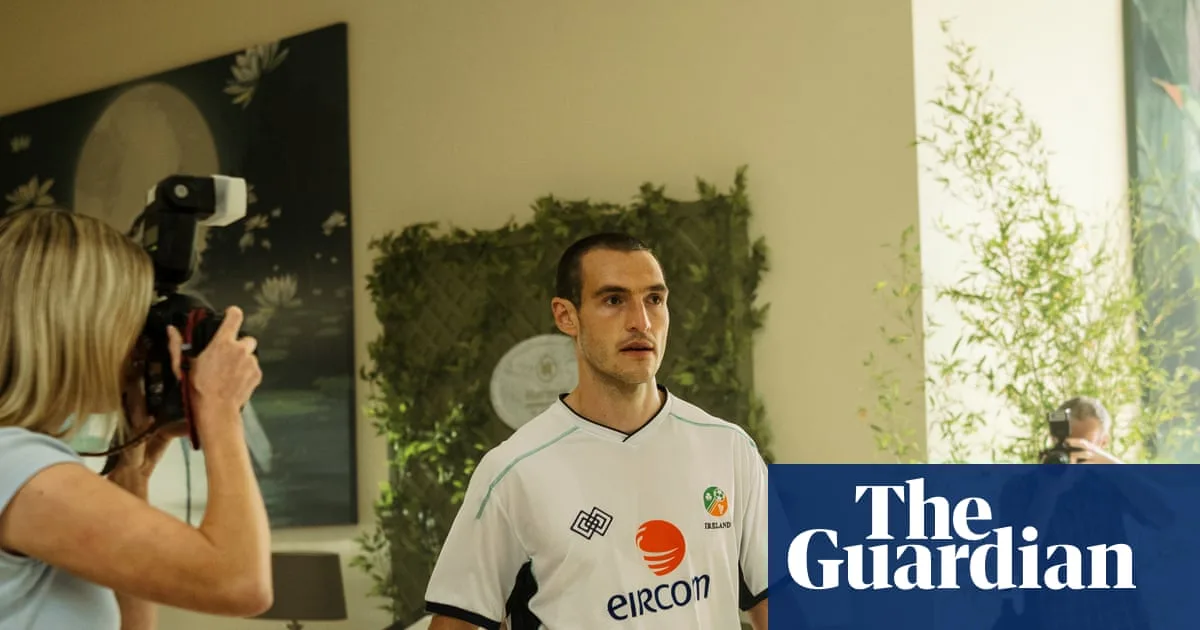
Almost twenty-four years have passed since Keane and his national team manager dramatically fell out during Ireland's pre-tournament training camp on the Pacific island of Saipan. The facilities were notoriously inadequate, with the squad arriving without even basic football equipment, prompting Keane's explosive criticism. After days of escalating drama, conflict and national angst, the captain famously flew home, creating a rift that would echo through Irish football history for decades.
When the film's directors approached McCarthy last year, the former manager acknowledged it was a story worth telling. Their response that every great narrative deserves retelling for new audiences held merit. However, the execution has proven controversial, with many questioning whether this particular retelling serves history or merely creates a new mythology.
Hardwicke's Uncanny Keane
Eanna Hardwicke captures Keane with such precision that it becomes vaguely chilling to witness. The actor manages to convey the legendary midfielder's characteristic darkness, the internal battles constantly raging beneath the surface, and the contradictions that made him both revered and feared throughout his career. Hardwicke brings to life the demanding elite athlete that Keane represented at his peak, though as history reminds us, this wasn't always his consistent persona.
The physicality and intensity Hardwicke brings to the role creates a compelling presence that dominates every scene he inhabits. This becomes particularly evident during the film's climactic confrontation, where the power dynamics are deliberately manipulated for dramatic effect.
Coogan's Problematic McCarthy
Conversely, Steve Coogan's portrayal of Barnsley-born McCarthy presents the manager as a hapless and hopeless chump, a caricature of fecklessness drowning in his own perceived inadequacies. The film depicts McCarthy and his players enjoying what appears to be a four-day stag party in the middle of the ocean, with the manager calling home at one point to discuss painting his garden fence posts duck egg blue upon his return.
The physical discrepancies between actor and subject have drawn particular criticism. McCarthy was forty-three during that early summer in Japan, while Coogan is sixty and appears every month of his age in the film. Furthermore, while McCarthy stands at six foot one inch compared to Keane's five foot eleven, the cinematic representation reverses this reality, with the player towering over his manager during their confrontations.
Creative Choices Versus Historical Accuracy
Saipan doesn't present itself as a documentary, positioning itself instead as entertainment with a degree of fun. However, the willful misrepresentation of McCarthy and certain events has struck many observers as unnecessary to the point of cruelty. Those closest to the sixty-six-year-old former manager have expressed deep unhappiness about how the film has turned out, with some players from that 2002 squad reportedly failing to recognise much of what they see on screen.
McCarthy himself maintained a characteristically philosophical approach when speaking to Coogan last year while on holiday in Portugal, joking that he was disappointed Brad Pitt hadn't been cast in the role. Yet beneath the humour lies a more serious concern about attention to basic detail and respect for historical truth.
The Aftermath and Reconciliation
The film's narrative conveniently overlooks Ireland's subsequent performance in the tournament. Without their captain, the team reached the last sixteen, losing to Spain only on penalties. This achievement raises questions about whether this was merely a fortunate fluke or evidence of a top-class manager who knew precisely what he was doing despite the turmoil.
McCarthy himself made peace with the saga years ago, demonstrating the mediation skills he believes define his character. A decade ago, he revealed how he proactively reached out to Keane before they were due to meet as opposing managers with Wolverhampton Wanderers and Sunderland respectively.
'I thought it was gonna be a circus,' McCarthy explained. 'So I decided to blow everybody out of the water. I rang him up and said: "Listen, we can either be part of the circus or we can get together and have a chat and shake hands privately. We will p*** on everybody's chips."'
The two men met in Cheshire for half an hour over a cup of tea, putting their differences behind them. 'Despite what people may think about me, I am a mediator,' McCarthy reflected. 'I like to make things right. I don't want anger and grudges and bitterness.'
A Lasting Legacy
Saipan will forever remain part of McCarthy's footballing story, and he insists he wouldn't change what happened. However, a man of demonstrated strength, character and confidence arguably deserves better than this strangely off-beam cinematic portrayal. The film raises important questions about where artistic license ends and historical misrepresentation begins, particularly when dealing with living figures and events still within living memory.
Perhaps the audiences who sit down to watch Saipan deserve better too – a more balanced exploration of complex personalities and a pivotal moment in Irish sporting history that acknowledges multiple perspectives rather than reducing them to simplistic caricatures.