Cristiano Ronaldo's Saudi Standoff Threatens His Football Legacy
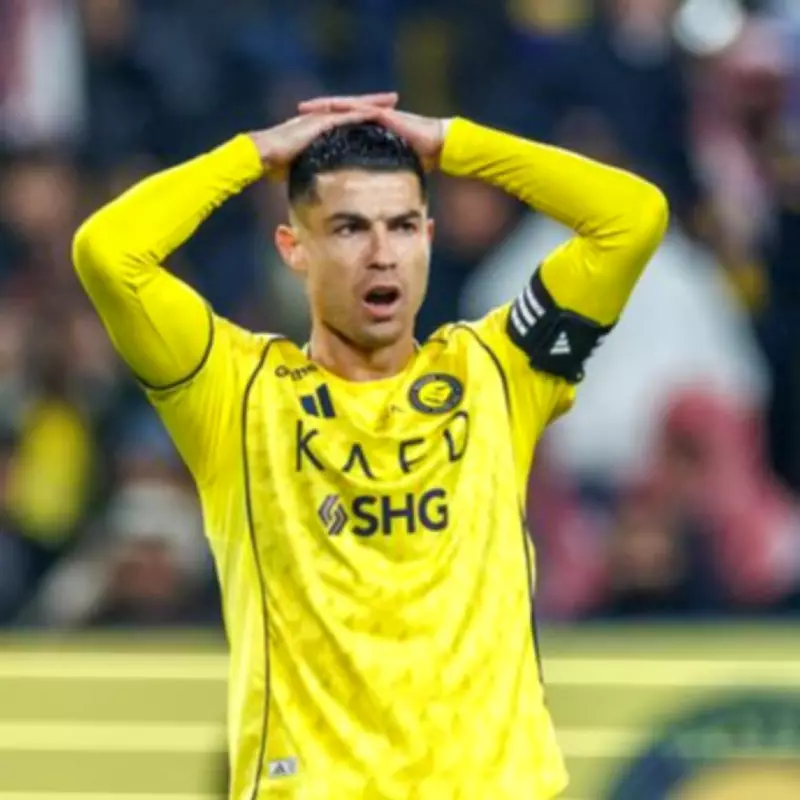
Cristiano Ronaldo, the five-time Ballon d'Or winner, is making a rare misjudgement that threatens to tarnish his own legacy through his ongoing strike action at Saudi Arabian club Al-Nassr. The Portuguese superstar sat out another Pro League match despite being fit to train with his team during the week, creating significant discontent among his employers in the Middle East.
A Legacy Beyond Statistics
For a footballer who has meticulously crafted his image throughout his career, Ronaldo's current actions represent a puzzling departure. While his pursuit of 1,000 career goals demonstrates his statistical ambitions, and his personal branding suggests individual focus, Ronaldo has consistently sought to be remembered as a team player. His unwavering devotion to Portugal's national team stands as testament to this aspect of his character.
Throughout his magnificent career, Ronaldo has maintained that a single-minded pursuit of personal excellence ultimately serves the team's interests. He has demonstrated that a player can exhibit petulance, display demonstrative celebrations, and occasionally throw tantrums while still contributing fundamentally to collective success.

The Saudi Standoff
Ronaldo's industrial action in Saudi Arabia marks a concerning low point in his illustrious career. His latest protest involved missing Al-Nassr's match against Al-Ittihad on Friday, despite being physically capable of playing. The political machinations behind his strike remain unclear, but the fundamental reality is stark: Ronaldo receives approximately £488,000 daily to perform for his team, and that performance can only occur on the pitch when he is fit to play.
From an external perspective, Ronaldo's actions appear particularly counterproductive given his stated goal of reaching 1,000 career goals. Currently standing at 961 goals, every missed match represents a lost opportunity to edge closer to this milestone. While his Al-Nassr contract reportedly contains a £43.5 million release clause, European clubs show little interest in investing such sums in a footballer in his forties.
Commercial and Sporting Consequences
The argument that Ronaldo's signature might justify such expenditure through commercial returns collapses when considering that a player's market value depends fundamentally on their presence on the field. At 41 years old, even Ronaldo's remarkable physical condition suggests limited remaining opportunities at elite levels. The Saudi Pro League arguably offers his best chance to reach the magical 1,000-goal mark through continued participation with Al-Nassr this season and next, supplemented by international appearances.
However, a recent statement from Saudi Pro League officials delivered an ominous warning: "Cristiano has been fully engaged with Al-Nassr since his arrival and has played an important role in the club's growth and ambition. Like any elite competitor, he wants to win. But no individual - however significant - determines decisions beyond their own club."
Undermining His Own Ambitions
Ironically, Ronaldo's strike action directly undermines his pursuit of 1,000 goals, as he cannot score while refusing to play. This cannot be interpreted as selfless behaviour; rather, it represents a rare misstep from a footballer who has generally navigated his career with strategic precision. By refusing to participate, Ronaldo undermines the very league he is being handsomely compensated to promote.
The situation presents a paradox: a player obsessed with his legacy is actively damaging it through actions that reduce his playing time, alienate his employers, and frustrate fans. As Ronaldo's career enters its twilight phase, these decisions will inevitably form part of how football history remembers one of the game's greatest talents.