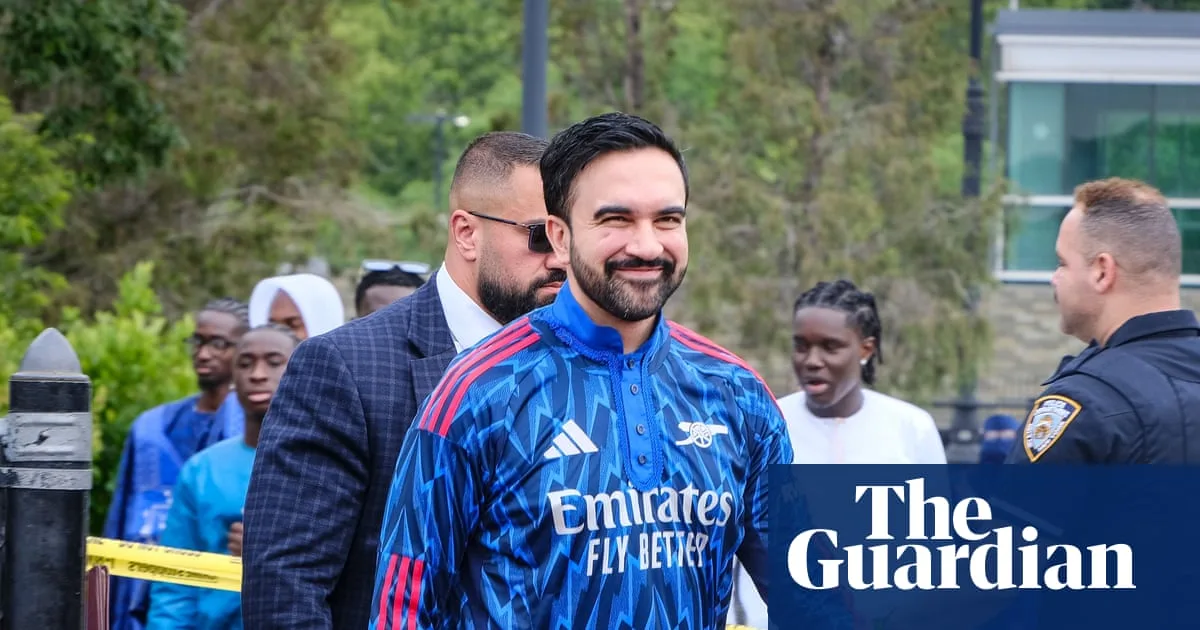
Zohran Mamdani, the New York mayor and avowed Arsenal fan, made headlines after wearing a custom-made kurta fashioned from the club’s 2025-26 away kit to attend Eid al-Adha prayers in the Bronx. The garment, supplied by Jason Andrew of the Brooklyn Invincibles supporters’ club, sparked widespread discussion across social media, illustrating how football fandom increasingly intersects with faith and cultural identity.
Andrew had just five days to create the bespoke item, a challenge exacerbated by a shortage of shirts following Arsenal’s Premier League title win. After sourcing the shirts through his contacts, he dispatched them to a longtime tailor, with his mother—the daughter of a seamstress—helping to explain the specifics. Mamdani, a vocal supporter who wore an Arsenal scarf at a press conference and received congratulations from former player Ian Wright upon becoming mayor, received mixed reactions online, from admiration to criticism.
Dr Fatima Rajina, a senior fellow at De Montfort University, suggested that some negative comments stem from Mamdani’s refusal to hide his faith in public office. “He’s the first Muslim mayor of the most multicultural city in the world,” she said. “He’s disrupting a lot of things, socially, culturally, politically.” Arsenal’s reputation as the Premier League club with the most diverse global fanbase aligns with Mamdani’s vision of an inclusive New York, as evidenced by videos of title celebrations from Uganda to north London.
Faris and Aaliyah Gohir, founders of Arsenal Muslim Gooners, described the image as powerful. “It brought faith, culture and football together in one image,” Faris said. Aaliyah noted that Arsenal-branded thobes and hijabs would be popular among female fans, adding: “A Muslim-inspired range would feel like a natural next step.” The club has previously engaged with diverse communities, such as Foday Dumbuya’s 2024-25 away shirt and a 2022-23 prematch jersey in Jamaican colours.
Andrew said Mamdani’s approach was on brand: “He’s like: ‘Hey, I’m a New Yorker. I wear Timberlands, I wear a Carhartt jacket.’ … The kurta embraces his fandom – we’re no different to him, and he’s no different to us.” The moment underscores how football’s reach extends beyond the pitch, embracing cultural expressions and challenging stereotypes.