The National Women's Soccer League (NWSL) has unveiled a radical new financial measure designed to combat the growing exodus of its biggest stars to European clubs. The league's governing body has introduced a 'High Impact Player Rule' that will permit teams to shatter their salary cap by up to $1 million specifically to attract and retain elite talent.
A Direct Response to Global Competition
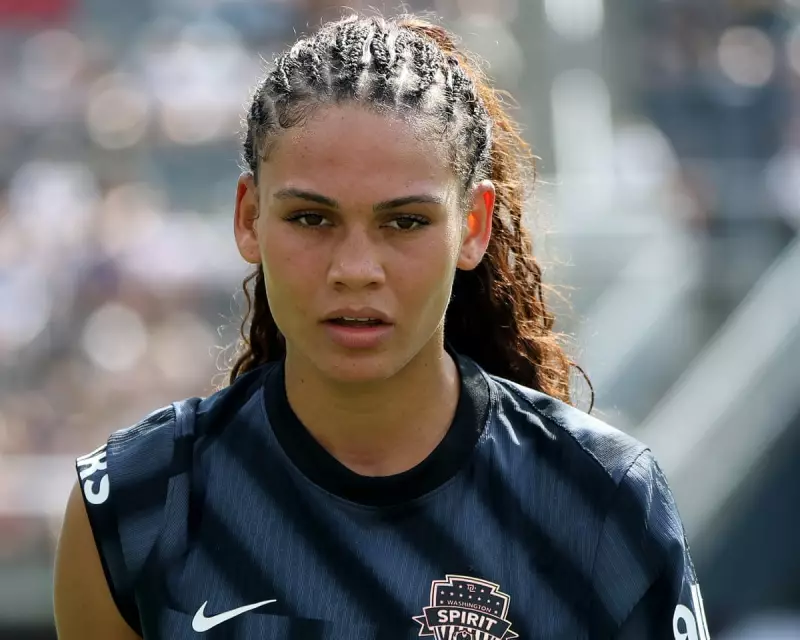
The rule, which is scheduled to take effect from 1 July 2026, is a direct counter to lucrative offers from abroad. One of the first players it aims to secure is Trinity Rodman, the dynamic Washington Spirit forward, who has been strongly linked with a big-money move to Europe. NWSL Commissioner Jessica Berman stated the move was critical for the league's growth, allowing for strategic investment in world-class players and demonstrating a commitment to building competitive rosters for fans.
This initiative is projected to increase league-wide spending by up to $16 million in 2026 alone, and a staggering $115 million over the current collective bargaining agreement period. The NWSL framed it as a necessary step to address an increasingly competitive global market while enabling clubs to invest more broadly across their squads.
Player Union Pushback and Proposed Criteria
However, the proposal has not been welcomed by the NWSL Players Association (NWSLPA). The union has firmly stated that changes to compensation are a mandatory subject of collective bargaining and cannot be imposed unilaterally. In a strongly-worded statement, the NWSLPA criticised the rule as an "arbitrary classification" and argued that fair pay should be negotiated, not dictated. The union has put forward its own alternative: a straightforward raise to the overall Team Salary Cap, coupled with a system for projecting future revenue sharing to allow for multi-year contracts.
Under the league's new framework, a player must meet specific sporting or commercial benchmarks to be designated a 'high-impact' star. The criteria include:
- Being ranked in the Top 40 of the Guardian's Top 100 players in the world within the previous two years.
- Featuring on SportsPro Media's list of the 150 most marketable athletes.
- Placing in the Top 30 in Ballon d'Or voting in the prior two years.
- Being a key fixture for the US women's national team, ranking in the top 11 for minutes played (field players) or first for goalkeepers over two calendar years.
- Being an NWSL MVP finalist or a member of the league's Best XI first team in the last two seasons.
Financial Mechanics and Future Implications
The $1 million allowance can be applied to a single marquee signing or split among several qualifying players. Importantly, the cap charge for any designated high-impact player(s) must be a minimum of 12% of the base salary cap. The threshold itself will increase annually in line with the league's standard cap adjustments. This comes after the NWSL salary cap for 2025 was set at $3.5 million following revenue-sharing adjustments.
This bold strategic play by the NWSL highlights the intense financial pressures in modern women's football. While the league aims to solidify its status as a premier destination by financially empowering its clubs, the significant resistance from the players' union sets the stage for a crucial period of negotiation. The outcome will profoundly influence whether stars like Trinity Rodman see their future in the United States or seek their fortunes overseas.