New Film Reveals Hidden Twist in Ireland's Most Infamous Football Controversy
The cinematic dramatisation of Roy Keane's dramatic departure from Ireland's 2002 World Cup squad has uncovered a previously undisclosed detail that may fundamentally alter perceptions of one of Irish sport's most divisive episodes. While the film 'Saipan' explores the well-documented enmity between Manchester United's star captain and manager Mick McCarthy, it introduces a revelatory twist that remained hidden for over two decades.
The Phone Call That Could Have Changed Everything
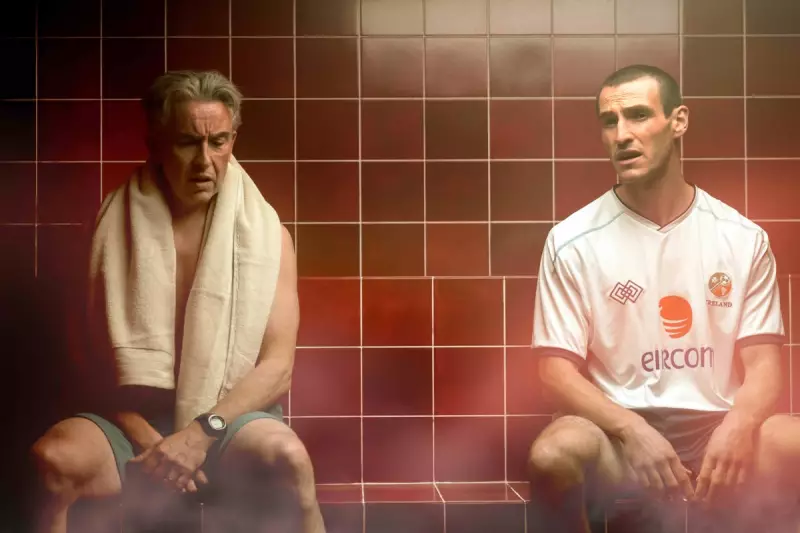
At the film's climax, as Ireland descended into what co-director Glenn Leyburn describes as "a fever dream" of national anxiety, the script reveals McCarthy actually telephoned Keane with a direct question: "Do you want to play?" This disclosure came from McCarthy himself during consultations with actor Steve Coogan, who portrays the manager in the film.
Scriptwriter Paul Fraser explains the significance: "Mick told Steve about what happens at the very end of the film, that he rang him up. I don't think Mick has ever declared that publicly before. That was a very last-minute addition to the script, but I thought 'I've got to put that in because that's important.'"

The revelation carries enormous weight given Ireland's collective obsession with getting the two men communicating during the crisis. Keane's departure, triggered by a row about inadequate preparation at the Pacific island training base, became what many described as the nation's "Princess Diana moment" - an event that transcended sport to become cultural trauma.
Absurdity and Tragedy Intertwined
The film captures both the surreal absurdity and profound tragedy of the situation. Co-director Lisa Barros D'Sa notes the "heightened tone" reflects how "Ireland stepped into Saipan and through the looking glass, to confront a perhaps distorted, exaggerated, but ultimately revelatory version of itself."
Leyburn points to the inherent ridiculousness: "If you look at broad strokes, the team goes to an island that took them 24 hours to get to, three different flights, and there's no football pitch there and no balls. That is absurd."
Yet beneath the comedy lies genuine tragedy. Fraser views the story as "two impossibly complicated egos unwilling to step down and look at the consequences." Many Irish fans still believe a peak-form Keane could have driven a talented squad to the World Cup final in a tournament characterised by upsets, making the penalty shootout elimination by Spain particularly painful.
Irish Identity and Professional Principles
At its core, the Saipan controversy explores two fundamental themes: standing by principles and evolving Irish identity. The clash represented a collision between what Barros D'Sa describes as "a more haphazard old Ireland, happy to be there, and Keane's modern ultra-professionalism."
The film also examines the complex relationship with the Irish diaspora in Britain, touching on the "plastic Paddies" label attached to Ireland's teams of that era. This context informs one of the film's most controversial elements - the heated argument where Keane allegedly questioned McCarthy's Irishness.
While former players present during the actual confrontation deny Keane used the exact phrase "English c**t" or directly challenged McCarthy's Irish identity, the filmmakers explain their dramatic rationale. "The story needs to build to this argument," Fraser states. "When you're writing a scene with an escalating argument, you've got to get to that point where you go 'oh f**k, you're not coming back from this.'"
Memory, Fiction and Historical Truth
The creative team immersed themselves in extensive research, consuming hours of hysterical radio debates and contemporary media coverage. Barros D'Sa spent considerable time listening to archival recordings where Keane biographer Eamon Dunphy emerged as a central character in the national drama.
Leyburn observes the fallibility of collective memory: "There's no point in the film where it actually says that [Keane called McCarthy an 'English c**t']. It says 'useless c**t.' It goes to show the fallibility of memory!"

Despite fictional elements, the filmmakers maintained crucial boundaries. Fraser emphasises: "It's a work of fiction, but based on some kind of given truth. It's not like 'Inglourious Basterds' - there's never going to be a version of this where Roy stays and Ireland beat Spain."
The film ultimately presents Saipan as what Barros D'Sa calls "a shipwreck story," with the island itself becoming a character that trapped both men in an inescapable conflict. As Ireland prepares to revisit this seminal moment through cinematic lens, the newly revealed phone call adds another layer to a story that continues to fascinate and divide the nation.