The National Collegiate Athletic Association (NCAA) has issued a clarification on its eligibility rules concerning players with NBA contracts, following a controversial midseason signing by Baylor University that has sent shockwaves through college basketball.
The Baylor Signing That Sparked Debate
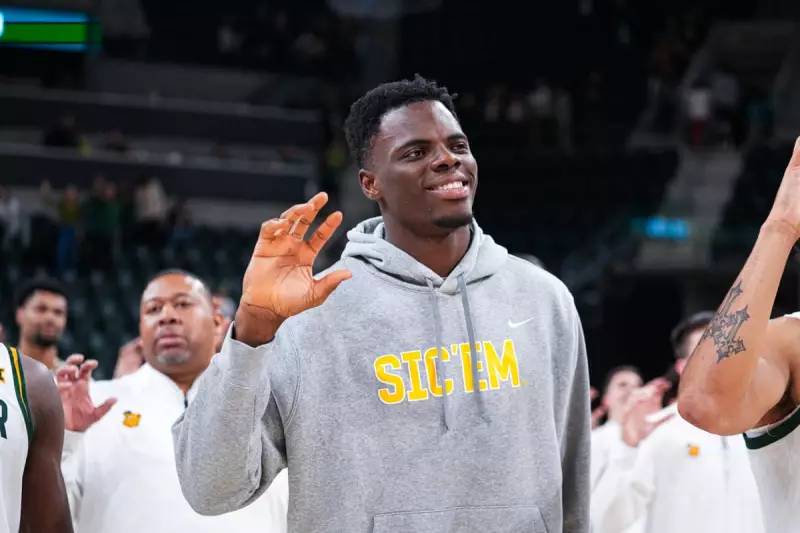
On Christmas Eve, the Baylor Bears announced the addition of 7ft Nigerian centre James Nnaji, a move that immediately drew criticism from rival coaches. Nnaji, 21, was selected as the 31st overall pick by the Detroit Pistons in the 2023 NBA draft. His draft rights have since been traded to Boston, Charlotte, and most recently the New York Knicks in October 2024. Despite being drafted, Nnaji has never been on an active NBA roster and was playing professionally in Europe prior to his move to Waco, Texas. He could make his debut for Baylor in their Big 12 conference opener against TCU this Saturday.
The crux of the controversy lies in the perceived inconsistency of NCAA rules. While American players who declare for the draft and sign with an NBA team are typically rendered ineligible for college sports, international players with professional experience have been permitted to compete in the NCAA for years.
NCAA's Statement and Coaching Backlash
In a statement released on Tuesday, the NCAA sought to draw a line. It stated that players would not be eligible if they had signed a standard NBA contract or a two-way deal with a G League affiliate. However, it indicated this would not automatically apply to players from the G League without NBA deals, or from other professional leagues globally.
NCAA President Charlie Baker explained the association is "exercising discretion" to ensure prospective student-athletes from American leagues are not disadvantaged compared to international counterparts. He cited that rules have long allowed schools to enrol players with no prior college experience midyear.
This justification did little to placate high-profile critics. Arkansas coach John Calipari voiced a common frustration, stating, "If you put your name in the draft – I don't care if you're from Russia – and you stay in the draft, you can't play college basketball. Well, that's only for American kids." He argued for a clear, universal rule disqualifying any drafted player.
A Shifting Landscape and Legal Challenges
Baylor coach Scott Drew defended the recruitment, pointing to other undrafted international players currently in college basketball and the precedent of teams adding players from the NBA's G League. He highlighted the current lack of enforceable, agreed-upon rules in the era of Name, Image and Likeness (NIL) payments. "Until we get to collective bargaining, I don't think we can come up with rules that are agreeable or enforceable," Drew said.
The NCAA itself acknowledged that its ability to enforce long-standing rules is being undermined by legal challenges. Baker's statement referenced recent court rulings that have enjoined the NCAA from enforcing eligibility standards "without even having a trial," calling them "wildly destabilizing." This legal pressure was underscored when attorneys for Vanderbilt quarterback Diego Pavia, who is suing for more eligibility, cited Baylor's signing of Nnaji to bolster their case.
Baker concluded by vowing to work with Division I leaders in the coming weeks "to protect college basketball from these misguided attempts to destroy this American institution," signalling that further clarifications or rule changes may be on the horizon as the line between amateur and professional sports continues to blur.