Liverpool Sporting Director Breaks Silence on Slot Relationship and Transfer Vow
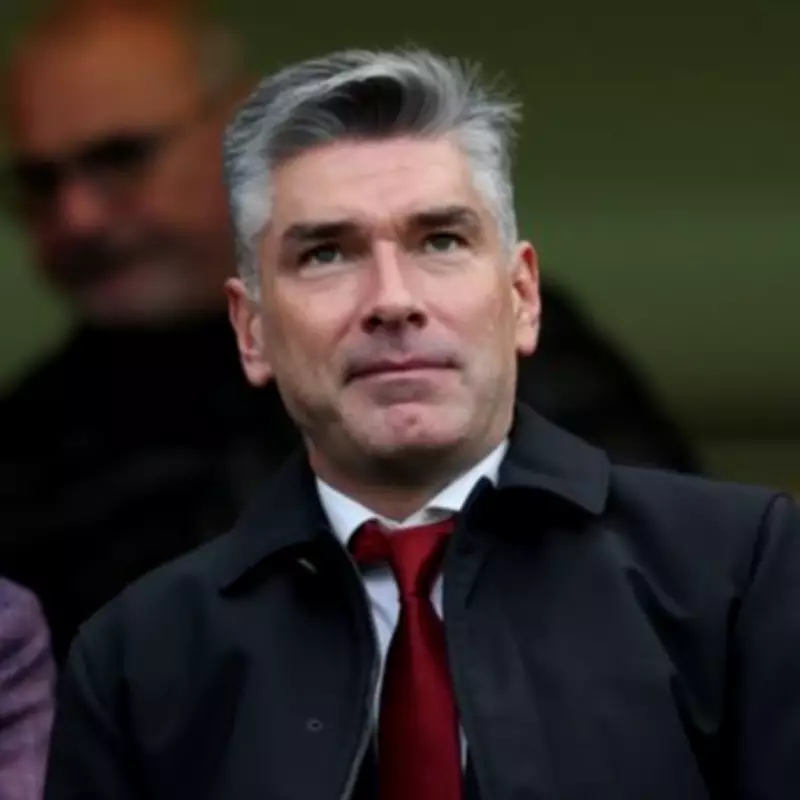
Liverpool sporting director Richard Hughes has broken his customary silence to speak candidly about his partnership with manager Arne Slot and the club's ambitious transfer strategy. The 46-year-old executive, who arrived at Anfield alongside Slot in the summer of 2024, gave a rare interview following the closure of the January transfer window, offering insight into their collaborative approach and defending the Reds' substantial investment in new talent.
Defining Roles and Building Trust
Hughes was emphatic about maintaining clear boundaries between his role and Slot's managerial responsibilities. "Fundamentally, there's the understanding for both parties and everyone at large, that everything involving matchday, team selection, tactics, that's always the manager or head coach. That's their domain," Hughes explained. "It's very important not to step into that."
He elaborated on their communication style, noting that while football discussions are frequent, he allows Slot to lead those conversations. "Of course we talk about football and performances but I always let Arne lead that. Naturally in a conversation I will come up with an opinion and not just react to Arne's, but always waiting for the right time to share these things is critical," Hughes stated.

Slot's Perspective on the Partnership
Speaking on the same episode of The Reds Roundtable podcast, alongside CEO Billy Hogan, Arne Slot praised Hughes's supportive yet unobtrusive approach. "What I really like about working with a sporting director is that whenever I need him, he is there for me. But you don't constantly feel that all the decisions you are making, he is judging them," Slot revealed.
The Dutch manager highlighted Hughes's unique focus on the club's overall success rather than personal accolades for his signings. "I've worked with sporting directors who are very keen on the ones they have signed and what makes Richard special is that he's not only focused on the ones he signed, he is there for Liverpool to win and not just for his signings to do well. That's something you don't always see with sporting directors. It's safe to say he has a low ego," Slot added.
Defending Record-Breaking Transfer Business
Hughes also addressed Liverpool's significant transfer activity, which saw the club spend a record-breaking £449 million on new signings this season while recouping approximately half that amount through player sales. Despite the Reds currently sitting sixth in the Premier League table and facing scrutiny over their title defence, Hughes remains convinced their investments will yield results.
He emphasised the need for patience with high-profile acquisitions like £116 million signing Florian Wirtz, who has recently begun to show his quality. "You have to constantly try to help people off the pitch in their adaptation," Hughes noted. "It's normal to expect that young people coming from another country would take time to adjust to their surroundings, a different type of football than they may have been used to."
A Collective Approach to Player Development
The sporting director stressed that Liverpool's transfer strategy is a collective effort focused on long-term success rather than immediate individual performances. "Whether they are good, bad or indifferent in terms of signings, there's no proprietary felt in my position, it's a collective effort that helps these boys translate their form for which they have been brought to the club and be the best version of themselves," Hughes asserted.
He concluded with a reminder that the team's success depends on integrating new arrivals with established players. "It's a team sport and just because new people are coming in you can't just suddenly leave the players who have been here for a number of years or Federico Chiesa, who has only been here for one year," Hughes said, underscoring the importance of squad cohesion.