Iranian American Soccer Fans Torn Over World Cup Support Amid Political Turmoil
Many Iranian soccer fans residing in the United States are experiencing profound internal conflict regarding their support for the national team as the World Cup approaches. This division stems from the complex interplay of sports, politics, and personal identity within the diaspora community.
A Dream Dashed by Silence
Arad Ershad, a graduate student in New York who was raised in Tehran, once harbored ambitions of spending lavishly on travel and tickets to witness Iran compete on football's grandest stage. However, his fervor has significantly diminished after observing many of his childhood idols among the players maintain silence during the theocratic leadership's lethal suppression of protesters in January.
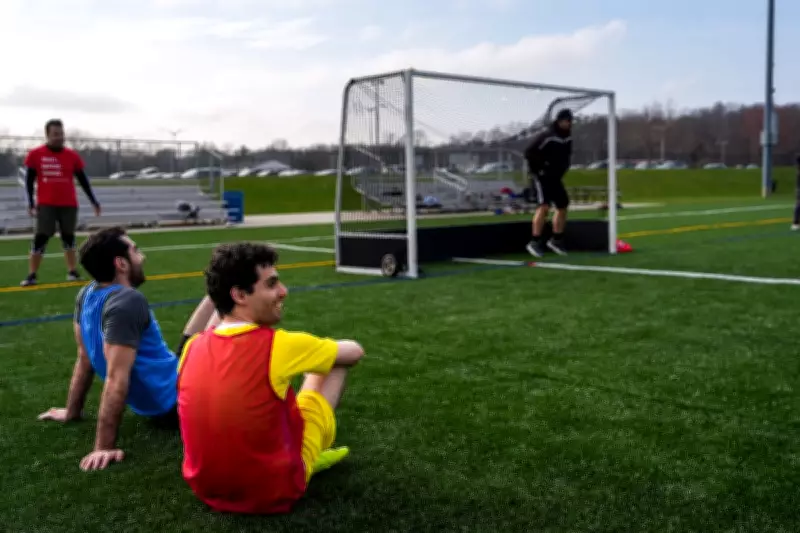
"It feels so terrible that I do not desire their success. They were my icons, my legends," he expressed with regret during a recent casual soccer match on Long Island. "I understand that participating in a World Cup represents the pinnacle of a soccer player's career, but how can one simply remain mute?"

A Diaspora Deeply Divided
Ershad's mixed emotions resonate widely across the Iranian diaspora as Team Melli, the affectionate Persian moniker for Iran's national squad, gears up for its seventh World Cup appearance. The team is slated to commence its campaign against New Zealand on June 15th near Los Angeles, a city hosting the largest Iranian community outside Iran, including numerous individuals who escaped the 1979 Islamic Revolution.
The diaspora community is sharply fragmented. Some perceive the men's team as accomplices in glossing over the Iranian government's oppressive actions and vow to boycott the tournament entirely. Others intend to attend Iran's matches to demonstrate their affection for the nation and the sport, yet plan to display protest signs prominently. A further contingent insists on separating politics from athletics, aiming to purely relish watching Iran compete on soccer's most prestigious platform.
Political Entanglements and Participation Uncertainties
This participation, however, faces significant uncertainty. Iranian officials have expressed doubts about the team's involvement due to the country's ongoing conflicts with the United States and Israel. Iranian football authorities recently convened with the head of FIFA, international football's governing body, who has emphatically insisted that Iran adhere to the predetermined schedule.
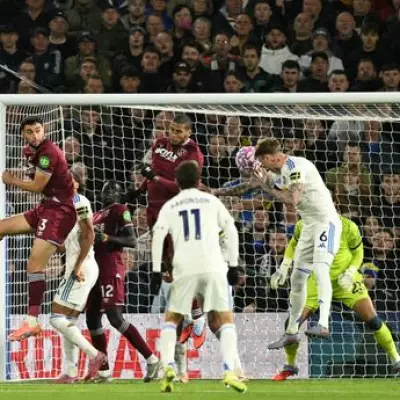
The Iranian team recurrently finds itself ensnared in political controversies. Prior to a recent match in Turkey, players carried small backpacks commemorating Iranian children killed in a US missile strike on an elementary school—a gesture many Iranian American fans interpreted as alignment with the government and evidence of the political pressures imposed upon the athletes.
Severe Repercussions for Dissent
Iranian athletes have confronted severe consequences for voicing dissent. In 2022, a distinguished former national team member was arrested for allegedly protesting against the country's leadership. This year, star striker Sardar Azmoun was reportedly omitted from World Cup warm-up games due to a social media post that provoked governmental ire.
Concerns Over World Cup Attendance
Nader Adeli, who manages the over-60 squad of the Iranian American club team Arya FC in Los Angeles, worries that the persistent warfare might obstruct Iran's World Cup participation. Last month, US President Donald Trump advised against the Iranian team's attendance, citing safety apprehensions. In retaliation, Iran petitioned to relocate its matches to Mexico, a co-host of the event alongside the US and Canada, though FIFA's chief has consistently rebuffed such proposals.

Adeli, unsuccessful in the ticket lottery for Iran's two Los Angeles-area matches, contends that the World Cup should be an occasion to savor the sport devoid of external disruptions. Nevertheless, with war raging, he is skeptical about the team's travel plans, and even if they do journey, he questions whether the players could concentrate fully on competition. "Sports should never transform into a political issue," he asserted. "As individuals, we harbor no animosity toward any Americans or Iranians. It is solely the governments."
Former Women's Player Advocates Boycott
Shiva Amini, a former women's national team player now residing in New York City, is among the Iranian expatriates urging the Trump administration to deny visas to the men's team for the World Cup. The 36-year-old, who departed Iran in 2017 after being photographed without a headscarf in Europe, stated that many Iranians became disenchanted with the men's squad during the 2022 World Cup.
Players remained silent as Iran was convulsed by street demonstrations protesting the country's mandatory headscarf laws following Mahsa Amini's death. "They possessed a substantial platform, and instead of addressing that, they were laughing, they appeared so joyous, and it was genuinely a slap in the face," she recounted. "Thus, those are not the Iranian national soccer team. Those are the regime's national soccer team." Amini recognized that the few players who did speak out paid a heavy price, including Amir Nasr-Azadani, who confronts years of imprisonment for his involvement in the 2022 protests.
Plans to Cheer and Protest Simultaneously
Masoud Ahmadi, a 62-year-old interior designer who plays for another predominantly Iranian American over-60 club team, Sina FC, is endeavoring to secure a ticket to watch Iran play. If successful, he intends to protest against the Iranian leadership by brandishing the country's lion-and-sun flag, which predates the Islamic Revolution.
Ahmadi, detained in Iran as a teenager before fleeing to Turkey and obtaining political asylum in the US, declared: "We will unequivocally raise our voices. This team is not an Iranian people's team. This is a government team."
Sasan Sadri, who manages Ahmadi's team, mentioned that if he acquires a ticket, he will attempt to wear a shirt advocating for leadership change in Iran. "As my compatriots, I wish for them to succeed," he said. "I do not support the regime, but soccer is soccer."
Conditional Support and Alternative Allegiances
As for Ershad, the New York graduate student, he plans to support the Iranian team only if the government is overthrown before the tournament commences. Otherwise, he will rally behind Cristiano Ronaldo's side to claim victory. "It is exceedingly difficult not to cheer for your national team, but let's go Portugal," he concluded, encapsulating the poignant dilemma faced by many in the diaspora.