Iranian Footballers Stage Silent Protest Over School Attack Casualties
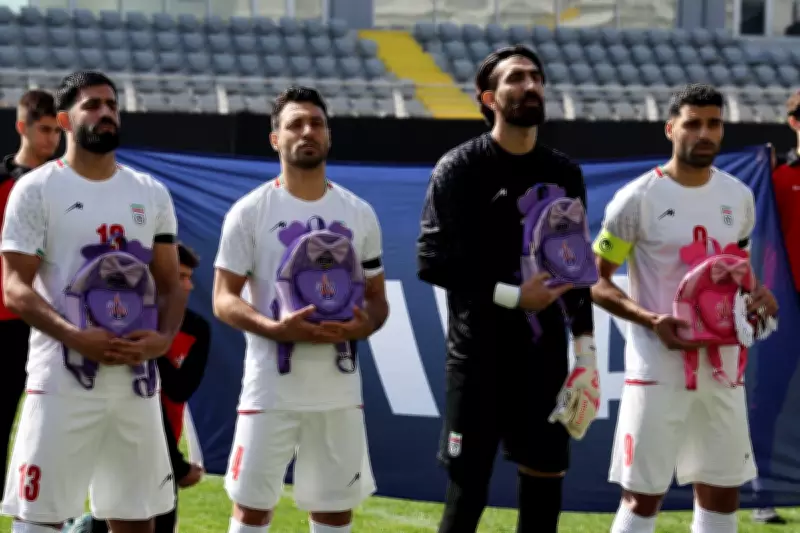
In a powerful and sombre display of solidarity, the Iranian men's national football team conducted a silent protest before their friendly match against Nigeria on Friday. The players, wearing black armbands, held pink and purple schoolbags adorned with ribbons close to their hearts as the national anthem played. This poignant gesture was a direct reference to the tragic attack on the Shajareh Tayyebeh School in Iran, which occurred on the first day of the conflict last month.
A Memorial for the Innocent Victims
A media official for the Iranian team explicitly stated to Reuters that the action was "in remembrance of the 165 girls the Americans killed in an Iranian school." According to Tehran, the joint US-Israeli strikes on 28 February resulted in the deaths of more than 175 people, including numerous children and teachers. The visual symbolism of the schoolbags served as a stark reminder of the young lives lost and the profound impact of the ongoing hostilities.
While US military investigators have acknowledged that American forces were likely responsible for the strike, a final conclusion has not been reached, and the investigation remains ongoing. This uncertainty has done little to quell the grief and anger within Iran, sentiments vividly expressed through the football team's demonstration.

Broader Context of Sporting Protests and World Cup Uncertainty
This protest follows a similar act of defiance earlier this month, where some members of Iran's women's soccer team remained silent during the national anthem at an Asian Cup match. That act led state television in Tehran to brand those players as "traitors," highlighting the tense political climate surrounding national symbols.
The men's team staged their protest in Belek, Turkey, during a preparatory friendly ahead of this summer's FIFA World Cup, jointly hosted by the United States, Mexico, and Canada. Iran's participation in the tournament is now shrouded in significant doubt due to the escalating conflict that began at the end of February.
US President Donald Trump commented earlier this month, stating that while Iran's national team was welcome to play in the US, it might not be appropriate for their "life and safety." In response, Iran's football federation has entered into discussions with FIFA, football's world governing body, about the possibility of relocating their World Cup matches from the United States to Mexico.
FIFA has indicated, however, that its current position is for Iran to play their scheduled matches in the US as originally planned. This adds another layer of complexity to an already fraught situation, with the team's presence on the world stage hanging in the balance.
Continuing Preparations Amidst Turmoil
Despite the geopolitical tensions and the emotional weight of their protest, the Iranian squad continues its World Cup preparations. The team is scheduled to play another friendly match against Costa Rica on Tuesday, also in Turkey. These matches are crucial for team cohesion and tactical development, yet they are now overshadowed by the profound political statements made off the pitch.
The players' decision to use an international sporting platform to highlight a national tragedy underscores the deep intersection of sport, politics, and human rights. It serves as a reminder that the beautiful game is often played against a backdrop of real-world conflict and suffering, with athletes sometimes choosing to become voices for the voiceless.