In the world of soccer, contradictions and evolving narratives define the landscape, with Graham Ruthven addressing three pressing questions that capture the sport's current complexities.
Gio Reyna: Mauricio Pochettino's Great Contradiction
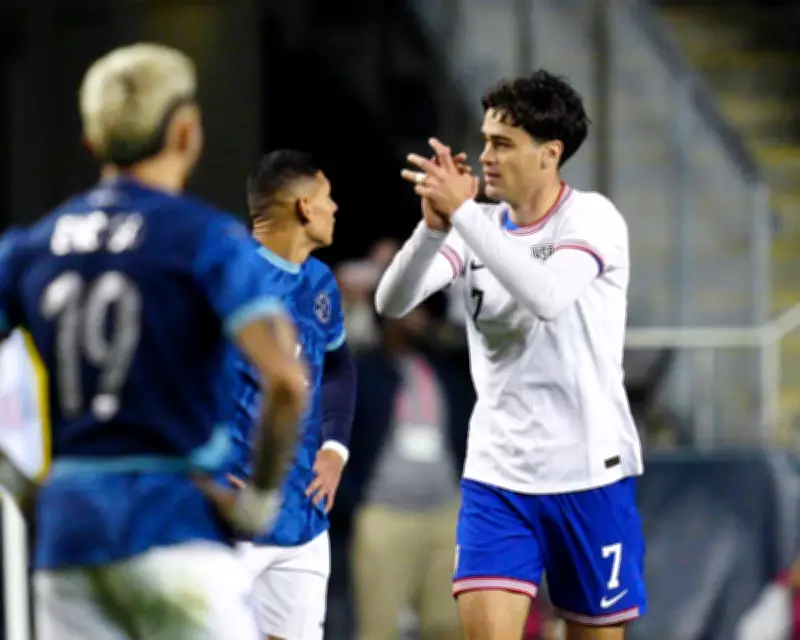
Gio Reyna has played a mere twenty-six minutes in 2026, with no appearances for Borussia Mönchengladbach in the last two months. For most players, such limited club action would exclude them from national team selection, especially under US manager Mauricio Pochettino, who emphasizes club form. However, Reyna is not any ordinary player.
Despite his lack of minutes, Reyna remains the United States' most naturally gifted creative talent. Injuries have impacted his physical readiness, but his presence offers the USMNT a unique dimension otherwise absent. This was evident in November's matches against Paraguay and Uruguay, where Reyna, despite minimal club play, contributed a goal and an assist.

Reyna embodies Pochettino's contradiction—a player granted an exception. Some argue he threatens the cultural reset initiated after the last World Cup, where attitude and training issues limited his role and sparked controversy. The baggage from Qatar lingers, with critics questioning his merit for another chance.
Yet, Pochettino remains unconvinced by these doubts. "I think we really know that he's a very special talent and a very special player," Pochettino stated. "And I think to give the possibility, even if it's not playing too much in his club, it can be very useful for us." While Gladbach may overlook Reyna's potential, Pochettino's faith underscores his pivotal role in the USMNT's strategy.
World Cup Playoffs: A Welcome Distraction Amid Geopolitical Chaos?
The intercontinental playoffs for the World Cup have become entangled with global turmoil, raising questions about their role as a diversion. Iraq arrived in Mexico over a week early for their playoff against Bolivia or Suriname, a precautionary move given travel difficulties from the Middle East. Meanwhile, war in Iran casts uncertainty over their participation, potentially opening a spot for Iraq if FIFA intervenes.
Geopolitics further complicate matters, as cartel violence in Mexico recently threatened the playoff host's stability. Soccer, in this context, offers a fleeting escape. Nations like New Caledonia and Suriname aim for their first World Cup qualification, while Bolivia, DR Congo, Jamaica, and Iraq seek to end decades-long absences. The potential for euphoric celebrations provides a glimmer of joy amid chaos.
However, this backdrop highlights the farcical nature of the qualifiers, where sport and strife intertwine unpredictably.
Arsenal's Evolution: What Mikel Arteta Must Address
Arsenal's Carabao Cup final loss to Manchester City exposed critical flaws in Mikel Arteta's squad. Expected to showcase progress, Arsenal instead faltered in a 2-0 defeat, reinforcing concerns about their performance in high-stakes matches. Absences of creative midfielders like Eberechi Eze or Martin Ødegaard left Arsenal struggling in half-spaces and build-up play.
Statistical weaknesses underscore this issue. Arsenal rank only fourth in the Premier League for expected goals this season, with even Brentford creating more big chances. Their strength lies in defence and set pieces, metrics that have propelled them to the top of the table and an unbeaten run in the Champions League quarter-finals.
This defensive prowess could secure Arsenal's first Premier League title since the Arsène Wenger era and advance them in Europe. Yet, the next evolution is clear: Arsenal must enhance their attacking creativity to dominate consistently. Without this shift, their ambitions may remain unfulfilled.