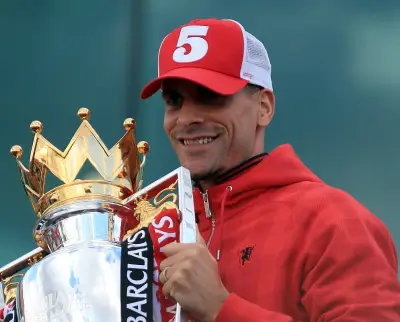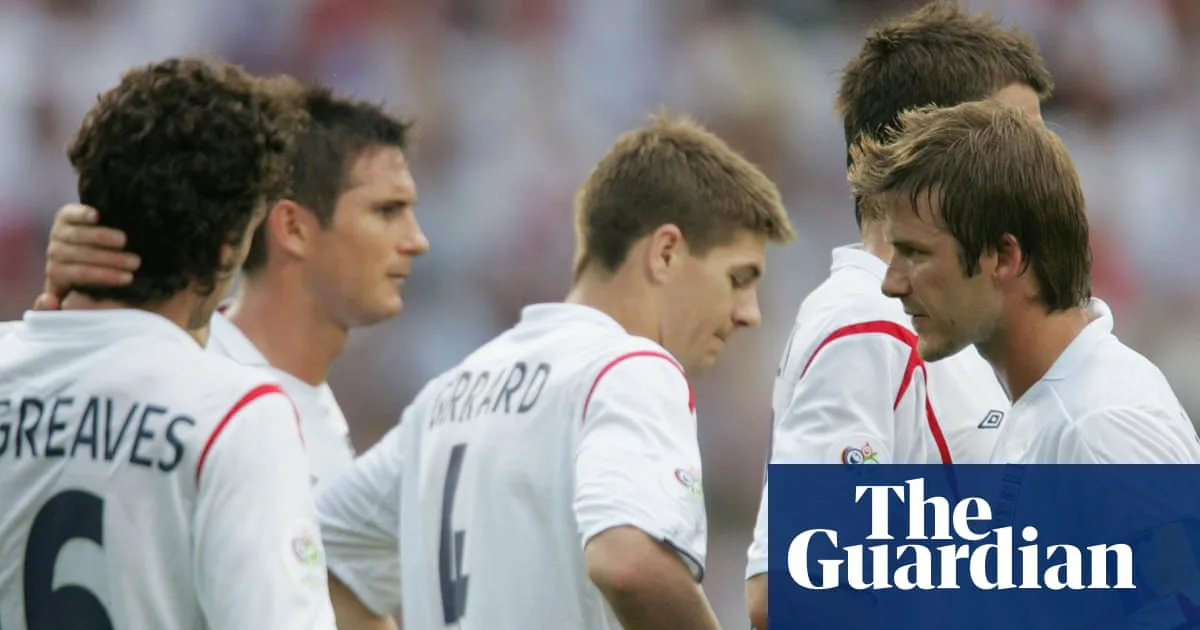
Steven Gerrard has described himself and his England teammates from the so-called 'golden generation' as 'egotistical losers' who failed to deliver due to club rivalries and a lack of team cohesion. In a candid interview on the Rio Ferdinand Presents podcast, the former Liverpool captain admitted he 'hated' being away with the England squad and felt disconnected from his international colleagues.
Gerrard, who earned 114 caps between 2000 and 2014, highlighted the cliques formed by players from Liverpool, Manchester United, and Chelsea as a major obstacle. He noted that he, Michael Owen, and Jamie Carragher represented Liverpool, while Rio Ferdinand, Gary Neville, David Beckham, Paul Scholes, and Wayne Rooney formed a United bloc, and Ashley Cole, John Terry, and Frank Lampard came from Chelsea. The midfield partnership with Lampard never clicked, and Gerrard felt the system of a central midfield two was flawed.
Reflecting on the fractured environment, Gerrard said: 'I think we were all egotistical losers. Why couldn't we connect as England teammates back then? I think it was down to the culture within England that we were all never connected. All in our rooms too much. We weren't friendly or connected. We weren't a team.' He added that he 'hated' the long hours alone in hotel rooms, saying: 'I used to love the games... but it was 90 minutes a day. And then I was just on my own.'
Ferdinand suggested there was 'underlying bitterness' among the players, to which Gerrard agreed, citing 'a little bit of hatred'. He criticised the coaching staff for not doing enough to foster unity, saying: 'There should have been more emphasis on the staff to go to us: “Listen, you need to forget that now. We need to connect from day one – more activities, more out of your rooms, more time together.”'
Gerrard also discussed his managerial career, calling his time at Aston Villa 'tough' and admitting he has 'unfinished business' after leaving Al-Ettifaq in January. He is reportedly under consideration for a return to Rangers, where he began his management career, following the sacking of Russell Martin.