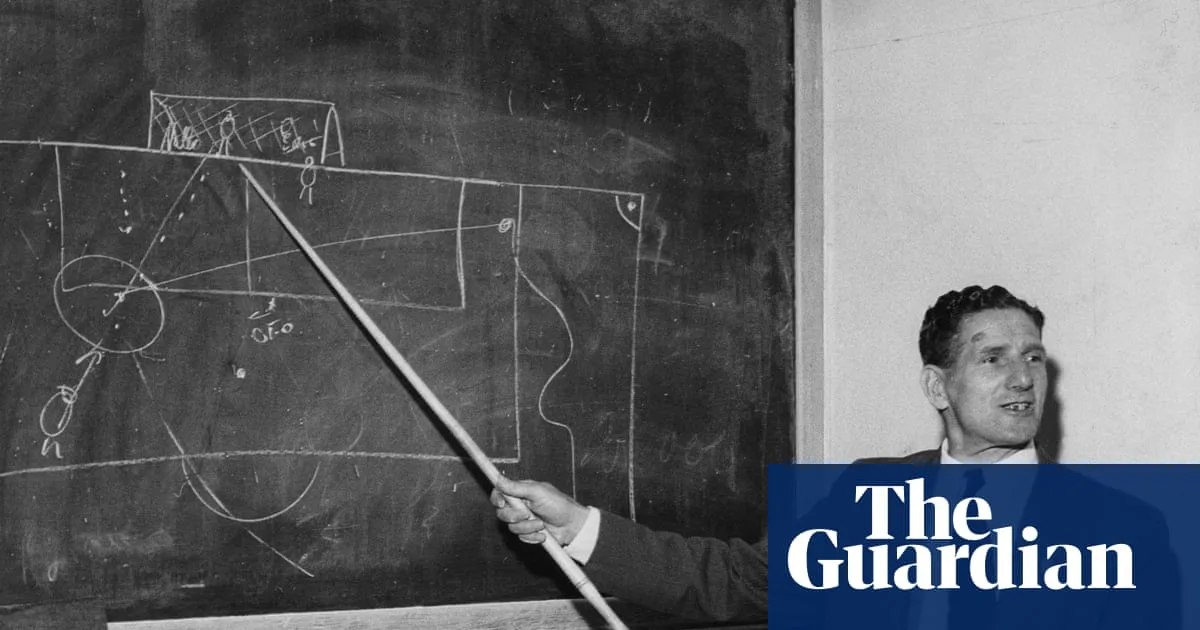
George Raynor: The English Coach Who Led Sweden to World Cup Glory
George Raynor: England's Forgotten World Cup Final Coach

The Unlikely Journey of George Raynor: England's Overlooked Tactical Genius

In the annals of football history, few stories are as compelling as that of George Raynor, an English coach whose innovative ideas and tactical acumen propelled Sweden to unprecedented heights on the international stage. Despite leading Sweden to Olympic glory and a World Cup final, Raynor's achievements were largely ignored in his native England, where his lower-league playing background hindered his career prospects. This narrative explores his remarkable journey from frustration at home to legendary status abroad.

A Frustrating Start and a Breakthrough in Sweden

George Raynor's early career was marked by rejection. As a young, ambitious coach brimming with fresh concepts, he faced constant setbacks in England, with job applications often going unanswered due to his reputation as a lower-league player. However, in 1946, a pivotal opportunity emerged in Sweden, a nation then considered a football outpost. This move provided Raynor with the foothold he desperately needed to launch his managerial career, drawing parallels to modern coaches like Graham Potter who seek opportunities beyond traditional powerhouses.

Upon arriving in Sweden, Raynor encountered a unique football culture rooted in amateurism, both in the domestic league and the national team. He worked under the Swedish FA's selection committee, where former winger Putte Kock held ultimate authority over team selections. This structure mirrored that of England under Walter Winterbottom, yet Raynor's influence remained undiminished. With coaching experience limited to a physical training role in Iraq during World War II and a stint with Aldershot reserves, he relied on self-study and a deep understanding of the game, earning a recommendation from FA secretary Stanley Rous for the Sweden position.

Wide Pickt banner — collaborative shopping lists app for Telegram, phone mockup with grocery list

Olympic Success and Tactical Innovations

Raynor quickly implemented his coaching principles, transforming Sweden into a competitive force. In November 1947, they pushed England to a narrow 4-2 defeat at Wembley, signaling their growing prowess. The following year, Raynor led Sweden to gold at the 1948 Olympics, a triumph built on a solid midfield foundation that unleashed the attacking trio of Gunnar Gren, Gunnar Nordahl, and Nils Liedholm, famously known as Gre-No-Li. This victory showcased Sweden's potential but came with a caveat: the country's strict amateur ethos barred players who turned professional abroad from national team selection.

Undeterred by this limitation, Raynor continued to excel. He guided Sweden to the 1950 World Cup in Brazil, where they advanced from a group including Italy and Paraguay to finish third overall, despite a heavy 7-1 loss to the hosts. Two years later, Sweden secured bronze at the Olympics, falling only to Ferenc Puskas's legendary Hungary team in the semi-finals. Raynor's analytical mind shone through as he studied Hungary closely, devising tactics that earned Sweden a 2-2 draw in Budapest in 1953. His willingness to learn from the era's best teams, such as Hungary, and adapt his strategies accordingly was a hallmark of his success.

The 1958 World Cup Final and Unfulfilled Ambitions

After a brief hiatus managing clubs like Juventus, Lazio, and Coventry, Raynor returned to Sweden in 1957 as they prepared to host the 1958 World Cup. With relaxed rules allowing professional players, he molded a squad that defeated holders West Germany, the Soviet Union, and Hungary en route to the final. There, Sweden faced a Brazil side featuring Garrincha and a young Pelé. Despite taking an early lead through Lindholm, Sweden succumbed to a 5-2 defeat, with Brazil's class prevailing in the second half.

This achievement made Raynor the first English manager to reach a World Cup final, yet it failed to secure him a significant role back home. His only offer came from non-league Skegness Town, where he stayed until 1960 before financial constraints forced his departure. Subsequent spells in Sweden and a brief tenure with Fourth Division Doncaster in the late 1960s led to a quiet retirement. In Sweden, he was celebrated with royal recognition and induction into the Swedish Football Hall of Fame in 2006, but his legacy elsewhere faded into obscurity.

Pickt after-article banner — collaborative shopping lists app with family illustration

Legacy of a Forgotten Pioneer

George Raynor's career exemplifies a level of sustained international success unmatched by any English manager except Alf Ramsey. He came closer than any non-native coach to winning the World Cup, yet his accomplishments were undervalued in an era when British coaching often dismissed progressive European methods. As he lamented in his book, Football Ambassador at Large, every coach aspires to succeed in their own country, but Raynor's innovations went unrecognized. Ultimately, he remained a forgotten figure, his tactical masterclasses and historic feats overshadowed by the very homeland he sought to impress.