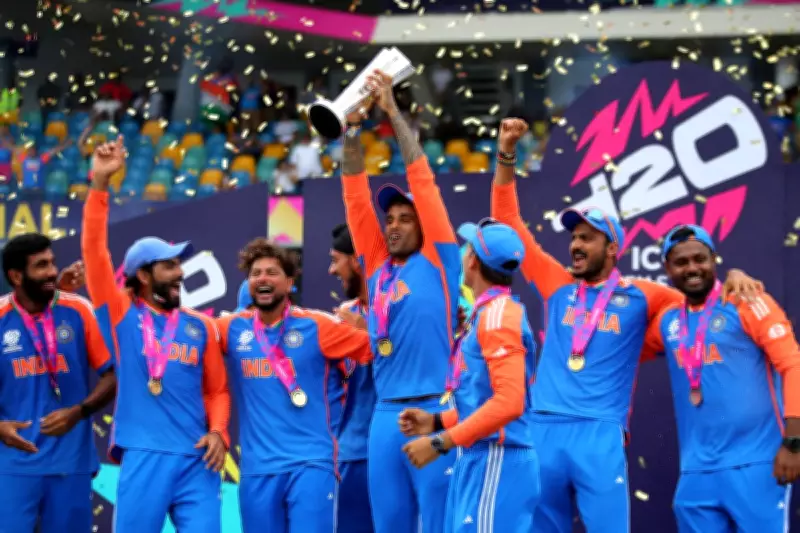
Geopolitical Crisis Engulfs Cricket's Premier Tournament
The T20 Cricket World Cup, cricket's most profitable event, commences this weekend in South Asia under a cloud of geopolitical turmoil. The tournament has been significantly diminished by the absence of Bangladesh and the potential loss of the high-stakes India-Pakistan match, as diplomatic disputes among co-hosting nations threaten to overshadow the sporting spectacle.
Diplomatic Boycotts and Security Fears
Bangladesh's withdrawal from the tournament, enforced by the International Cricket Council (ICC), marks a dramatic start to the crisis. The Bangladesh Cricket Board (BCB) had refused to play scheduled fixtures in India, citing security concerns for its team and fans amid escalating political tensions. Relations between India and Bangladesh have deteriorated sharply over the past eighteen months following the collapse of the Sheikh Hasina regime in 2024.
The ICC rejected Bangladesh's request to relocate matches to co-host Sri Lanka, citing an "absence of any credible security threat". When Bangladesh failed to confirm participation within the twenty-four-hour deadline, Scotland was invited to fill the vacant spot. The governing body emphasized its commitment to maintaining neutrality and fairness in ICC events.

Pakistan's Solidarity Stand and Commercial Implications
In response to Bangladesh's removal, Pakistan announced it would not play its group-stage match against arch-rivals India, scheduled for 15 February in Colombo. Pakistan's prime minister confirmed this decision was made in solidarity with Bangladesh. This development places the Board of Control for Cricket in India (BCCI) at the centre of a complex dispute blending geopolitics, commercial power, and longstanding grievances about cricket governance.
The India-Pakistan fixture represents the most-watched and commercially valuable match in global cricket, historically attracting over six hundred million viewers. The potential boycott threatens severe financial repercussions for the tournament and member boards, particularly through media rights losses.
Historical Context and Political Tensions
Cricketing relations between India and Pakistan have been strained for decades, shaped by military conflicts and security incidents. The nations have not played a bilateral series since 2013, and Indian players have been barred from the Pakistan Super League since the 2009 Mumbai attacks. Tensions escalated further following a four-day military conflict in April last year, sparked by a militant attack in Kashmir.
Recent controversies include Indian players skipping post-match handshakes with Pakistani opponents during September's Asia Cup, and India's refusal to accept the trophy from Asian Cricket Council chairman Mohsin Naqvi, who also serves as Pakistan's interior minister and PCB chief. Former PCB chairman Ehsan Mani described these incidents as contributing to the current standoff, urging ICC chairman Jay Shah to engage with Pakistani authorities.
Administrative Power Struggles and Revenue Disputes
Former PCB chairman Najam Sethi linked Pakistan's position to wider resentment over the "Big Three" revenue distribution model, under which India, Australia, and England receive the majority of ICC income. Sethi accused the BCCI of using its financial influence to dominate decision-making, recalling how a planned India-Pakistan series collapsed despite contractual agreements.
Sethi suggested Bangladesh's removal had created conditions for broader challenge: "They have been treating us very badly. Now that Bangladesh have been snubbed in a sense, we feel there are 400 million people on one side. We can all stand up." He argued that temporary losses might ultimately lead to a reformed, more equitable ICC structure.
ICC Response and Potential Sanctions
The ICC has described Pakistan's selective participation as "difficult to reconcile" with global competition principles, warning of significant long-term implications for cricket in Pakistan. While acknowledging governments' role in national policy, the governing body emphasized that Pakistan's decision wasn't in the interest of the game or fans worldwide.

The ICC constitution allows for sanctions where governments interfere in cricket administration, requiring boards to operate autonomously. Precedents include Zimbabwe's suspension in 2019 and Sri Lanka losing hosting rights for an Under-19 World Cup following board dismissal. However, teams refusing matches in previous tournaments typically forfeited points without facing fines.
Player Perspectives and Tournament Logistics
Players have largely deferred to government and administrative decisions. Pakistan captain Salman Ali Agha described the boycott as beyond the team's control, while Indian captain Suryakumar Yadav confirmed India would travel to Colombo as scheduled. Scotland, promoted into the tournament under unusual circumstances, emphasized their commitment to making the most of the opportunity.
If Pakistan boycotts the India match, their opponent will receive two points. With only the top two teams from each group progressing, this creates minimal margin for error in remaining matches against the Netherlands, USA, and Namibia. Uncertainty remains about what would happen if India and Pakistan were drawn to meet in the final.
Broader Implications for Cricket Governance
Former England captain Nasser Hussain questioned whether the ICC would apply rules consistently if India made similar demands, while former Pakistan captain Shahid Afridi called on the ICC to demonstrate impartiality through actions rather than statements. Cricket analysts highlight how the crisis originated with the removal of Bangladeshi fast bowler Mustafizur Rahman from the Indian Premier League, following BCCI instructions.
As the T20 World Cup begins on 7 February, concluding on 8 March, the ICC prioritizes tournament delivery while calling on all members to protect its integrity. The governing body continues to hope for a resolution, with some observers predicting Pakistan might reverse its stance following Bangladesh's 12 February election. The tournament's success now depends on navigating complex geopolitical waters while preserving cricket's spirit of competition.