The Origins of International Football Retirement Announcements
The practice of footballers publicly announcing their retirement from international duty, now a common feature of the modern game, has deeper historical roots than many fans realise. While it is often viewed as a contemporary development, evidence suggests it dates back at least to the mid-20th century, with iconic figures setting early precedents.
Roger Milla's Pioneering Unretirement in 1990
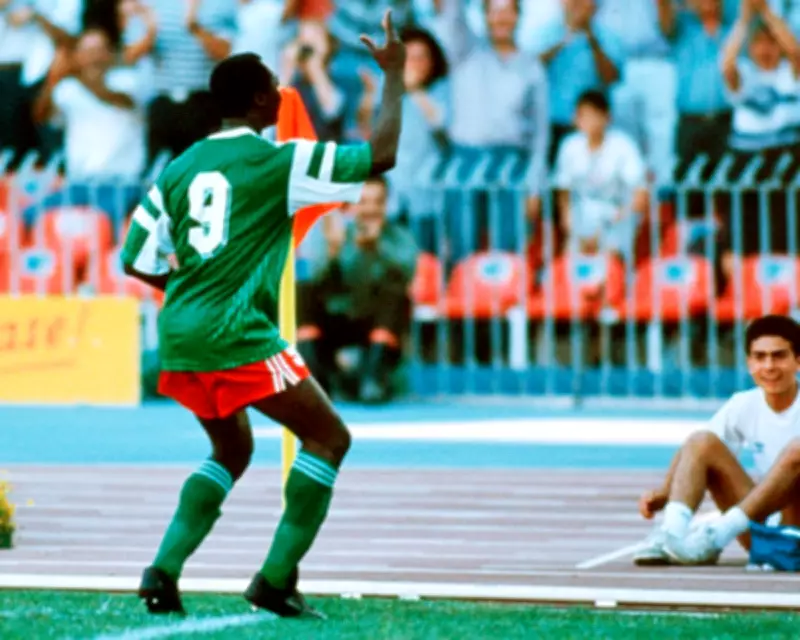
One of the most famous early cases involves Cameroon legend Roger Milla, whose story popularised the concept of international retirement. Milla had formally retired from playing for Cameroon following their victory in the 1988 Africa Cup of Nations, during a jubilee event celebrating the achievement. However, in a dramatic turn, he was persuaded to come out of retirement by Cameroon's president Paul Biya to participate in the 1990 World Cup. His iconic goal celebrations and performances at Italia 90 not only captivated global audiences but also highlighted the formalised nature of his initial retirement decision.
European Pioneers: Zoff, Breitner, and Müller
In Europe, several stars of the 1970s and early 1980s made clear retirement statements. Italian goalkeeper Dino Zoff, after a 1-0 defeat to Romania in 1983 during Euro 84 qualifiers, publicly acknowledged it was time to step away at age 41. He stated, "That goal was a sort of sentence for me. It's by far the best to recognise the way things are going." Zoff played one final match, a 2-0 loss to Sweden, before concluding his international career with 112 caps.

West German icons Paul Breitner and Gerd Müller also retired from international football after the 1982 and 1974 World Cups respectively, marking significant moments in the sport's history.
English Contenders: The Charltons, Hunt, and Greaves
While Gary Lineker's retirement after Euro 92 is well-remembered, English players had earlier instances. On the flight home from the 1970 World Cup, brothers Jack and Bobby Charlton informed manager Alf Ramsey they no longer wished to be considered for selection. Earlier, in 1968, Liverpool's Roger Hunt retired after facing abuse from home fans during a draw against Romania. Similarly, Jimmy Greaves, only 28 and an unused substitute at Euro 68, told Ramsey he was finished with international duty. These were often private conversations rather than public announcements, but they underscore the early trend.
Fritz Walter: The 1954 Precedent
Newspaper archives reveal an even earlier example. In September 1954, just two months after captaining West Germany to a stunning World Cup victory, 34-year-old Fritz Walter announced his international retirement, declaring, "I want to go out while I am at the top." His attempt to retire on a high note was short-lived; he returned to the national side two months later, playing for another four years until his final cap in a 3-1 semi-final defeat to Sweden in the 1958 World Cup.
Swift Ascents Up the Football Pyramid
Beyond retirement stories, the football world has seen remarkable rapid promotions. Wrexham's potential fourth consecutive promotion this season highlights this phenomenon, though no English team has achieved three straight promotions to reach the top flight. Historical examples include Swansea (1977-81) and Wimbledon (1982-86) with three promotions in four years.
Further down the pyramid, Shaw Lane and Truro City managed four consecutive promotions between 2011-2015 and 2005-2009 respectively. Chester FC's rise from the ninth to fifth tier in three seasons (2010-13) is another notable case. Internationally, Parma's rebound from Serie D to Serie A in three seasons after bankruptcy in 2015, and Olympique Akbou's five consecutive promotions to Algeria's top flight between 2018-2024, demonstrate global parallels.
Steve Palmer's Maverick Shirt Numbers
In a lighter anecdote, Watford's Steve Palmer nearly wore all 14 shirt numbers in the 1997-98 season before squad numbers were standardised. Manager Graham Taylor assisted by starting Palmer in goal against Bournemouth, where he swapped positions with keeper Alec Chamberlain after kick-off to complete his unique set.

The Infamous 2004 Olympic Penalty
A memorable incident from the 2004 Olympic football tournament saw Tunisia's Mohamed Jedidi take a penalty six times due to encroachment violations. Referee Charles Ariiotima from Tahiti ordered multiple retakes, with Jedidi eventually scoring on the sixth attempt in a 3-2 win for Tunisia, though neither team advanced to the quarter-finals.
Unanswered Football Queries
The article concludes with several intriguing questions from readers, such as whether any club has won a league with a goal difference greater than their points tally, if any player has matched Endrick's debut goal record, and if a penalty shootout with zero shots on target has occurred at a competitive level. These queries invite further exploration into football's rich and varied history.