
The spectre of Sir Alex Ferguson's transfer philosophy is casting a long shadow over Manchester United's plans for the January window, as the club reportedly compiles an eight-man shortlist of midfield targets.
Ferguson's Firm Stance on Winter Spending
During his unparalleled reign at Old Trafford, the legendary Scottish manager was famously sceptical of major January signings, viewing them as poor value and a risky gamble. In 2012, Ferguson told The Independent that he had "never seen it work," arguing that a player arriving for big money in mid-season rarely settles before the following campaign begins.
He elaborated, warning that clubs are perceived as desperate in January, leading selling teams to inflate their asking prices. "To go into the market in January you never get full value," Ferguson stated bluntly. This principle guided the vast majority of his winter business, which focused on long-term prospects rather than instant solutions.
United's Current Midfield Dilemma
The relevance of Ferguson's caution is acute for current United boss Ruben Amorim. His squad has been stretched thin by injuries to key midfielders like Bruno Fernandes and Kobbie Mainoo. This was evident in the recent draw with Wolves, where Amorim was forced to start with Casemiro and Manuel Ugarte, bringing on youngster Jack Fletcher at half-time.
This shortage has prompted the club to scour the market, with The Daily Mail reporting a significant eight-player midfield shortlist. The search underscores the immediate pressure on Amorim to secure a top-four finish, with United currently two points behind fourth-placed Liverpool.
The Shortlist and Ferguson's Legacy Exceptions
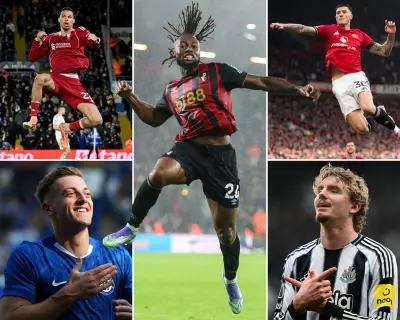
Atop United's reported wishlist is Nottingham Forest's Elliot Anderson, though a deal is considered difficult given Forest's relegation battle. Other names linked include Brighton's Carlos Baleba, Crystal Palace's Adam Wharton, and England international Conor Gallagher.
The list extends to Everton's James Garner, Bournemouth's Tyler Adams, Wolves' Joao Gomes, and Al-Hilal's Ruben Neves. This broad search highlights the club's perceived need for reinforcement.
Ferguson's own record provides a nuanced blueprint. While he largely avoided big January buys, he did make two of his most successful signings in that window: Nemanja Vidic and Patrice Evra joined for a combined £12.5 million in January 2006. Crucially, however, neither was an instant star; both required time to adapt, proving Ferguson's point about a lack of immediate impact.
Other exceptions included Louis Saha, whose £12.85m move from Fulham in 2004 brought seven goals in 14 games, and the short-term loan of Henrik Larsson in 2007. His final signing, Wilfried Zaha for £10m in January 2013, was explicitly a future prospect, loaned back to Crystal Palace immediately.
The modern exception at United is Bruno Fernandes, whose transformative January 2020 arrival from Sporting CP defied the traditional wisdom. This precedent may encourage the current hierarchy to spend.
Ultimately, Ferguson's ghost would likely advise Amorim to look within—to the academy talents like Jack Fletcher—to solve short-term issues, rather than pursuing a costly and potentially disruptive mid-season 'quick fix'. Whether the modern United, with its intense commercial and sporting pressures, can afford such patience remains the pivotal question of this transfer window.