Chinese Super League Returns Amidst Bans and Youth Promise
Chinese Football Returns with Bans and Youth Promise

Chinese Football's Turbulent Return Amidst Widespread Sanctions

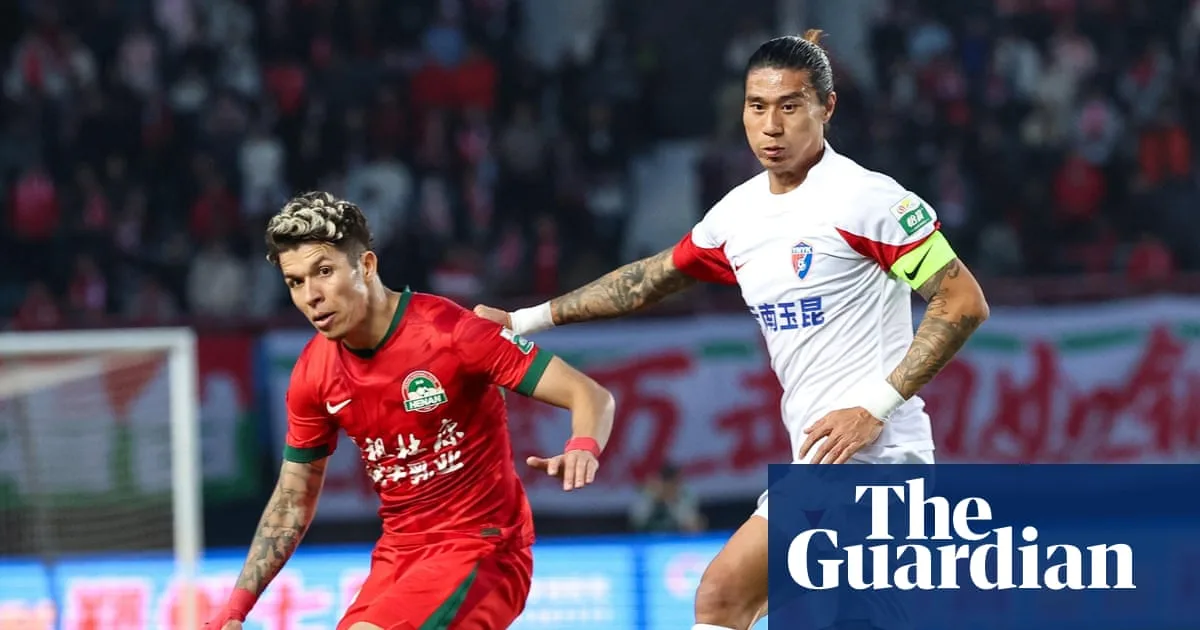
The Chinese Super League is poised for a dramatic 2026 season, set to commence in early March, against a backdrop of unprecedented disciplinary action and cautious optimism. With 13 clubs facing punishments as part of a "zero-tolerance" anti-corruption campaign, the league's integrity is under intense scrutiny. This crackdown, announced jointly by the ministry of public security, general administration of sport, and the Chinese Football Association, has already garnered more international attention than the entirety of the previous season.

Severe Punishments Reshape Title Race

The disciplinary measures have drastically altered the competitive landscape. Chengdu Rongcheng, who finished third last season, emerge as unexpected title favourites. They are the only top-six side from 2025 to start the new campaign on zero points, while rivals face significant deductions: Shanghai Shenhua begin on minus 10 points, and Shanghai Port have been docked five points. The CFA's disciplinary committee stated these penalties were imposed "based on the amount, circumstances, nature, and social impact of the improper transactions each club was involved in," aiming to purify the sport.

This follows the lifetime ban from football activities imposed on former China national team coach Li Tie, who is currently serving a 20-year prison sentence for bribery. Li Tie, who played 29 Premier League matches for Everton in the 2002-03 season, represents the high-profile casualties of this clean-up operation.

Contrasting Fortunes: From Success to Scandal

Last season was celebrated as a high point for Chinese football, with average attendances exceeding 25,000—the best in Asia and surpassing figures from a decade prior when marquee signings dominated. Fans witnessed a thrilling title race, culminating in Shanghai Port securing a third consecutive championship by a narrow two-point margin over Shanghai Shenhua, with Chengdu Rongcheng in close contention until the final weeks.

Yet, this success is now overshadowed by the ongoing crackdown. The punishments deliver another blow to loyal supporters, who often bear the brunt of such controversies. However, amidst the grey clouds, patches of blue emerge, offering hope for the future of Chinese football.

Youth Success Signals Promising Future

A significant bright spot is the remarkable performance of China's under-23 team. For the first time, they progressed beyond the group stage of the AFC U23 Asian Cup, reaching the final on 24 January before suffering a 4-0 defeat to Japan. Players like Wang Yudong, Hu Hetao, and Liu Haofan impressed, with Xu Bin earning a move to Wolves, suggesting long-term investments in youth development are yielding results.

Coach Li Hao praised the defensive solidity, dubbed the "Great Wall of China," which did not concede a single goal en route to the final. "Our experience in the Chinese Super League and other domestic competitions has been crucial," Li stated. "It helped us address our weaknesses and turn a new page." This international breakthrough indicates a potential shift towards sustainable growth.

Grassroots Revival in Provincial Leagues

Beyond the professional tier, a grassroots revolution is unfolding. In 2021, Jiangsu province lost its CSL team when champions Jiangsu FC collapsed due to economic pressures and the pandemic. In response, locals launched the Jiangsu City Football League in 2025, featuring 13 amateur teams. This organic, bottom-up initiative quickly captured public imagination, with matches initially held in colleges before moving to major stadiums.

In July, a record 60,396 fans watched Nanjing face Suzhou, with over 800,000 visitors reported on ticketing websites. The league emphasizes affordability, cultural events, and social media engagement, creating a fun, community-driven atmosphere free from the rigid control often criticized at the national level. This model has inspired other provinces to establish similar competitions.

International Interest and Future Prospects

The state of Chinese football even entered diplomatic discussions, as evidenced by Prime Minister Keir Starmer's recent meeting with President Xi Jinping, where the latter's knowledge of English clubs like Crystal Palace, Manchester City, Arsenal, and Manchester United surprised observers. Historical connections, such as Fan Zhiyi at Crystal Palace and Sun Jihai at Manchester City, underscore football's cultural bridges.

As the 2026 season approaches, the blend of stringent punishments, emerging youth talent, and vibrant provincial leagues presents a complex picture. If the professional game can harness the grassroots spirit seen in Jiangsu, it may yet rebuild trust and excitement. Perhaps future diplomatic visits will feature more optimistic conversations about Chinese football's revival, moving beyond scandals to celebrate genuine progress on and off the pitch.