Michael Carrick's Tactical Crossroads at Manchester United
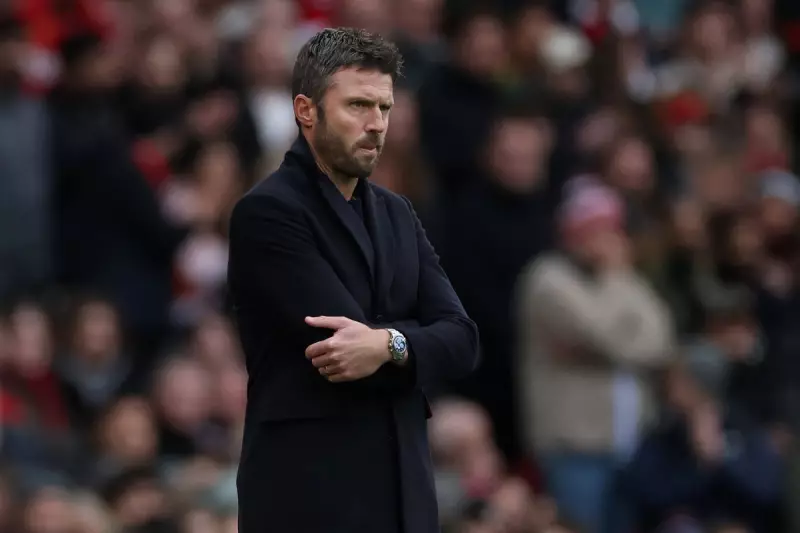
With just fifteen matches remaining in the Premier League season, interim Manchester United manager Michael Carrick finds himself at a significant tactical crossroads. The former Middlesbrough boss, who was unexpectedly handed the reins at Old Trafford for the remainder of the campaign, must now decide whether to stick with his immediately successful strategy or twist and adapt as the season reaches its climax.
The Carrick Formula: Instant Impact at Old Trafford
Carrick's arrival brought a clear tactical vision that has produced remarkable early results. Unlike his predecessors who often experimented with complex formations, Carrick implemented a straightforward 4-2-3-1 system that has instantly suited his squad. This approach has revitalised several players who had previously struggled to find their best form under previous regimes.
Patrick Dorgu, originally signed as a wing-back and criticised by former manager Ruben Amorim for appearing anxious on the ball, has been transformed under Carrick's guidance. Redeployed as a left winger, the player has scored twice in as many games after managing just one goal in his previous United appearances.

Similarly, Bryan Mbeumo has flourished in an unfamiliar striking role after being predominantly used as a right-sided attacking midfielder during his time at Brentford. The forward has already found the net in crucial victories over both Manchester City and Arsenal, demonstrating Carrick's ability to identify and maximise players' strengths.
Contrasting Approaches: Carrick Versus His Predecessors
Carrick's decisive early decision-making stands in stark contrast to the uncertain starts made by several of his predecessors. Ruben Amorim began his tenure with a disappointing draw at Ipswich, attempting to force square pegs into round holes within his preferred 3-4-3 formation. This included deploying Noussair Mazraoui on the right of a back three and using Alejandro Garnacho as an attacking midfielder.
Erik ten Hag had an entire summer to prepare for his first match against Brighton yet inexplicably started with Christian Eriksen as a false nine. Ralf Rangnick immediately implemented his favoured 4-2-2-2 system during his interim spell, but the formation proved unsustainable, partly due to Cristiano Ronaldo's reluctance to press from the front.
Perhaps most memorably, Louis van Gaal began his Manchester United reign by fielding Jesse Lingard as a wing-back in a defeat to Swansea City. Against this backdrop of uncertain beginnings, Carrick's clarity of thought and tactical certainty has been particularly refreshing for the Old Trafford faithful.
The Short-Term Success and Long-Term Questions
Carrick's immediate impact has propelled Manchester United into fourth position in the Premier League table, raising legitimate questions about what comes next. With only fifteen matches remaining and a relatively light fixture schedule that includes just two midweek games, the interim manager faces a genuine dilemma.
Should he maintain the counter-attacking approach that has brought victories against top opposition, or adapt his tactics for matches where United will be considered favourites? The team has operated with less possession in Carrick's opening games, partly because they faced stronger opponents, but this dynamic may change against supposedly weaker sides.
The manager must also consider squad management and player satisfaction. Matheus Cunha has excelled in his role as a super-sub, making compelling cases for inclusion in the starting lineup. Meanwhile, summer signings like Benjamin Sesko and Leny Yoro find themselves further down the pecking order despite their considerable potential and transfer fees.
Historical Precedent and Future Decisions
Carrick has shown tactical flexibility before during his previous coaching stint at United. In 2021, he made the bold decision to drop Bruno Fernandes for Donny van de Beek against Villarreal, and later omitted Cristiano Ronaldo from the starting lineup at Chelsea. These decisions demonstrated a willingness to make difficult choices for the team's benefit.

Now, with consecutive impressive victories against top opposition, Carrick faces perhaps his most significant decision yet. Will he maintain the 4-2-3-1 system that has brought immediate success, or will he need to adapt as opponents study and counter his approach? The parallel with Thomas Tuchel's mid-season arrival at Chelsea is compelling - the German manager implemented a 3-4-3 formation that brought Champions League glory, proving that a single tactical idea can transform a season.
As Manchester United enter the final phase of their campaign, all eyes will be on Carrick's next move. His early success has created both opportunity and expectation, with the interim manager's decisions in the coming weeks likely to define not only United's season but potentially his own managerial future.