Former FIFA Chief Joins Calls for 2026 World Cup Boycott
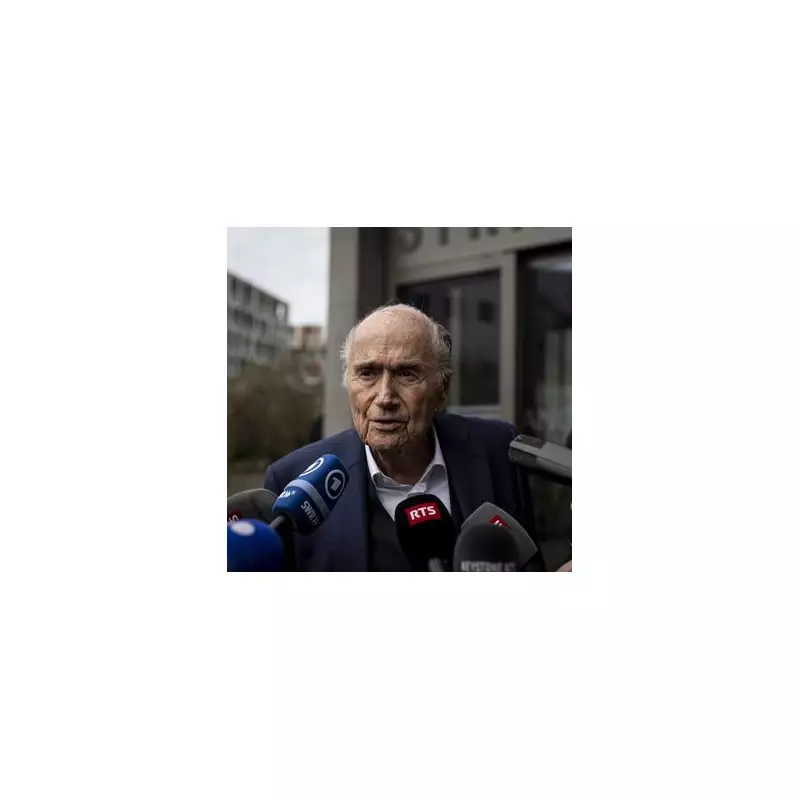
Sepp Blatter, the former president of FIFA, has publicly endorsed growing demands for a boycott of the 2026 World Cup. This movement is a direct response to the recent actions and policies of United States president Donald Trump, which have sparked significant discontent across Europe.
Political Tensions Fuel Sporting Controversy
Discontent has been steadily brewing among European nations due to Trump's expansionist tactics, particularly his claim for the USA to take over Greenland, an autonomous territory of Denmark. This follows the controversial capture of Venezuelan president Nicolas Maduro. Additionally, proposed trade tariffs have further strained transatlantic relations, placing the upcoming World Cup under intense political scrutiny.
The tournament is scheduled to be hosted jointly by the USA, Canada, and Mexico from June 11 to July 19, 2026. The idea of teams refusing to participate as a form of political pressure has gained traction in several European circles.

Support from Legal and Political Figures
The boycott suggestion has found support beyond Blatter. Mark Pieth, a Swiss lawyer specialising in white-collar crime and anti-corruption, has strongly advocated for fans to avoid travelling to the USA for the event. In an interview with Swiss newspaper Der Bund, Pieth warned that supporters could face immediate deportation if they displeased officials, suggesting they would be better off watching the tournament on television.
Blatter, who led FIFA from 1998 until his resignation in 2015 amidst a corruption scandal, echoed this sentiment on social media platform X, stating, "I think Mark Pieth is right to question this World Cup."
German Football Voices Lead Dissent
The loudest calls for a boycott have emerged from Germany. Oke Göttlich, vice-president of the German Football Association and president of Bundesliga club St. Pauli, has drawn parallels to the boycott of the 1980 Olympic Games in Moscow, which was a response to Russia's invasion of Afghanistan.
Göttlich questioned the current apolitical stance of football organisations, contrasting it with the widespread criticism of the political context surrounding the Qatar World Cup. He emphasised the need to defend values and set boundaries, publicly challenging figures like Trump and current FIFA president Gianni Infantino to define their limits.
Further political weight was added by Roderich Kiesewetter, a member of the German parliament's foreign affairs committee. He stated that if Trump follows through on his threats regarding Greenland and initiates a trade war with the EU, it would be difficult to imagine European countries participating in the World Cup.
A Tournament Under a Cloud
The 2026 World Cup, intended as a celebration of football across North America, now finds itself at the centre of a significant geopolitical storm. With a former FIFA president, legal experts, and influential European football figures advocating for a boycott, the pressure is mounting on governing bodies and national associations to take a stance. The debate underscores the complex and often unavoidable intersection of international sport and global politics.