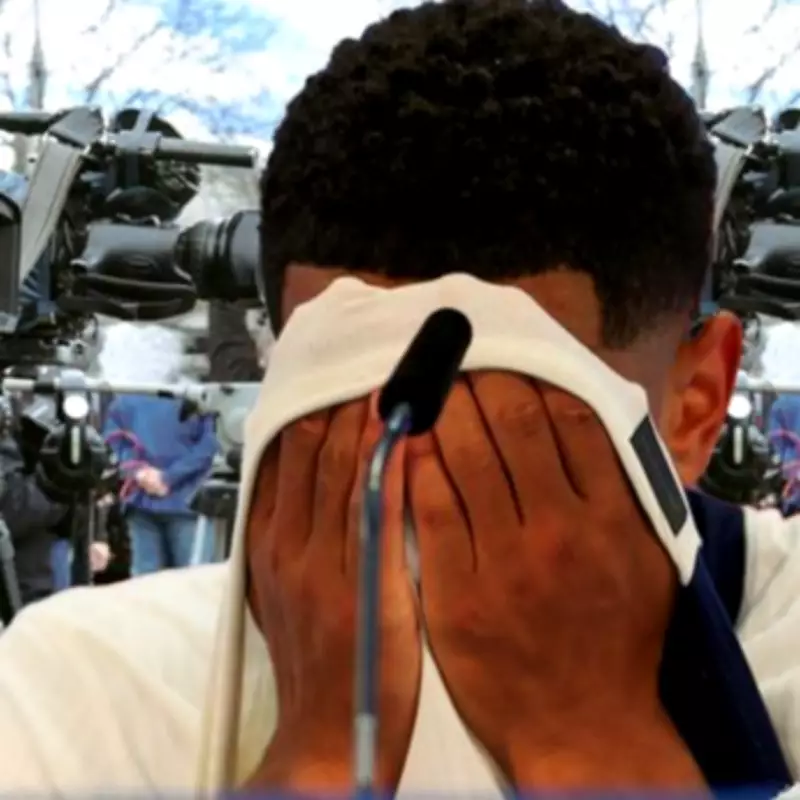
Jude Bellingham's Media Standoff: England's Star Feels Like a 'Scapegoat'
Jude Bellingham stands as one of English football's brightest talents, a generational player whose performances for Real Madrid and the national team have marked him as arguably England's best player. Yet, his relationship with the media has become fractured, attracting nearly as much attention as his exploits on the pitch. Not since David Beckham has England boasted such a global superstar, destined to be a face of the 2026 World Cup. This prominence makes the current discord between Bellingham and the press particularly perplexing and concerning.
A Growing Sense of Mistrust and Frustration
Bellingham has publicly expressed feeling like a 'scapegoat' and does not enjoy conducting media interviews. He harbours a deep-seated mistrust, believing sections of the press are waiting for England to fail. This sentiment raises critical questions: Is this perception fair? Where does it originate? Should a star player simply accept the relentless spotlight and analysis of their every move?
His importance to the team is undeniable. Bellingham was England's saviour at Euro 2024, scoring a spectacular overhead kick against Slovakia in the 95th minute to avert a humiliating defeat. Few players could have delivered such a moment. As a linchpin for Real Madrid and the reason many believe England can win the World Cup, it is paradoxical that the nation's premier player is now the one we hear from the least.

'Vultures, Clowns & Scapegoats': Bellingham's Own Words
It would be simplistic to cast Bellingham as the villain. His candid comments on his YouTube channel during the Euros were revealing. 'I used to do the media on certain things... When I get up there, I feel like they're all like vultures waiting for me to say something which is half controversial and turn it into a massive story,' he stated.
He elaborated on feeling targeted: 'They always need someone to be the bad guy, someone to be the scapegoat and it seems like it's going to be me.' Bellingham emphasised that his frustration stems from a burning desire to win, and criticism of his body language feels personal, hurting both him and his family.
This stance was reinforced recently when, following reports about dressing room unrest at Real Madrid, Bellingham posted a scathing social media rebuttal, labelling certain media figures as 'clowns' spreading 'damaging misinformation for clicks.'
Roots of the Rift: From Birmingham to Dortmund
The origins of this media mistrust likely trace back to his early career. Growing up at Birmingham City, outside the traditional Premier League academy system, Bellingham was circled by major clubs from a young age. This environment, filled with inducements and agent approaches, can breed suspicion.
His move to Borussia Dortmund, a club renowned for nurturing talent and involving families, was a conscious choice. Despite interest from Manchester United and others, Dortmund provided a supportive development path. Interestingly, Bellingham was more media-accessible during his time in Germany, appearing happy and engaged in interviews.
The protective instinct of his family, particularly his father Mark, has also played a role. Early media scrutiny, such as headlines about earnings when he was just 16, can create a lasting wariness. This protection, while understandable, may have evolved into a more controlled media approach that the Football Association now wishes to see relaxed.
The Tuchel Flashpoint and a Strained Dynamic
The situation escalated significantly following comments from England manager Thomas Tuchel. In a live radio interview, Tuchel suggested Bellingham's on-field antics could be 'repulsive' and 'intimidatory' to teammates. For a parent, such public criticism from a national manager about a player's character and upbringing would be appalling.
Although Tuchel has apologised, the remark ignited the debate, ensuring every squad selection or non-start for Bellingham is heavily scrutinised. It has also fuelled narratives about his place in the team, with some extreme opinions arguing he should not even be in the squad—a view widely regarded as ridiculous within football circles.

Is There a Way Back?
The FA's communications team is highly regarded across Europe for its openness, and the current standoff is not seen as their fault. However, Bellingham now does precious few interviews while on England duty, snubbing even host broadcaster requests. This creates a practical problem, as other players may resent covering extra media duties if one star is exempt.
Pundit Ian Wright further inflamed the debate by suggesting on a podcast that the media is 'not ready for a black superstar' and does not like players they cannot control—a viewpoint that has been contested. In reality, much of the press criticism was directed at Tuchel for his remarks, not Bellingham.
Ultimately, there appears to be fault on both sides. Bellingham is an articulate, charming individual when he chooses to engage, as seen in his Champions League flash interviews. Yet, the chasm seems wide. With the 2026 World Cup approaching, it is a profound shame that England's standout talent, a player every fan wants to hear from, feels so alienated from the media that amplifies his achievements. The path to reconciliation remains unclear, casting a shadow over what should be a celebratory period for English football.