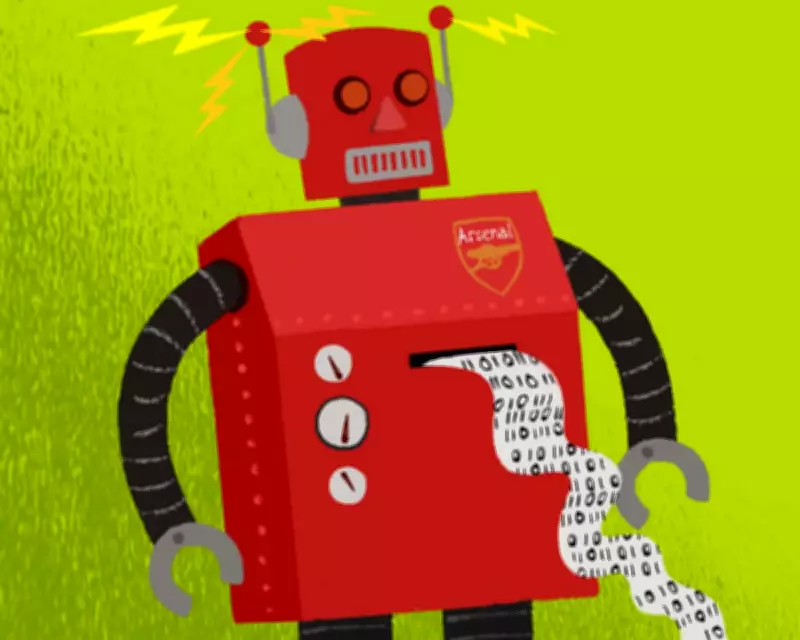
Arsenal's Premier League Title Pursuit as a Digital-Age Metaphor
The current Arsenal football season presents a fascinating case study, one that extends far beyond the boundaries of the pitch. Their quest for the Premier League title has become a powerful symbol of our contemporary, hyper-networked existence. This is a campaign characterised not just by points and goals, but by an overwhelming atmosphere of data, scrutiny, and digital-age angst.
The Unbearable Weight of Constant Observation
Modern life is defined by a pervasive, inescapable visibility. Since the Great Networking of the early 2010s, we exist in a state of perpetual observation, our digital footprints echoing indefinitely. This reality mirrors the experience of elite footballers today, particularly those at Arsenal. The team operates under a microscope of relentless analysis, where every pass, every tactical shift, and every touchline gesture is dissected across social media platforms and content streams. There is no quiet space, no anonymous moment—a condition that profoundly alters performance and perception.
A Robotic Team in a Human Game
Arsenal's most discussed flaw this season lies in what can be termed an over-mechanisation of their tactical approach. They represent, in many ways, football's first post-human team. The club is deeply invested in data analytics, utilising platforms like StatDNA and internal AI systems to simulate games, predict injuries, and mechanise attack patterns. Manager Mikel Arteta, often appearing like an AI-generated simulation of the earnest modern coach, publicly articulates a philosophy that can sound more like corporate stakeholder reporting than traditional football passion.

This data-driven methodology has yielded a squad that is efficient, structured, and top of the table, yet one whose play can sometimes feel stifled and lacking in spontaneous fluency. Watching Arsenal labour to create clear chances can be a strangely tense experience, akin to witnessing a highly advanced machine struggling with a fundamentally human creative act.
The Scrutiny Engine: Online Fandom and Content Creation
The intensity surrounding Arsenal is fuelled externally by a uniquely online fan culture. All modern fandom exists digitally, but Arsenal's feels exceptionally present and loud. Narrative arcs like "bottling" the title have been circulating since autumn, not because of events on the pitch, but because the content cycle demands constant drama. This creates a white noise of micro-analysis, hot takes, and performative rage that seeps into the very fabric of the season.
This external scrutiny compounds the internal culture of measurement. Players are tracked, statted, and analysed at every level. The question becomes: how does existing in this panopticon affect the ability to perform complex, instinctive movements under pressure? The need for spontaneity—to "dance like no one's watching"—collides violently with the reality that everyone is watching, always.
Seeking Silence in the Storm
The proposed solution, much like the fantasy of a "Temporary Burner Identity" for escaping digital surveillance, revolves around finding a bubble of silence. Historically, sporting success amidst intense pressure has required the cultivation of a still, mental space. Arteta's recent, and very public, "face-meeting" with players aimed to release tension, yet even this private moment was instantly processed into public content, mined for meaning by the ever-hungry scrutiny engine.
If Arsenal's challenge falters in the final stages, it may be attributed less to a lack of courage or talent, and more to this new, pervasive static. It would be a collapse born of the digital age, perhaps the first truly "terminally-online" failure from a team that embodies that condition. Their season, whether it ends in triumph or agony, remains a gripping and oddly tender parable of what it means to compete, create, and exist when every action is data, every moment is content, and there is nowhere left to hide.