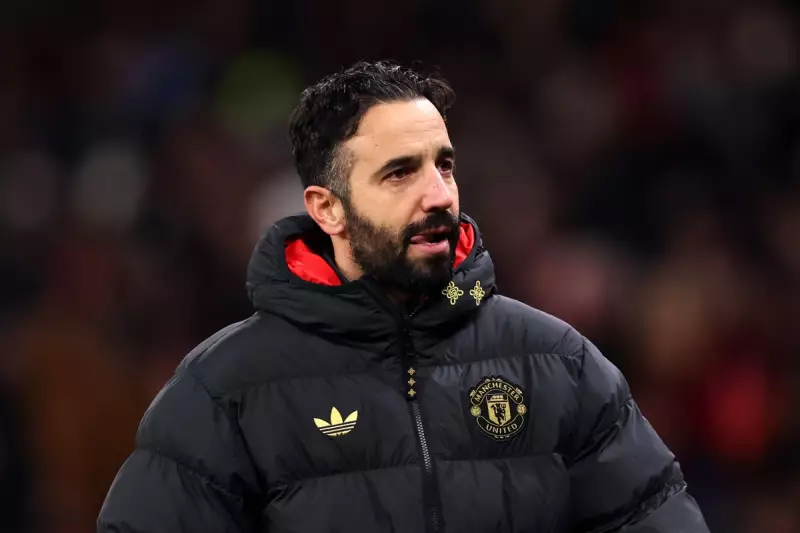
For over a year, Ruben Amorim's tenure at Manchester United was defined by a rigid, unyielding commitment to a single tactical blueprint. Now, a sudden and dramatic shift in formation has thrown that entire period into question, suggesting 13 months of stubborn adherence to a 3-4-3 system may have been a total waste.
The Stubborn Philosophy That Failed to Deliver
Until very recently, Amorim's Manchester United played one way and one way only. Despite a series of poor results and glaring squad mismatches, the Portuguese manager persisted with his preferred three-at-the-back system. The obituaries for his time at Old Trafford were being written around this inflexibility, with the consensus being he would "perish playing 3-4-3 and nothing but 3-4-3."
This dogma created a fundamental problem. Of the squad he inherited, very few players naturally suited the 3-4-3 shape. It failed to showcase the best positions of key figures like Amad Diallo, Diogo Dalot, and the since-departed Marcus Rashford and Alejandro Garnacho. Centre-backs preferred a pair, midfielders looked better in a trio, and too often United were left with players in awkward roles, outnumbered in key areas of the pitch.
A Belated and Telling Volte-Face
The damning evidence of this failed philosophy has finally forced a change. In United's last two Old Trafford fixtures, Amorim has abandoned his creed. First came a 4-4-2 in a 4-4 draw with Bournemouth, followed by a 4-2-3-1 in a crucial 1-0 victory over Newcastle United on Boxing Day.
The irony is stark. The first match with a back four produced arguably United's most vibrant attacking display of the campaign, with 25 shots. Amad Diallo's opening goal came from him playing as a traditional winger, not a wing-back. The second game showcased a resolute defensive block, proving the simple solidity of two banks of four. This pragmatic adaptation was a reaction to a squad depleted by injury and the African Cup of Nations, and it worked.
The Cost of a Year-Long Experiment
The most significant issue with Amorim's tactical shift is its timing. This change could have come at almost any earlier point, and likely would have benefited the team. Last season, amid all the club's other well-documented problems, a more flexible approach with a back four might have seen them challenge for the top eight. Instead, they finished a dismal 15th.
The recent results highlight the potential cost. Last December, playing 3-4-3, United lost at home to both Bournemouth and Newcastle. This season, with the new shapes, they have taken four points from the same fixtures. The change in fortune is clear, but it arrives with an uncomfortable implication: the previous 13 months were an exercise in obstinate, philosophical failure.
Amorim has now uttered the word "adapt" and shown he can. But by doing so, he has inadvertently framed his first year at Old Trafford as a period of costly, self-inflicted stagnation. The question now is whether this new-found pragmatism has come too late to redefine his troubled reign.