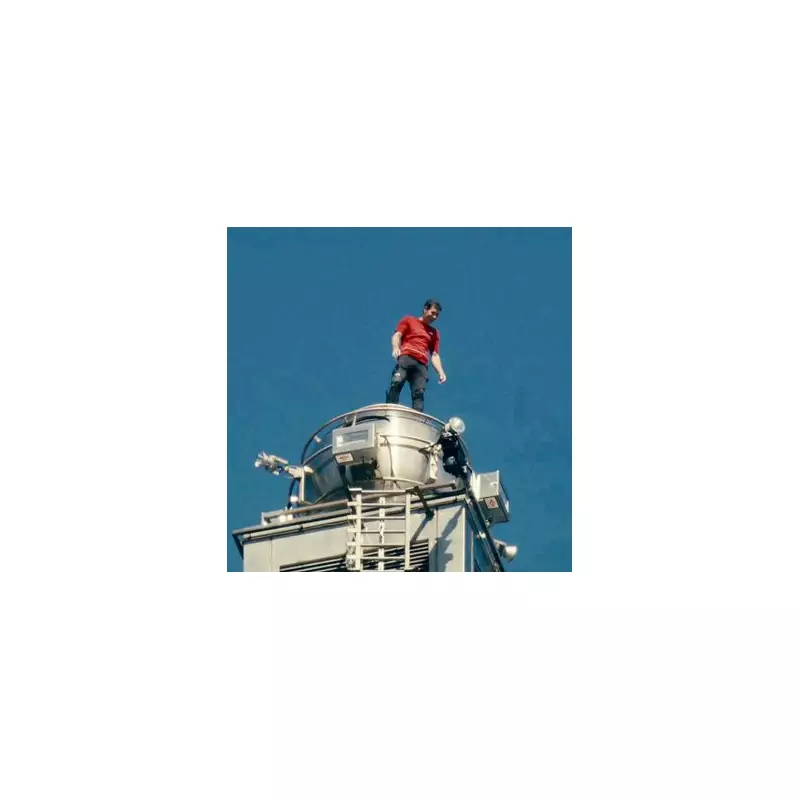
Netflix viewers across the globe were left utterly captivated yet perplexed after witnessing legendary free solo climber Alex Honnold complete one of his most audacious challenges to date. The historic live-streamed ascent of Taipei 101, one of the world's tallest skyscrapers, concluded with a pressing question echoing through social media platforms: how exactly did the climber make his descent?
The Historic Ascent That Captivated a Global Audience
Over the weekend, Alex Honnold, renowned for his rope-free climbs, undertook a breathtakingly risky live broadcast event. Scaling the formidable 1,667-foot-tall Taipei 101 in Taiwan without any ropes or safety equipment, he completed the brutal climb in a remarkable one hour and thirty-five minutes. The feat was originally scheduled for 1am UK time on Saturday, January 24th, but was postponed due to weather-related safety concerns, ultimately taking place at 1am on Sunday, January 25th.
Netflix had heavily promoted the event with the tantalising tagline: "No ropes. No fear. Free solo legend Alex Honnold risks it all in a high-stakes, live ascent of one of the world's tallest skyscrapers in Taipei, Taiwan." Throughout the climb, Honnold waved to enthusiastic fans cheering from the ground and from within the building's interior.

The Climactic Moment and the Lingering Question
Upon reaching the summit, Honnold was heard simply stating, "Sick," before remarking on the windy conditions. He then took out his personal phone to record the moment and capture selfies, savouring the panoramic view. While audiences at home were amazed by the ascent, a singular query dominated online discussions immediately afterwards.
Social media platform X became a hub for viewer reactions, with one person posting, "But how does he get down?" Another added, "The journey up looks terrifying…thinking about coming back down may be even scarier." Multiple users echoed the sentiment with posts like, "BUT HOW DOES HE GET BACK DOWN?" and "How did he get down after that?" Clearly, the method of descent was a mystery captivating the global audience.
The Reveal: An Anticlimactic Yet Practical Descent
The answer to the widespread curiosity has now been revealed, and it may strike some as surprisingly straightforward. According to a report from The Sporting News, Alex Honnold's descent was markedly different from his ascent. After completing the climb, he reportedly put on a harness and rappelled down from the very top of the skyscraper.
Following this initial rappel, the report claims he then took a lift, or elevator, directly to the bottom of the building. This method stands in stark contrast to some of his other legendary climbs, such as his famous free solo of El Capitan in Yosemite National Park. In that instance, the only viable options post-ascent are typically rappelling or a careful, technical down-climb.
Why This Method Was Possible
The practicality of this descent is directly attributable to the nature of Taipei 101 itself. Unlike a sheer rock face, it is a fully operational skyscraper equipped with interior access points near its summit. These are used for routine maintenance and observation purposes. This infrastructure allowed Honnold to transition safely from the building's exterior to a secure interior space upon completion of his climb.
The Sporting News further suggests that for Honnold, the primary focus is always the ascent itself. Once his goal is achieved, he reportedly sees no compelling reason to extend the inherent risk beyond that point. The descent, therefore, becomes a matter of practicality and safety rather than an extension of the stunt.
The entire event, titled Skyscraper LIVE, remains available for streaming on the Netflix platform, allowing viewers to relive the tense and historic climb that left everyone wondering about the journey back to solid ground.