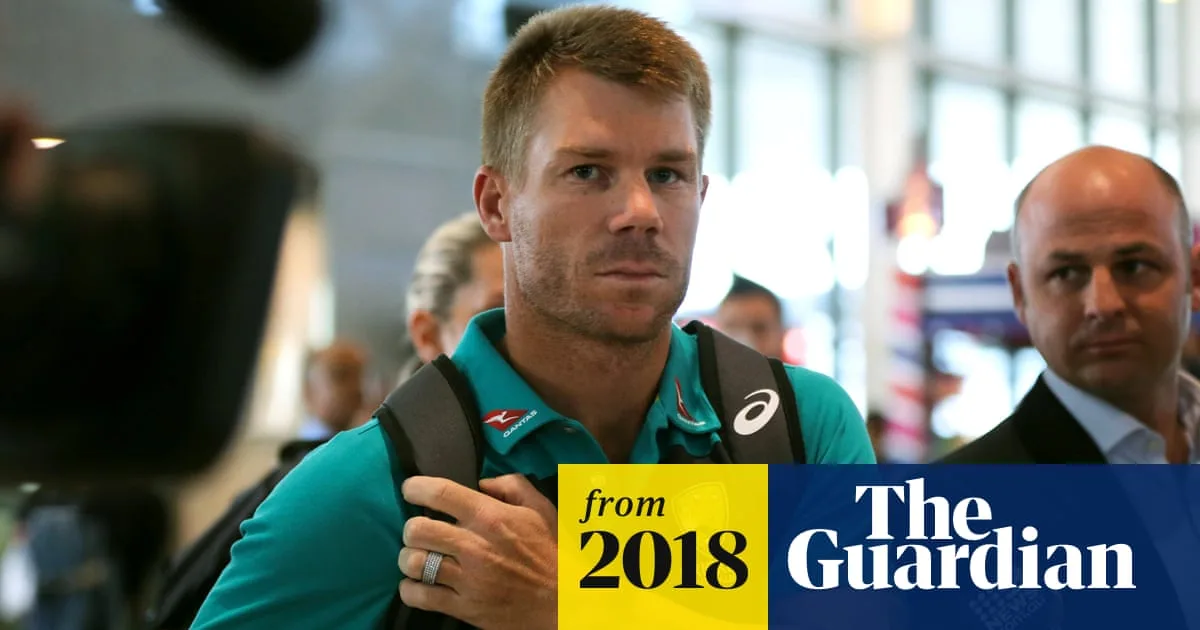
Channel Nine has defended its decision to employ banned cricketer David Warner as part of its commentary team for Australia’s upcoming one-day international series in England, despite criticism over the appointment. Warner, serving a 12-month suspension for his role in the ball-tampering scandal in South Africa, will analyse matches from a studio in Sydney rather than travelling to the UK.
Tim Gilbert, sports presenter on Nine’s Today show, said he did not understand the backlash. “He has been banned from playing cricket, I get that. But has he been banned from earning money, banned from working? He has a family... They did the wrong thing, they’ve owned up, they’ve fessed up... Not banned from any commentary boxes,” he said on Tuesday.
Today co-host Karl Stefanovic said Warner’s involvement would offer insight into “what happened and what his thought process is”, adding: “I can’t wait to hear from him... I think it’s an astounding appointment.” Warner will provide analysis during the second ODI against England in Cardiff on Saturday, before making his playing return in a T20 tournament in Toronto later this month.
Nine’s director of sport, Tom Malone, said: “People have tried to paint Dave as the villain in all this, but he’s been hurting as much as the others. He just wants to atone for his mistakes and move on – I hope Australia gives all of them that chance.” Australia spinner Ashton Agar, who faces England in the opening ODI on Wednesday, welcomed Warner’s return to cricket, saying: “For him as a person that’s a great thing to be back around cricket.”