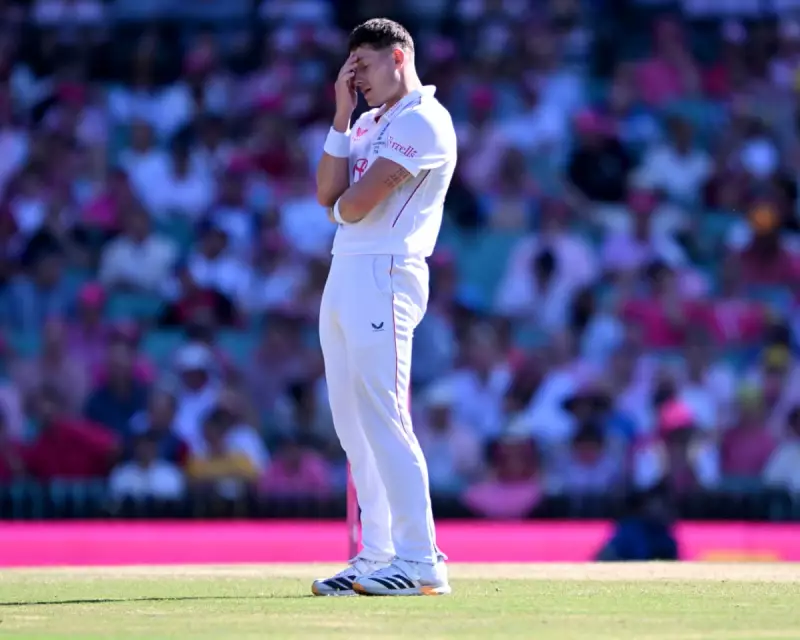
On a subdued morning at the Sydney Cricket Ground, Matthew Potts began his spell from the Randwick End and was immediately subjected to a brutal assault. His first four deliveries were dispatched to the boundary by the rampant Travis Head, setting the tone for a gruelling day that laid bare England's exhausted bowling resources in this Ashes series.
A Baptism of Fire at the SCG
Potts, a late call-up to the touring party, found himself thrust into the fray on the third day of the fifth Test. With Australia comfortably placed, his introduction was met with a flurry of attacking strokes from centurion Travis Head. The crowd, sensing English vulnerability, offered mock cheers for a rare defensive shot, welcoming the Durham seamer to what would become a punishing treadmill.
By lunch, England had produced what many considered their worst session of the entire series. It yielded 115 runs for the loss of just one wicket—the nightwatchman—and was littered with errors: three dropped catches, two burned reviews, and a missed run-out. All the while, Head advanced serenely towards 150, treating the bowling with an almost contemptuous ease.

The Conscripted Paratrooper
This was not a fair reflection of Matt Potts at his best. The 26-year-old is a skilful bowler with a Test average under 30, known for his wholehearted effort. On this day, however, he appeared what he was: an underprepared conscript answering an emergency call. He bowled with a soldierly, chest-out gallop, reminiscent of a paratrooper leaping into action, but his lines and lengths were inevitably scattered.
His presence on the field underscored a deeper issue within the England setup. Potts would not be on this tour if not for a cascade of absences: the retirement of Jamie Overton, injuries to Jofra Archer, Gus Atkinson, and Mark Wood, a limping Chris Woakes, and the unavailability of Ollie Robinson. He was, in essence, the last man standing, a "dogged jar of pesto at the back of the fridge" brought out to do a job.
Systemic Failures in Bowling Preparation
The struggles of Potts and fellow replacement Brydon Carse—who together conceded over 100 runs in 16 overs at a critical juncture—point to a systemic neglect of bowling within the much-vaunted 'Bazball' philosophy. The regime has been built on batting intent, often treating the bowling department as an afterthought.
Potts arrived in Sydney having not played a first-class match since September. His preparation consisted of limited-overs cricket and net sessions. This lack of meaningful overs is a recurring theme for England's bowlers on this tour, who have been expected to find rhythm in the heat of Test battle against a world-class Australian batting line-up.
The problem is compounded by a coaching approach that reportedly dismisses detailed pitch-map analysis as excessive. Instead, bowlers are given basic, almost simplistic briefings. The result was visible in Sydney: a lack of consistent pressure, poor lengths, and a feeling that England was always chasing the game, even when nominally ahead.
By the time Head smashed a Potts half-tracker for six to bring up the hundred conceded by the bowler, the narrative was set. Potts did rally later, finding a better length and showing resilience, but the figures—0 for plenty from his early overs—will look grim in the scorebook.
Ultimately, Matthew Potts' difficult day in Sydney was less about his own failings and more a symbol of a touring party that has mismanaged its bowling resources. He is the willing foot soldier sent over the top with insufficient support, highlighting how this Ashes tour has been lost not just in batting collapses, but in the gradual fade-out of a depleted and undercooked attack.