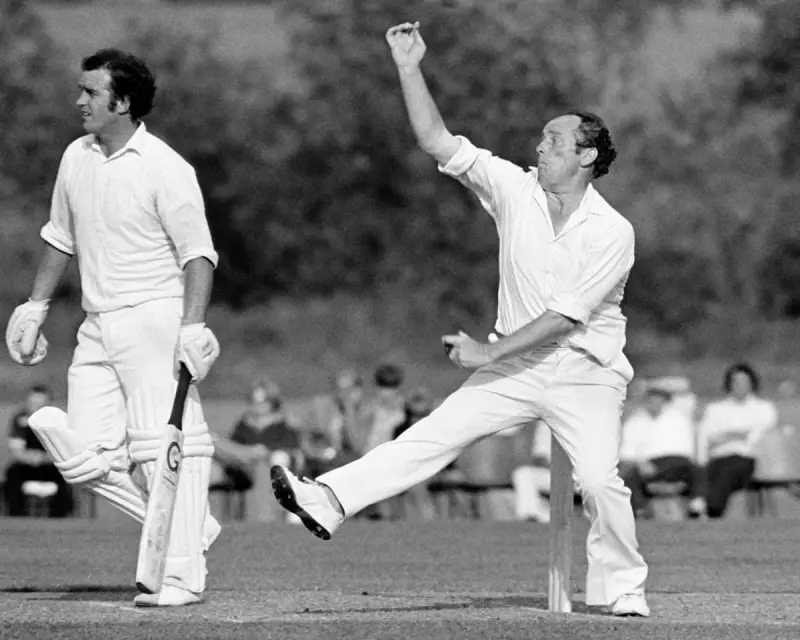
Norman Gifford: England Cricket's Unsung Spin Hero Passes Away
The cricketing world is in mourning following the death of Norman Gifford, the esteemed former England left-arm spinner and Worcestershire captain, at the age of 85. Gifford's passing marks the end of an era for a player whose contributions to the sport, both domestically and internationally, were characterised by skill, dedication, and a quiet professionalism that often saw him overshadowed by more flamboyant contemporaries. His career spanned a transformative period in English cricket, and his legacy endures through his impressive statistics and the respect he commanded from teammates and opponents alike.
A Prolific Career in County and International Cricket
Norman Gifford's cricketing journey was defined by remarkable consistency and longevity. Born in 1940, he made his first-class debut for Worcestershire in 1960, quickly establishing himself as a key figure in the county's bowling attack. Over his illustrious career, he claimed an impressive 1,651 first-class wickets, a testament to his endurance and tactical acumen. Gifford's ability to extract turn and bounce from pitches, coupled with his economical bowling, made him a formidable opponent in the County Championship, where he played a pivotal role in Worcestershire's successes during the 1960s and 1970s.
His international career with England, though perhaps underrated, was equally significant. Gifford earned 15 Test caps between 1964 and 1973, taking 143 wickets at an average of 31.47. These figures place him among England's most effective spin bowlers of his generation, with notable performances including a five-wicket haul against Australia. Despite facing competition from other spinners and the challenges of overseas tours, Gifford's reliability and control made him a valuable asset to the national team, contributing to several memorable victories.

Leadership and Legacy at Worcestershire
Beyond his bowling prowess, Norman Gifford demonstrated strong leadership qualities, captaining Worcestershire from 1971 to 1978. Under his guidance, the team achieved notable successes, including winning the County Championship in 1974. His captaincy was marked by a calm, strategic approach that inspired confidence in his players, fostering a cohesive unit that thrived in competitive cricket. Gifford's influence extended off the field as well, where he was known for mentoring younger players and upholding the values of sportsmanship and teamwork.
After retiring from playing, Gifford remained involved in cricket, taking on coaching roles and contributing to the development of the sport at grassroots levels. His dedication to nurturing talent ensured that his impact continued long after his active career ended. Tributes from former teammates, cricketing authorities, and fans have highlighted his humility, work ethic, and the quiet dignity with which he approached the game, cementing his status as a beloved figure in English cricket history.
Remembering a Cricket Icon
Norman Gifford's death is a significant loss to the cricketing community, prompting reflections on his enduring contributions. In an era dominated by fast bowlers and batting stars, Gifford's spin artistry offered a contrasting style that enriched the sport's diversity. His career statistics—143 Test wickets and over 1,600 first-class wickets—underscore his effectiveness and durability, while his leadership at Worcestershire left an indelible mark on the county's legacy.
As the sport continues to evolve, Gifford's example serves as a reminder of the importance of skill, perseverance, and integrity. His obituary not only commemorates a talented athlete but also celebrates a life dedicated to cricket, inspiring future generations of players. The cricketing world will fondly remember Norman Gifford for his quiet excellence and the lasting impression he made on the game, ensuring his memory lives on in the annals of English cricket.