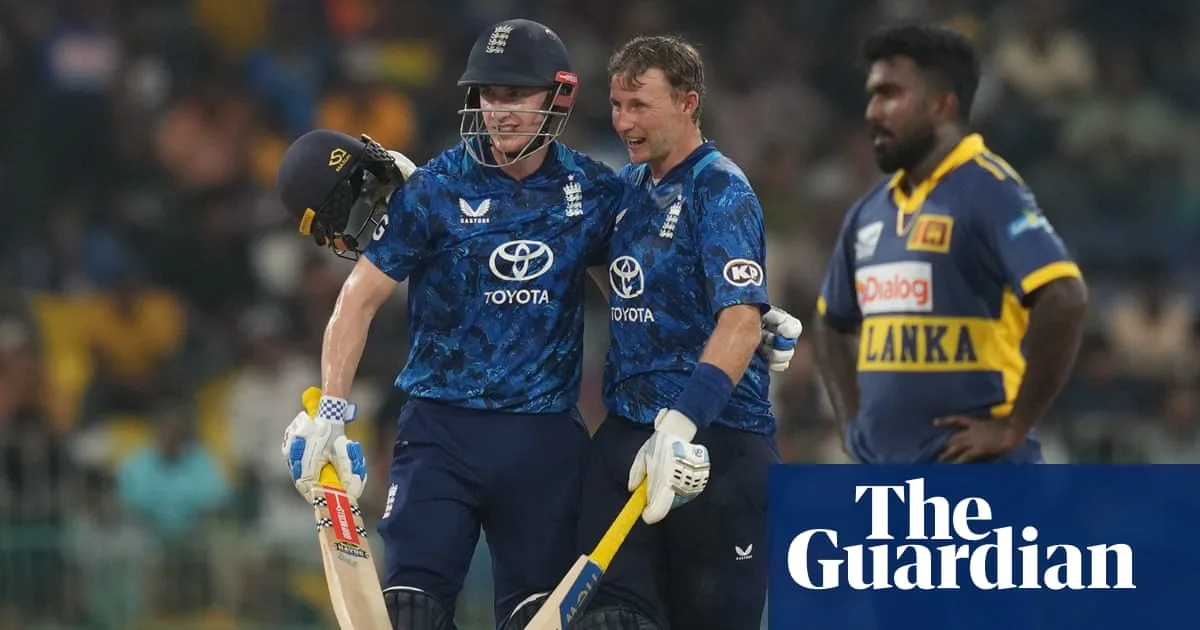
From Ashes Debacle to Subcontinental Challenge: England's Cricket Reset Begins in Sri Lanka
Just two weeks after the conclusion of a humiliating Ashes series defeat in Australia, England's cricket team faces another formidable challenge as they begin a one-day international series against Sri Lanka. Under the leadership of Harry Brook, the squad arrives at Colombo's Premadasa Stadium carrying the weight of recent disappointments and the urgent need for redemption.
Historical Echoes and Current Realities
The timing of this tour carries uncomfortable historical parallels for English cricket. In 2014, a whitewash defeat in Australia was followed by a group-stage exit at the World T20, including a shocking loss to the Netherlands. Similarly, in 2011, England's 50-over side suffered a quarter-final humiliation against Sri Lanka at this very stadium after a difficult winter down under.
Now, fifteen years later, England return to the Premadasa without even the consolation of a recent series victory to bolster their confidence. The first ODI begins just fourteen days after Alex Carey struck the winning runs at the SCG, marking the start of the second half of England's winter campaign, which includes three T20 matches in Pallekele before culminating with the T20 World Cup in March.
Leadership Under Scrutiny and Team Dynamics
Harry Brook's captaincy begins under unusual circumstances, with his own professionalism questioned following a controversial incident involving a bouncer during England's tour of New Zealand. Brook himself has acknowledged needing to regain the trust of his players, creating an atmosphere of uncertainty within the squad.
Meanwhile, Brendon McCullum's position as head coach faces increasing scrutiny, though his appointment by Rob Key appears secure for now. The entire leadership structure seems to be operating without the clear authority that typically accompanies successful international setups, adding another layer of complexity to England's challenges.
Form and Format Challenges
England begin this tour in what has become their weakest format. The ODI side has suffered six series defeats in their last seven attempts, excluding a winless Champions Trophy campaign last year. Since taking over as white-ball coach in January, McCullum has yet to secure an ODI victory away from home.
The team currently sits eighth in the ODI rankings, dangerously close to positions that wouldn't guarantee qualification for next year's World Cup. This represents a remarkable decline for a squad that, under Eoin Morgan's leadership, developed an aura of invincibility in limited-overs cricket.
Opposition Strengths and Selection Questions
Sri Lanka presents a formidable challenge, having won seven consecutive 50-over series at home over the past two years, with victories against quality opposition including Australia and India. Wanindu Hasaranga's wrist-spin has made him the joint leading wicket-taker in ODIs since the beginning of 2024, creating significant problems for visiting batting lineups.
England's selection for the series opener raises questions about balance and strategy. Sam Curran's placement at number eight seems peculiar given his recent match-winning half-century at number five in the Big Bash. Zak Crawley returns to List-A cricket after more than two years, resuming his Test partnership with Ben Duckett despite their struggles during the Ashes series.
The Path Forward
Brook has emphasized the need for his team to understand "when to absorb pressure and apply pressure back," though this familiar mantra will face its sternest test against Sri Lanka's disciplined attack. The absence of Jofra Archer, recovering from a side strain, places additional responsibility on Adil Rashid and the remaining bowling resources.
While Brook rightly points to the quality within England's batting lineup – noting that five to seven players would feature in most international teams – consistency remains the crucial missing ingredient. The same batting order capable of posting 400 runs twice last summer has shown alarming fragility in recent months.
Victories in Sri Lanka would provide much-needed confidence after the misery of the Ashes, but they won't come easily. The series represents more than just another bilateral contest; it's an opportunity for England to begin rebuilding their identity and competitive edge ahead of crucial global tournaments.