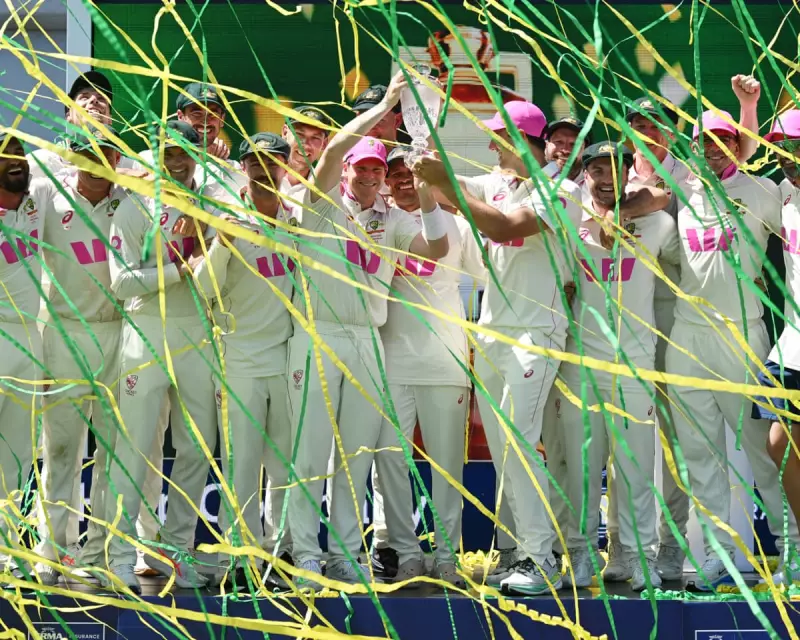
Australia lifted the Ashes urn at the Sydney Cricket Ground following a comprehensive 4-1 series victory, yet the triumph was overshadowed by a widespread sense of anticlimax. Despite the sunny scenes and celebratory pitch invasion, the 2025-26 series has been branded a profound disappointment, failing to deliver the epic contest its storied history promised.
A Hollow Victory in the Sydney Sun
The final day in Sydney provided picturesque visuals as fans flooded the SCG turf and Usman Khawaja enjoyed a farewell with family. However, the conclusion felt insubstantial. The series lacked the momentous quality expected of an Ashes battle, with the result feeling decided after a mere 31 hours of actual play across the first two Tests. The subsequent matches in Brisbane, Adelaide, and Melbourne did little to elevate the contest, featuring one-sided sessions and collapses from both sides.
England's Ill-Prepared 'Bazball' Philosophy Exposed
England arrived as a rabble, their much-vaunted 'Bazball' ethos under Brendon McCullum and Ben Stokes crumbling under Australian pressure. Critics argue the tourists were spectacularly ill-prepared, approaching the mission with an arrogant assumption that positive intent alone would suffice. Their failure to adapt techniques for Australian conditions proved fatal. While Ben Stokes is expected to continue as captain, the tour has been a severe reality check for an era that had this Ashes series as its ultimate goal.

England's woes were comprehensive: poor batting, wayward bowling, and, crucially, costly dropped catches that could have altered the series outcome. Their selection appeared chaotic, exemplified by the late call-up of Jacob Bethell with minimal first-class experience, a gamble that yielded a bright innings but underscored the disarray.
Australian Triumph Built on Mediocrity
Despite the 4-1 scoreline, Australia's performance was far from dominant. The home side were there for the taking and benefited significantly from English errors. The bowling attack and wicketkeeper Alex Carey were standouts, with Travis Head playing a blinder and Steve Smith finding form late. Beyond that, Australian batting was largely mediocre.
The statistics tell a damning story: only five batters across both teams averaged over 40. Most specialist batsmen averaged between 18 and 27. The series saw baffling selections and tactics from both camps, including deploying part-time spinners and constant batting order reshuffles. Brydon Carse ended as England's leading wicket-taker with 22 scalps, a testament more to the strange nature of the contest than sustained excellence.
In the end, nearly a million spectators were left feeling "unfulfilled" by a series that promised a clash of titans but delivered a spectacle well below the expected standard. The Ashes remains cricket's greatest rivalry, but this chapter will be remembered for its unfulfilled potential and a glaring lack of quality at its core.