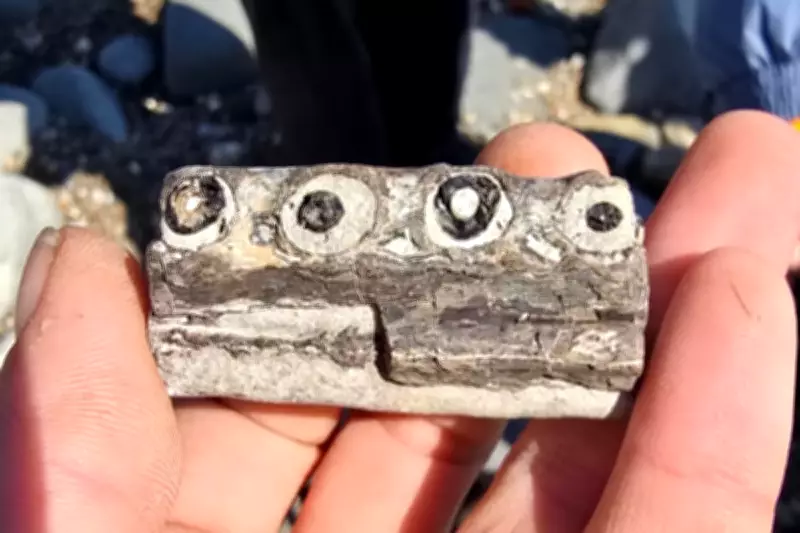
An amateur fossil hunter has made a remarkable discovery along the Jurassic Coast, unearthing a rare fragment of what is believed to be the world's oldest sea crocodile. Heather Salt, a keen enthusiast, found the upper jaw bone during a guided walk on the Lyme Regis shore in Dorset. Initially, she mistook the specimen for a piece of wood with nails embedded in it.
A Significant Find
Palaeontologist Dr Paul Davis from Lyme Regis Museum examined the discovery and identified it as a very rare crocodylomorph specimen. The fossil belongs to the same type as Turnersuchus hingleyae, an early Jurassic marine crocodile that was fully adapted to life in the sea. Only around 11 specimens of this species have ever been recorded, underscoring the importance of Ms Salt's find.
Donation to the Museum
Ms Salt generously donated the fossil to Lyme Regis Museum, where it is now on public display as part of a dedicated exhibit. The museum has expressed its gratitude for her contribution, which adds valuable insight into the prehistoric marine life of the Jurassic period.

The discovery highlights the ongoing importance of amateur fossil hunters in contributing to scientific knowledge. The Jurassic Coast, a UNESCO World Heritage Site, continues to yield significant finds that deepen our understanding of Earth's ancient history.