
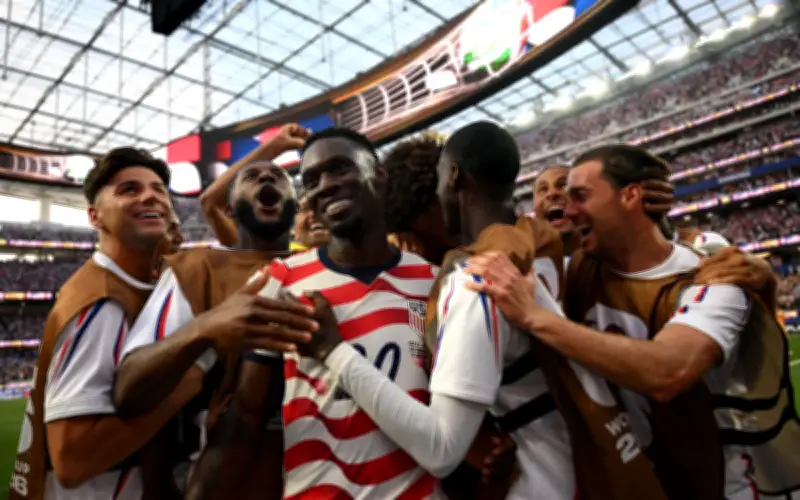
The United States men's national team produced their finest modern World Cup performance in their opening match, a 4-1 victory over Paraguay, only to suffer a dismal 4-1 defeat to Belgium in the round of 16. This stark contrast has left fans and analysts grappling with how to assess this golden generation.
A Tale of Two Performances
The 4-1 win over Paraguay was hailed as the most impressive performance in USMNT history, showcasing dominant control and superior chances. However, the subsequent loss to Belgium by the same scoreline in the knockout stage exposed the team's fragility under pressure. According to Leander Schaerlaeckens, author of The Long Game, this team both proved it is the most talented generation ever produced and utterly imploded in its first serious knockout test.
Christian Pulisic's Mixed Impact
Christian Pulisic, the face of the team, was largely absent in influence except for a manic 45-minute spell at the tournament's start. He appeared in countless commercials, outnumbered only by David Beckham, but failed to dislodge legends from the 1994 World Cup. His teammates, including Weston McKennie, Tim Ream, and Sergiño Dest, also underperformed relative to their recent form.
Age and Future Prospects
The core of this team is unlikely to improve by the 2030 World Cup, as key players will be in their early 30s. Antonee Robinson will be 32, while Tyler Adams, Pulisic, and McKennie will be 31, and Dest 29. Modern soccer players rarely improve at these ages, suggesting the window for this generation may be closing.
Missed Opportunity for Mainstream Breakthrough
The USMNT had a chance to permanently capture the nation's heart, with 42 million TV viewers tuning in—more than any college football or NBA finals game, and more than any baseball game this century. However, the team's faceplant, compounded by Donald Trump's intervention to overturn Balogun's suspension for the Belgium game, ruined the positive momentum. Trump's claims of influence were delicately disputed by FIFA, but the association with a personal defeat for Trump left a lingering negative impression.
Historical Context and Legacy
Despite the disappointment, the USMNT delivered their best World Cup performances in modern history, winning a single knockout game as in 2002. The commanding group-stage wins over Paraguay, Australia, and Bosnia and Herzegovina were unprecedented. In 2002, the US was fortunate to upset Portugal, draw with South Korea, and lose to Poland, before a flattering 2-0 win over Mexico. In contrast, the 2026 team won their group with a game to spare for the first time.
Conclusion
The legacy of the 2026 USMNT is one of soaring highs and crushing lows. They demonstrated real growth, bullying less talented teams and matching up well with peers, but disintegrated when it mattered most. As Schaerlaeckens notes, they soared as high as hoped and then stalled in mid-air, smashing a deep crater into how this campaign will be remembered.




