Vice President JD Vance Declines to Share Private Iran War Discussions with President Trump
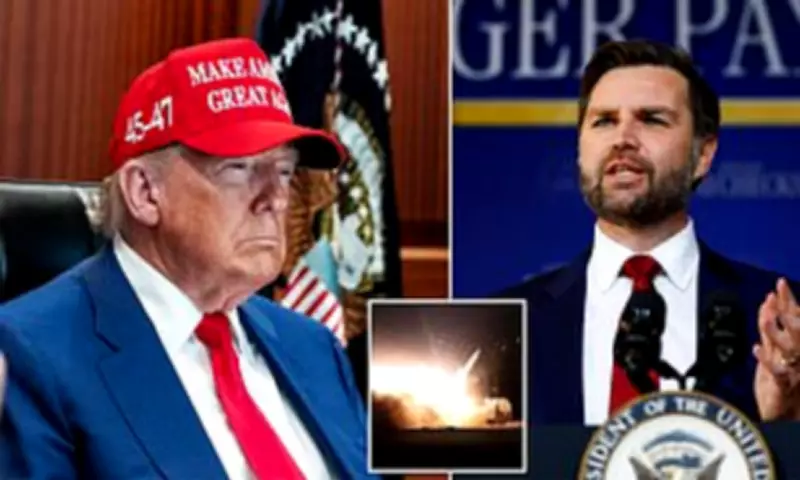
Vice President JD Vance has firmly refused to disclose the contents of his personal conversations with President Donald Trump regarding the ongoing US-Iran war, stating that doing so could potentially land him in prison. The 41-year-old former Marine, who has long advocated an anti-war stance shaped by his experiences in Iraq, made these remarks during a public appearance on Friday.
Vance's Anti-War Background and Current Stance
For years, Vance has preached an anti-war message deeply informed by his military service in the Iraq conflict. However, as the US-Iran war enters its third week, the typically vocal vice president has noticeably reduced his social media activity and has not publicly characterized Operation Epic Fury as a war, unlike President Trump who has done so repeatedly.
President Trump has openly acknowledged that Vance was 'less enthusiastic' about the military engagement and that the two differ 'philosophically' on the matter. This revelation follows a Politico report indicating that Vance expressed skepticism about the operation before it was officially ordered.
The Classified Conversation Defense
When pressed by reporters about what he has communicated to the President regarding the war, Vance asserted that he could not share details because these high-level discussions are classified—or at least he maintains they are. 'I hate to disappoint you but I will not show up here in front of God and everyone else and tell you what I said in the classified room,' Vance responded.
'Partially because I don't want to go to prison, and partially because I think it's important for the president of the United States to talk to his advisors without those advisers running their mouth to the American media,' the vice president added, receiving enthusiastic applause from the audience.
Emphasizing Operational Security and Cohesion
The Republican leader stressed the critical importance of maintaining privacy in high-level conversations with the President and top advisors to prevent operational security breaches. He humorously noted that he cannot even bring headphones into the Situation Room, let alone divulge classified discussions externally.
'When you're thinking about a major decision like this, the way the President makes these decisions is he talks to a lot of people. Obviously we're thinking about various ins and outs, various options, what this looks like, how to accomplish our goals, what our goals should be,' Vance explained.
He continued: 'And I think it's important for the President of the United States to be able to have that conversation with his team, without his team, then running their mouths to the American media. So part of what makes our national security team so cohesive is that we all trust each other, and we all have a very free exchange of ideas. I'd like to keep that going.'
Internal Divisions and Public Posture
A senior administration official confirmed that Vance is 'worried about success' in the conflict, just days after President Trump admitted on stage that the vice president had been less enthusiastic about the US-Israeli strikes than other cabinet members. According to sources, Vance 'just opposes' the war and remains skeptical, though he has reportedly fallen in line since the decision was made.
'Once the decision has been made, he's fully on board,' one official stated. Vance reportedly advocated for swift, decisive action to minimize casualties and questioned Joint Chiefs Chairman General Dan Caine and CIA Director John Ratcliffe about risks and complexities during pre-strike meetings.
Historical Context and Public Statements
Vance, an Iraq war veteran who endorsed Trump's second term in a 2023 Wall Street Journal op-ed, wrote that the President 'won't recklessly send Americans to fight wars overseas.' In a March 2 Fox News interview, he asserted that Trump would not allow the US 'to get into a multiyear conflict with no clear end in sight and no clear objective.'
He emphasized that the war would continue until Trump achieves the 'all-important objective of ensuring that Iran can't have a nuclear weapon.' Trump's initially unclear objectives appeared to validate some of Vance's privately expressed concerns, as the President called for Iranians to overthrow their regime.
Vance now navigates a delicate public balancing act as visible differences emerge between him and Trump for the first time, all while maintaining his commitment to operational security and presidential confidentiality.