UK Experts Warn US-Iran Strikes Lack Legal Basis, Urge Non-Involvement
Senior UK political and security figures have issued stark warnings that recent US and Israeli military strikes against Iran are not legally justifiable under British standards, urging the United Kingdom to resist being drawn into a potentially escalating conflict in the Middle East. The coordinated preventative attack, which triggered retaliatory strikes from Iran towards Israel, has sparked intense debate over its legitimacy and implications for international stability.
Former National Security Adviser Questions Legality
Lord Peter Ricketts, the UK's former national security adviser, has publicly stated that the United Kingdom would not consider the attacks legal. In an interview with BBC Radio 4's Today programme, he emphasised that there was no imminent threat to the United States, making the action a choice rather than a necessity. Lord Ricketts argued that the Israeli government had pre-empted any potential deal from US-Iranian negotiations on the nuclear programme, further complicating the legal landscape.
"None of this, I think, is in any sense legal in a way that the UK would recognise," Lord Ricketts declared. "There was really no imminent threat to the US. This is action that they chose to undertake, or were dragged into it by the Israelis."

Labour MP Echoes Concerns Over UK Involvement
Dame Emily Thornberry, chairwoman of the Commons Foreign Affairs Committee and a senior Labour MP, has reinforced these concerns, warning that the UK should avoid entanglement in the conflict. She echoed Lord Ricketts' assessment, stating that she did not believe the US-Israeli strikes had a legal basis, as there was no evidence of an imminent threat justifying such action.
"As far as I'm aware, we're not involved in this. There's not been British agreement to be involved in this, and I think that's the right thing to do," Dame Emily said. "I don't think that there's a legal basis for this action. They were not under imminent threat, and so it's therefore difficult to see what the legal justification is."
When questioned about the UK's stance, she emphasised that Britain should resist involvement unless directly attacked, noting the uncertainty surrounding potential Iranian strikes on Western bases in the Arab Gulf.
Context of the Strikes and International Reactions
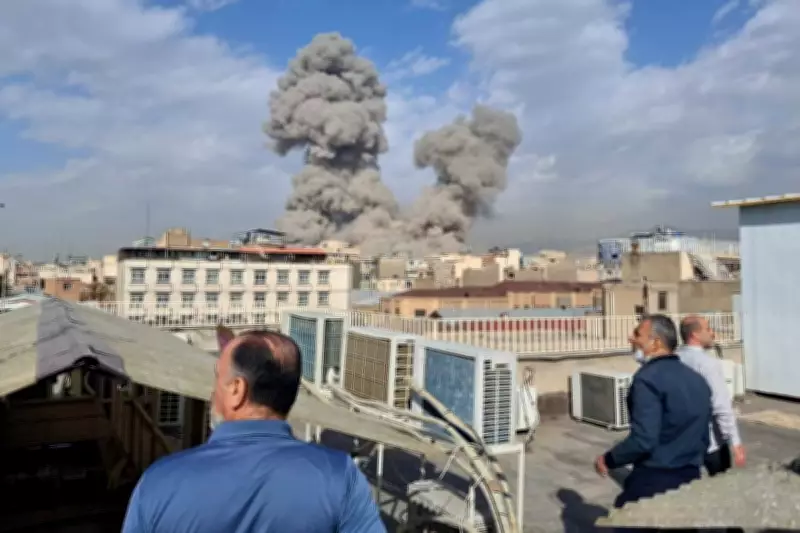
The strikes occurred on Saturday morning, with explosions reported over Tehran following what has been described as a preventative attack. In response, President Donald Trump confirmed a "major combat operation" in an eight-minute speech on Truth Social, asserting that Iran could never possess a nuclear weapon and vowing not to tolerate what he termed "mass terror."
This development has heightened tensions in the region, with experts warning of the risks of further escalation. The UK's position, as articulated by Lord Ricketts and Dame Thornberry, underscores a cautious approach focused on legal scrutiny and national security priorities.
As the situation continues to evolve, the international community watches closely, with debates over legality and diplomacy likely to intensify in the coming days.