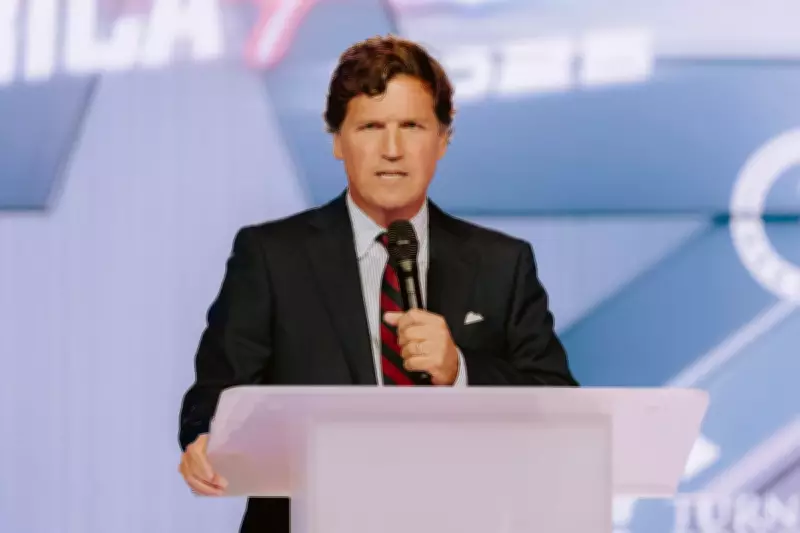
Tucker Carlson's Political Evolution: From Media Pundit to Presidential Speculation
The remarkable journey of Tucker Carlson from mainstream journalist to dominant force within the American far-right political landscape represents one of the most significant transformations in contemporary media and politics. His influence over Donald Trump and the broader MAGA movement has been profound, raising serious questions about his future political ambitions and potential presidential viability.
The Unlikely Adviser Without Government Experience
Donald Trump's governing style has consistently prioritized television punditry over traditional political counsel, making Tucker Carlson's role as a key informal adviser particularly noteworthy. Despite never holding any political or government appointment, Carlson has exercised substantial influence through his media platforms and personal relationship with the former president.
This influence reached its peak during Trump's 2024 re-election campaign, when the former president openly entertained the idea of selecting Carlson as his vice-presidential running mate. According to journalist Jason Zengerle's book Hated By All the Right People, Trump told reporters he "was entertaining the idea of tapping Carlson as his veep," highlighting the media personality's political standing at that moment.

A Fractured Relationship and Future Ambitions
Recent tensions have emerged between Carlson and Trump, particularly regarding foreign policy positions. When Carlson criticized attacks on Iran as "absolutely disgusting and evil," Trump responded sharply, stating "Tucker has lost his way" and "he's not MAGA." This public disagreement follows previous conflicts over issues including strikes on Iran and pressure regarding the Epstein files.
Some political observers speculate that if these ruptures continue to widen, Carlson could position himself as the true leader of a disillusioned MAGA base and launch a presidential campaign in 2028. This potential scenario underscores Carlson's enduring influence despite his lack of conventional political credentials.
The Transformation from Journalist to Far-Right Icon
Carlson's professional journey represents a dramatic shift from his early career as a respected writer for publications like New York magazine and Esquire. His evolution over three decades, as documented by Zengerle, mirrors broader changes within American politics and media.
After unsuccessful stints at CNN, PBS, and MSNBC—where his show was famously dismantled by Jon Stewart—Carlson eventually found his platform at Fox News, despite having previously described the network as "a mean, sick group of people." His rise coincided with Trump's political ascent, with Fox giving Carlson his own show just days before the 2016 election.
Building an Independent Media Empire
Following his abrupt dismissal from Fox News in 2023—possibly related to the Dominion lawsuit settlement—Carlson created his own successful media network. This platform featured controversial interviews with figures including Andrew Tate, Nazi apologist historian Darryl Cooper, and Donald Trump himself.
Carlson further cemented his influence with the three-part series Patriot Purge, which presented the January 6 Capitol riots as "a false flag operation, instigated by undercover FBI operatives." This narrative aligned with conspiracy theories circulating within far-right circles.
Shaping Policy and Personnel
Behind the scenes, Carlson played significant roles in Trump's second administration. He was instrumental in the vice-presidential selection of J.D. Vance, whom he had mentored into politics, and influenced the appointments of at least two cabinet members: Robert F. Kennedy Jr. and Tulsi Gabbard.
Carlson's policy influence extended to immigration, where he advocated for border walls as early as 2005, and foreign policy, where his criticisms of Ukrainian President Volodymyr Zelensky—sometimes employing antisemitic tropes—were echoed in Vance's confrontational approach.

International Alignments and Controversial Positions
Carlson has expressed sympathy for authoritarian leaders including Vladimir Putin, becoming the first American journalist to interview the Russian president after the invasion of Ukraine. He has also promoted Viktor Orbán's Hungarian regime as a "lesson" for America and advocated for white South African immigrants.
More recently, Carlson has embraced increasingly antisemitic rhetoric, claiming Epstein worked at Israel's behest and criticizing Israeli actions in Gaza. This represents a stark departure from his earlier collaborations with prominent Jewish intellectuals like Bill Kristol and John Podhoretz.
The Republican Party's Transformation
Carlson's journey reflects broader changes within the Republican Party, which has embraced positions that previous leaders like John McCain and Mitt Romney would have denounced as racist and undemocratic. As the party has moved toward conspiratorial territory, so too has Carlson, though the motivations behind this shift remain unclear.
Zengerle's book documents this transformation but offers limited explanation for why it occurred. The question remains whether Carlson's embrace of extreme positions represents political calculation or genuine belief, and whether he bears responsibility for policies implemented under Trump's influence.
Future Prospects and Political Legacy
As America approaches the 2028 election cycle, Carlson's potential presidential ambitions loom large. His ability to command millions of viewers and shape political discourse positions him uniquely within the Republican landscape, regardless of his relationship with Trump.
The ultimate test of Carlson's influence may depend on whether his media prominence can translate into electoral success, and whether the Republican Party continues its transformation toward the ideological territory he now occupies.