TSA Crisis Deepens as 500 Officers Quit During Government Shutdown
The Transportation Security Administration is facing an unprecedented staffing crisis with nearly 500 officers resigning during the ongoing government shutdown, according to the latest Department of Homeland Security figures. As Congress races against time to fund DHS before the spring recess, TSA officials warn that airport operations may need to be suspended entirely if the budget impasse continues.
Republican Senators Present "Final" Funding Proposal
Senate Majority Leader John Thune declared on Thursday that Republicans have delivered their "last and final" offer to Democrats regarding Department of Homeland Security funding. The proposal would fund most DHS operations but excludes funding for immigration enforcement and removal operations, creating a significant point of contention between the parties.
The Republican plan includes some new restrictions on immigration officers, such as mandatory body camera usage, but notably omits Democratic demands including requirements for federal agents to wear visible identification and prohibitions on conducting raids near schools, churches, and other sensitive locations.

Airport Chaos Escalates Nationwide
Absenteeism among remaining TSA staff has reached critical levels, with 41% of employees calling in sick at Atlanta's Hartsfield-Jackson International Airport and 39% at Houston's George Bush Intercontinental Airport. Nationwide, over 11% of scheduled TSA employees missed work on Wednesday alone, representing more than 3,120 callouts.
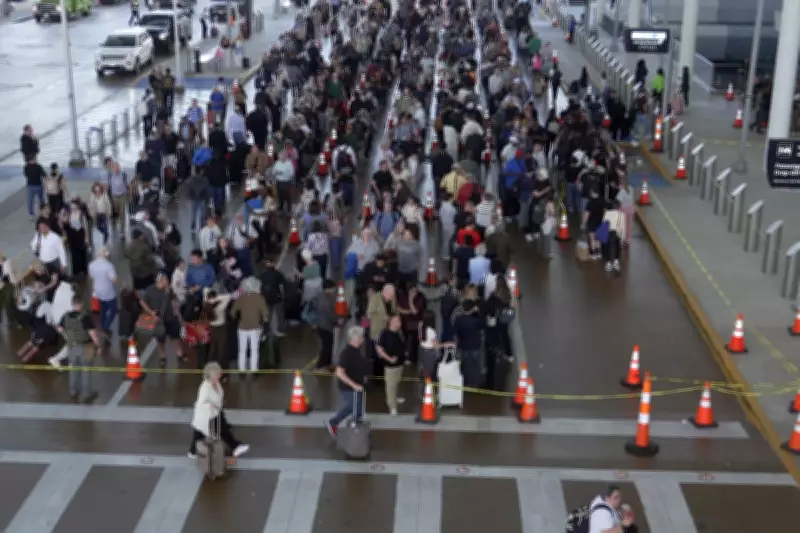
Travelers are experiencing extreme delays, with security lines extending outside terminals and wait times reaching four hours at multiple major airports. Houston's George Bush Intercontinental has become a particular flashpoint, with passengers reporting missed flights after waiting over three hours in security lines.
Financial Strain on TSA Workforce
TSA employees are facing their second consecutive missed paycheck as the shutdown enters its 41st day. Acting TSA Administrator Ha Nguyen McNeill testified before Congress that many officers are experiencing severe financial hardship, with some sleeping in their cars, selling blood plasma, and taking second jobs to make ends meet.
"Some are sleeping in their cars, selling their blood and plasma, and taking on second jobs to make ends meet, all while being expected to perform at the highest level when in uniform to protect the traveling public," McNeill told lawmakers.
ICE Deployment Creates Additional Complications
Immigration and Customs Enforcement officers have been deployed to assist with security at several airports, including Southwest Florida International Airport near Fort Myers. This deployment has prompted immigrant advocacy groups to advise undocumented individuals to avoid airports where ICE agents are present.
"If you are undocumented, it is recommended to not go to the airport - inside or outside," Unidos Immokalee warned its followers on social media regarding the Florida airport.
Political Standoff Continues
President Donald Trump has suggested potentially deploying the National Guard to assist at airports, though legal scholars question whether federalized troops could perform security screening duties under the Posse Comitatus Act. The president has blamed Democrats for the shutdown, while Democratic leaders insist on substantive changes to immigration enforcement policies.
Senate Democratic leader Chuck Schumer emphasized that "We've been talking about ICE reforms from day one," while House Speaker Mike Johnson accused Democrats of putting national security at risk.
Wider Implications for Homeland Security
The Federal Emergency Management Agency's Disaster Relief Fund is "rapidly depleting" according to agency officials, raising concerns about emergency response capabilities. DHS has operated without routine funding since mid-February, creating uncertainty across multiple homeland security functions.
As negotiations continue to stall, TSA officials warn that airport closures may become inevitable if callout rates continue to increase. The situation represents one of the most severe operational challenges in the agency's history, with implications for both national security and the traveling public.