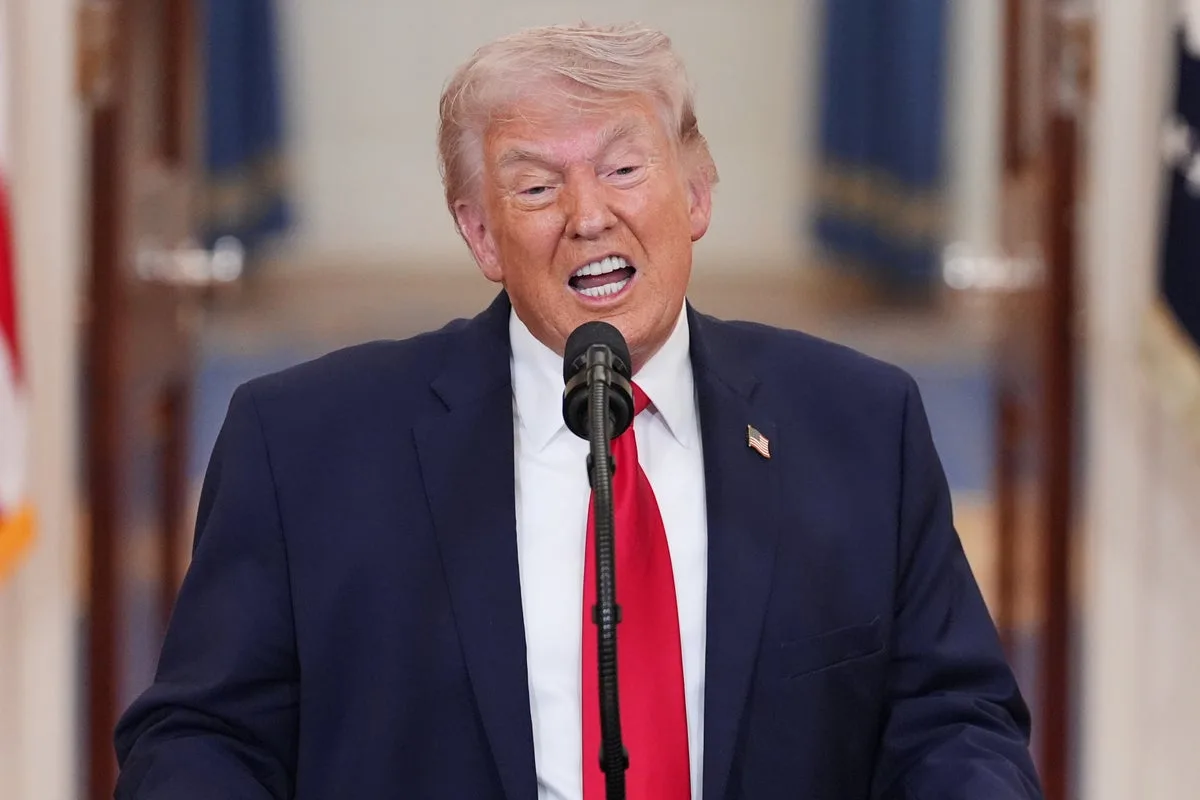
Donald Trump has spent his career criticising elite presidents for lacking the courage to act on their threats. However, his announcement to extend the deadline for strikes against Iran by two weeks has raised questions about the credibility of his words. Critics argue that Trump's pattern of making bold threats but failing to follow through—dubbed 'TACO' (Trump Always Chickens Out)—undermines his authority on the global stage.
Trump's decision to back down from his aggressive stance on Iran is seen as a strategic weakness that surpasses previous humiliations he used to condemn in past presidents. This retreat suggests that world leaders may no longer need to take Trump's threats seriously, echoing his 2013 criticism of Barack Obama for walking back from a 'red line' on Syria's use of chemical weapons.
Over the weekend, Trump escalated rhetoric by declaring 'Power Plant Day' and 'Bridge Day' for US forces unless Iran opened the Strait of Hormuz, threatening 'a whole civilization will die tonight.' Such language, experts say, amounted to threats of war crimes and genocide, bringing the world to the brink of disaster. While Trump ultimately extended the deadline—possibly due to appeals from Pakistan's Prime Minister Shehbaz Sharif or concerns about political fallout—the damage may be irreversible.

The retreat does not erase the fact that Trump opened the option to attack civilian infrastructure, creating a new phase of tension with Iran. Analysts warn that this could embolden adversaries like Russia and China, who may view Trump as weak, while also prompting allies like Canada to adopt a more confrontational posture. Iran, for its part, is likely to retaliate against US allies or Israel to demonstrate that such threats carry consequences.
Ultimately, the world now faces a precarious situation where Trump's bluffs are difficult to decipher. As one observer noted, the adage from Trump's first Defense Secretary James Mattis holds true: the enemy gets a vote. The long-term implications for US credibility and international stability remain uncertain.