
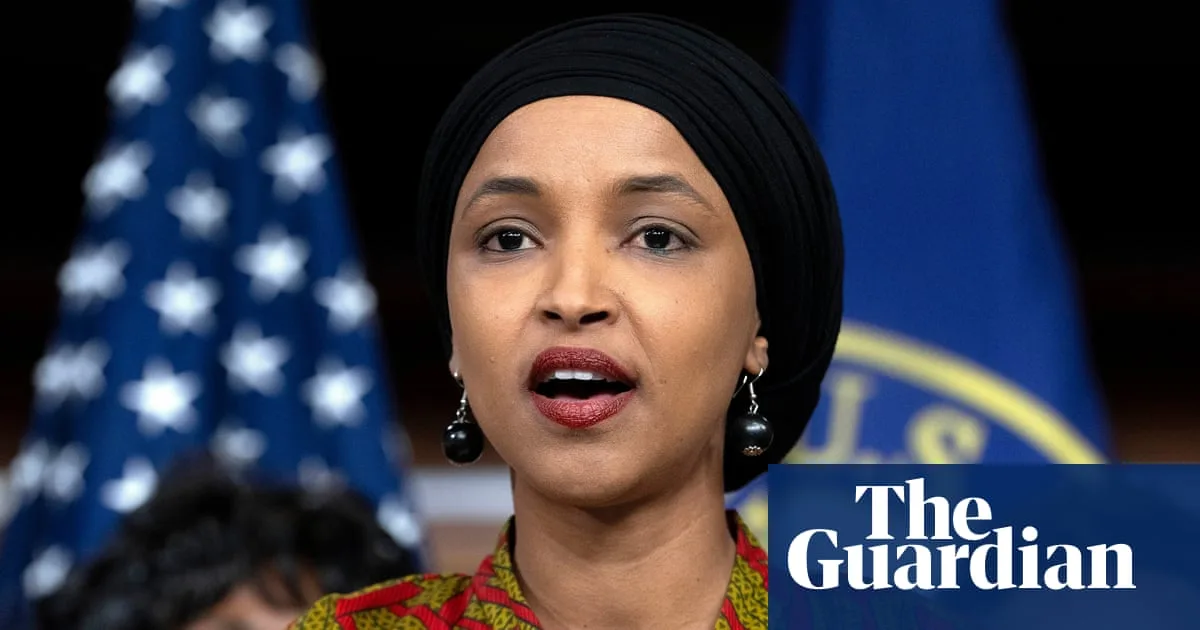
Ilhan Omar, the Democratic congresswoman for Minnesota, has described Donald Trump’s recent comments about the Somali community as “completely disgusting”. Speaking on CBS’s Face the Nation, she said the president’s “hateful rhetoric” could lead to dangerous actions by his supporters.
During a cabinet meeting, Trump referred to Somalis in the US as “garbage” and suggested they should be returned to Somalia, which he called “not even a nation”. His administration has also restricted immigration from Somalia and 18 other countries.
Omar, who was born in Somalia, defended the community, noting that many are American citizens. She acknowledged recent fraud cases involving some Somali residents, calling the fraud “reprehensible”, but emphasised that she was among the first to call for investigations into schemes like the Feeding Our Future scandal.
The Minneapolis mayor, Jacob Frey, has signed an executive order barring the use of city facilities for immigration enforcement operations. Omar wrote in the New York Times that Trump is “reverting to what he knows best: trying to divert attention by stoking bigotry” as his economic promises fail.
Treasury Secretary Scott Bessent alleged that some fraud proceeds may have been funnelled to the terrorist group al-Shabaab, and that donors to Omar’s campaign were involved. Omar denied any link, stating the money was sent back years ago, and questioned why the FBI and courts had not raised terrorism charges if the claims were true.




