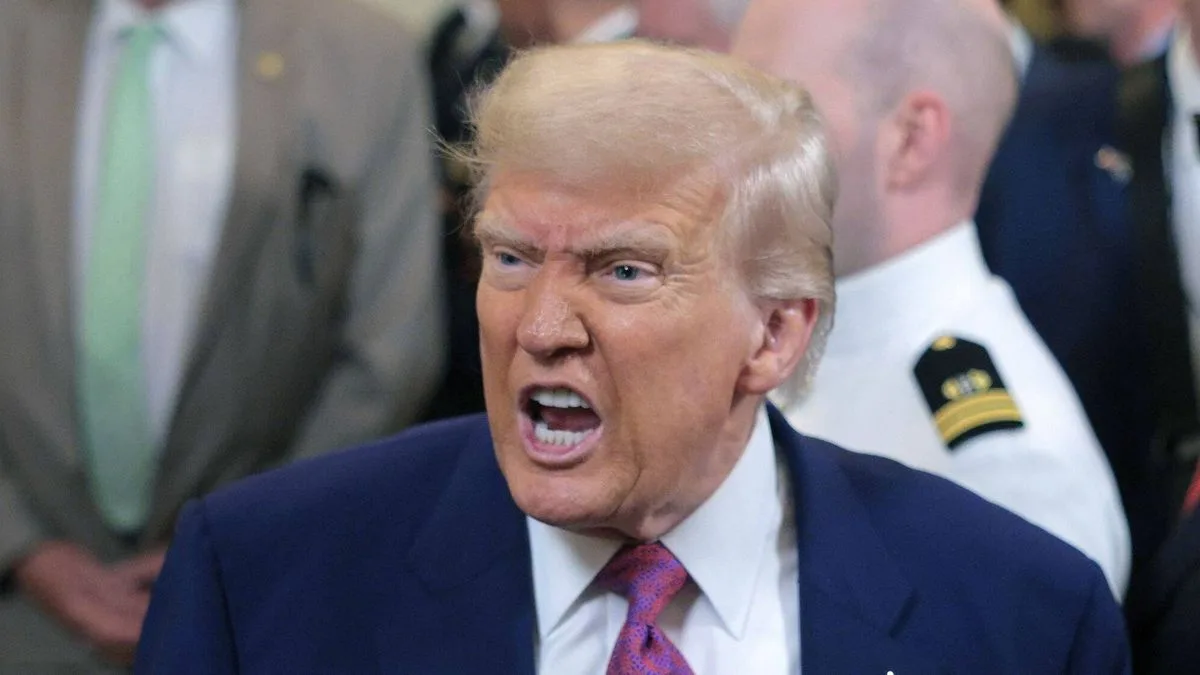
Donald Trump could unleash 'narcissistic rage' if he faces continued criticism over a string of deaths linked to Immigration and Customs Enforcement (ICE) operations, according to psychotherapist Mark Vahrmeyer. At least six people have died during the Trump administration's intensified immigration enforcement campaign, including Alex Pretti, 37, and Renee Good, also 37, in Minneapolis, Minnesota, sparking fierce backlash.
Trump has long been a polarising figure, and more than 200 mental health professionals signed a letter before his inauguration warning he showed 'symptoms of severe, untreatable personality disorder - malignant narcissism.' The letter, organised by Anti-Psychopath PAC, cited his 'failure to conform to social norms, repeated lying, reckless disregard for the safety of others, irritability, impulsivity, irresponsibility and lack of remorse.'
Vahrmeyer, speaking on behalf of the UK Council for Psychotherapy, explained that when a narcissistically structured person is challenged publicly, it triggers 'narcissistic wounding'—a puncture in the image they need to feel solid inside, leading to shame and humiliation. The common defence is 'narcissistic rage,' where shame fuels rage and demands an enemy. 'The aim is to smash whatever (or whoever) caused the exposure,' he said.
If even MAGA supporters begin to dissent or withdraw admiration, Trump is likely to experience it as betrayal, not feedback. The temptation would be escalation: louder rhetoric, sharper enemies, and punitive gestures to restore dominance. Immigration enforcement offers an attractive arena for this psychology, with simple villains and dramatic visuals.
However, Vahrmeyer noted that Trump is not operating in a vacuum; courts, state officials, Congress, and reality can impose limits. If he changes direction, it would likely be forced adaptation rather than contrition. 'A narcissistic mind can pivot when it must, but it will typically rewrite the pivot as victory, necessity, or sabotage by others,' he added.