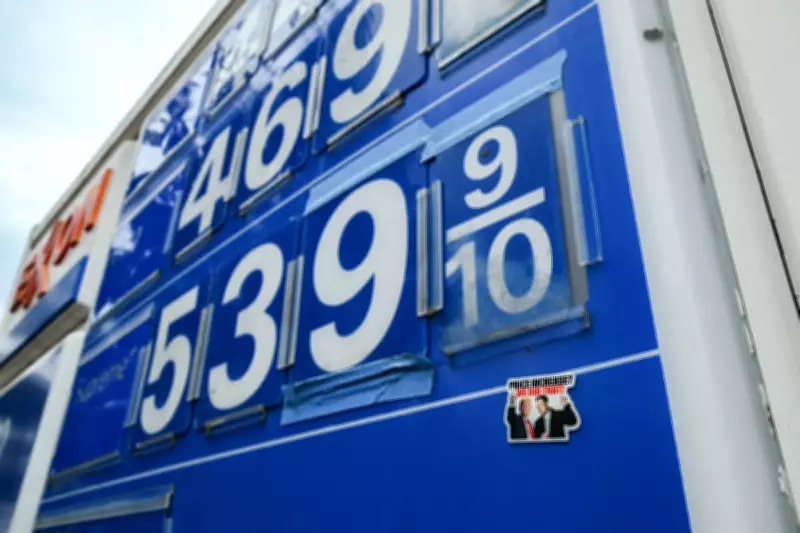
In Washington DC on 11 March 2026, a sticker featuring Donald Trump and Elon Musk was spotted on a board displaying gas prices, symbolizing the economic tensions amid the ongoing US-Israeli conflict with Iran. This visual comes as President Trump downplayed the surge in fuel costs, asserting that higher oil prices financially benefit the United States.
Trump's Response to Escalating Gas Prices
On Thursday, President Trump took to social media to address the economic fallout from the war in Iran, which has driven petrol costs above $100 per barrel. He wrote on Truth Social, "The United States is the largest Oil Producer in the World, by far, so when oil prices go up, we make a lot of money." He emphasized that his primary focus is preventing Iran, which he labeled an "evil Empire," from acquiring nuclear weapons, stating, "I won’t ever let that happen!"
Impact on Consumers and Global Markets
The American Automobile Association reported that the average price for a gallon of gas hit $3.60, marking the largest spike since Russia's invasion of Ukraine in 2022. This increase aligns with crude oil prices climbing above $100 per barrel, driven by Iran's attacks on Middle Eastern oil facilities. Despite global efforts to release petroleum reserves and stabilize markets, supply chain disruptions and overseas refinery dependencies continue to influence costs.

Political Repercussions Ahead of Midterm Elections
The rise in gas prices presents a significant political challenge for Trump as primaries commence for the November midterm elections. Republicans are defending narrow majorities in Congress, while Democrats have made cost-of-living concerns a central campaign issue. They criticize Trump's hostilities against Iran, arguing it contradicts his promise to lower prices. Democratic Congressman Don Beyer from Virginia responded, "President Trump should end this stupid war now and bring down gas prices for the American people." He added that Trump's stance benefits big oil donors at the expense of consumers.
Broader Economic and Strategic Context
While the US leads in crude production, global market dynamics mean that domestic prices are not insulated from international volatility. The conflict has also reportedly boosted Russia's fossil fuel exports, earning €6 billion since the war began, highlighting complex geopolitical economic ties. As tensions persist, the debate over energy policy, national security, and economic relief intensifies, shaping voter sentiment and policy discussions in the lead-up to the elections.