Trump Claims Physician Said He Could Live to 200 With Dietary Changes
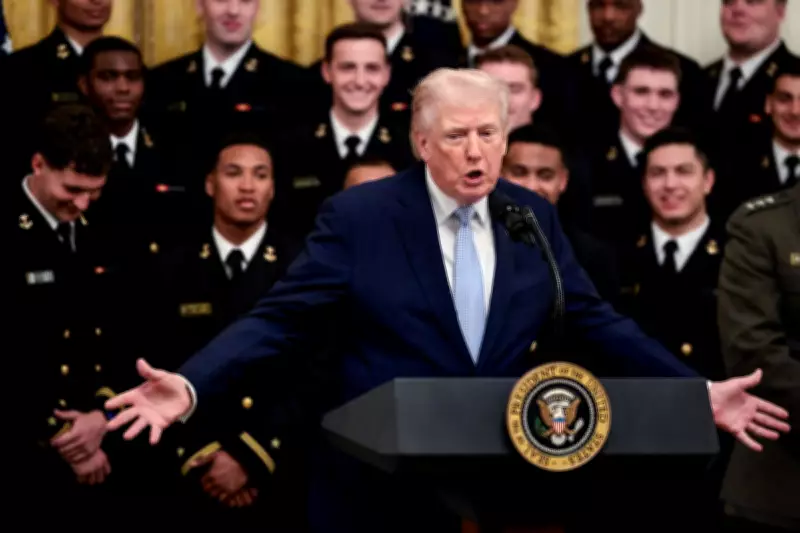
Former President Donald Trump has made a remarkable claim about his longevity potential, stating that his former White House doctor told him he could live to 200 years old if he abandoned his junk food habits. The 79-year-old made these comments during a Friday ceremony honoring the U.S. Naval Academy football team, where he signed an executive order designating the second Saturday in December as the exclusive date for the annual Army-Navy football game.
Medical Praise and Presidential Comparisons
During the event, Trump invoked his former physician, Congressman Ronny Jackson, who served as White House doctor from 2013 to 2018. According to Trump, Jackson declared him "by far" the healthiest of the last three American presidents, surpassing both Barack Obama and George W. Bush in medical assessment. "He took a lot of heat for this," Trump remarked about Jackson's evaluation. "They said, 'Who is the healthiest of the three?' He said, 'President Donald J Trump by far. If he didn't eat junk food, he'd live to 200 years old.'"
Trump's most recent publicly disclosed weight was 225 pounds, with golfing as his primary physical activity. This contrasts with Obama, who maintained approximately 180 pounds during his presidency through regular basketball and golf. Trump has openly celebrated his affection for fast food, notably McDonald's, even participating in a campaign event where he worked behind a drive-thru counter to demonstrate relatability to ordinary Americans.

Controversial Medical History and Bruising Concerns
Despite Jackson's glowing assessments, Trump's visible physical condition has raised questions. Both of his hands and neck have shown bruising in recent months, with the White House attributing hand marks to extensive handshaking. These observations have intensified scrutiny of the soon-to-be octogenarian's health, though Trump has consistently maintained his fitness through doctor's letters and public statements.
Jackson's medical career has faced its own controversies. During Trump's first term, the president nominated Jackson to lead the Department of Veterans Affairs, but the appointment uncovered allegations from nearly two dozen current and former White House medical staffers. They accused Jackson of drinking on duty, overprescribing opioids, and fostering a hostile work environment. Jackson ultimately withdrew his nomination, denying all accusations and calling them "baseless and anonymous attacks on my character and integrity."
Longstanding Medical Endorsements
Jackson has consistently provided positive health evaluations for Trump. In 2018, he told reporters that Trump's cardiac health was "excellent" and attributed his condition to "incredible genes." This pattern of praise likely explains why Trump referenced him during the Naval Academy event. The ceremony also served as a platform for Trump to formalize the Army-Navy football scheduling, declaring, "Not Ohio State against Notre Dame. Not LSU against Alabama. Nobody is going to play" on the designated December Saturday.
The intersection of Trump's health claims, Jackson's controversial background, and the political context of presidential medical assessments creates a complex narrative about how leaders' wellbeing is portrayed and perceived in the public sphere.